non-US support +44 (0)161 531 8801
























This article contains several key highlights of the interview. For the full interview, watch the entire podcast!
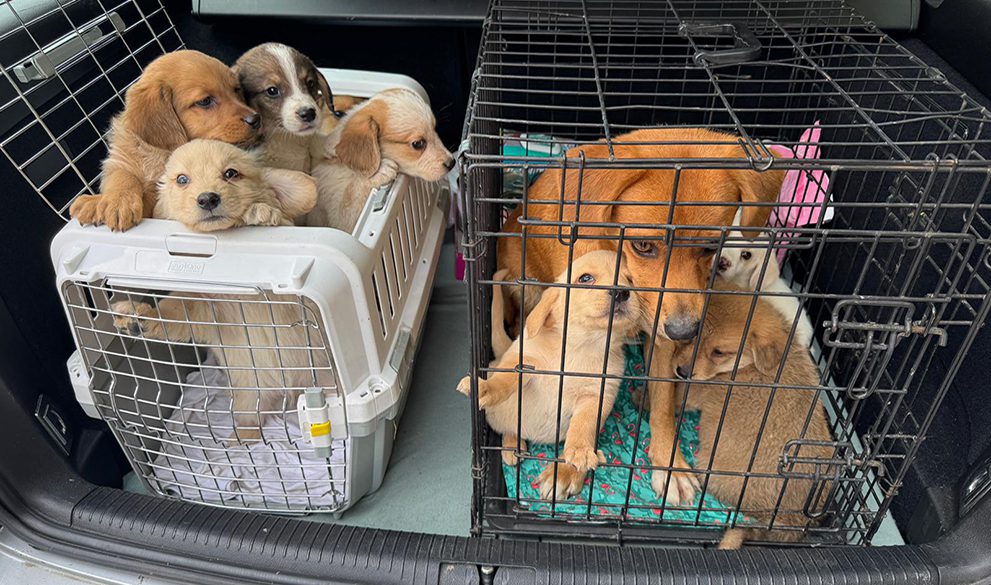
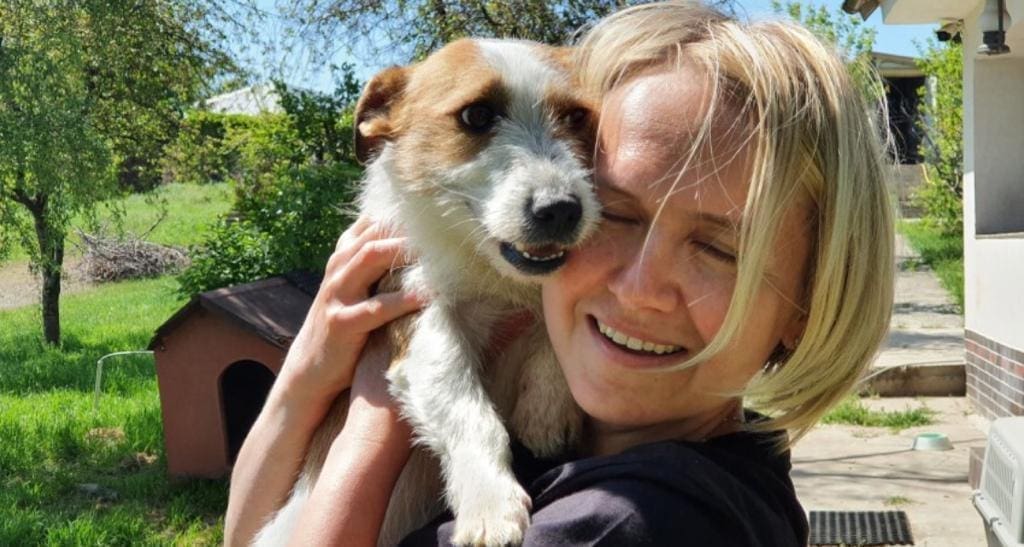
In our latest episode of the “Paws & Reflect” podcast, we had the pleasure of speaking with Stacey, an avid animal lover, advocate, and ROLDA adopter. Stacey shared her heartfelt journey of adopting pets, including her experience with ROLDA, an international animal rescue organization and our sponsor. This interview sheds light on the dedication and love required to give abandoned animals a second chance at life.
The Adoption Process
Stacey’s journey began with a deep-seated passion for animal rights. Originally from California, Stacey moved to South Carolina, where her commitment to animal advocacy grew stronger. She started by signing petitions and writing letters to schools, gradually becoming more involved in animal welfare organizations.
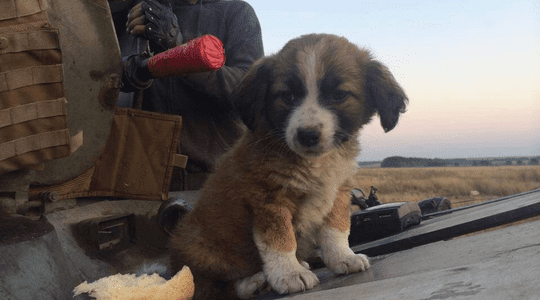
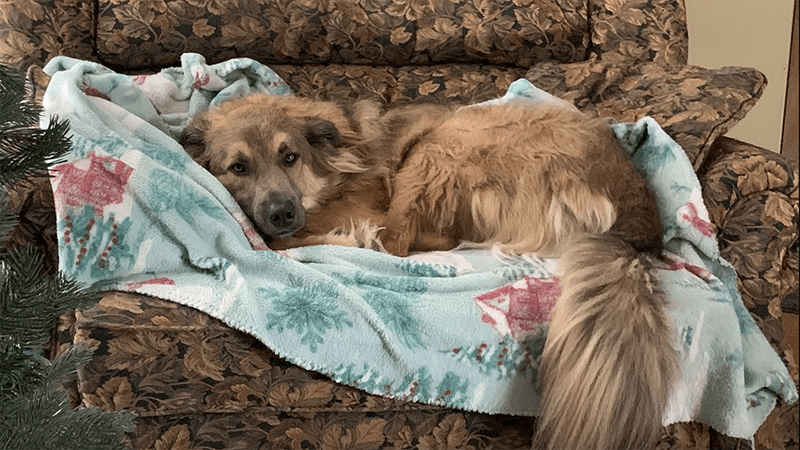
Stacey first learned about ROLDA through an email. Intrigued by their mission and impressed by their dedication, she began following their newsletters and updates. Her interest in ROLDA’s work eventually led her to consider adopting a pet from them. After seeing the pets available for adoption, she felt a strong connection with a puppy named Dream, later renamed Jaxton.
The Rigorous Vetting Process
ROLDA’s adoption process is thorough and meticulous, ensuring that every pet goes to a loving and capable home. Stacey described how she had to provide a detailed overview of her home and lifestyle, including a FaceTime tour of her house, to demonstrate that she could provide a safe and nurturing environment for Jaxton. This vetting process also included background checks and a commitment to provide regular updates on Jaxton’s well-being for the first two weeks.
Overcoming Challenges
The journey wasn’t without its challenges. Due to her mother’s illness, Stacey couldn’t personally pick up Jaxton from JFK airport. She had to hire a pet transport company, Save Them All, to bring Jaxton home. Despite a few hiccups, including an unexpected ransom fee at the airport, Stacey successfully brought Jaxton into her family. His seamless integration into her household, despite being a large puppy, was a testament to ROLDA’s careful matchmaking process.
The Importance of International Adoption
Stacey’s experience highlights the importance and impact of international pet adoption. While acknowledging the need for adopting local pets, she emphasized that pets overseas often face harsher conditions and greater danger. For Jaxton, finding a home with Stacey meant escaping a life of uncertainty and potential harm.
A Testament to ROLDA’s Mission
Stacey’s story is a powerful testament to ROLDA’s mission and dedication. The organization’s careful vetting process and continued support for adopters ensure that pets find the right homes. Stacey’s ongoing communication with Dana, the founder of ROLDA, further illustrates the organization’s commitment to its cause.
Final Thoughts
Stacey’s journey with ROLDA and her dedication to animal welfare serves as an inspiration. Her story underscores the importance of supporting organizations like ROLDA, whether through adoption, donations, or spreading awareness. As Stacey rightly pointed out, every little bit helps, and together, we can make a significant difference in the lives of abandoned and vulnerable animals.
Guest Bio:
Stacey is an individual living in South Carolina who went through the ROLDA adoption process. For privacy concerns, this is all of the information we are giving about our guest speaker.
About the Host
Alexander Taylor Clayton is the dedicated host of “Paws & Reflect,” a podcast that delves into the deep connections between humans and animals. With a background in anthropology and environmental sustainability, Alexander is passionate about animal welfare and advocating for a better world. Their commitment to making a positive impact shines through in each episode, as they bring insightful conversations with experts and activists to the forefront. Alexander’s goal is to inspire listeners to reflect on their relationship with animals and the natural world, fostering a culture of empathy and action.
ROLDA Information
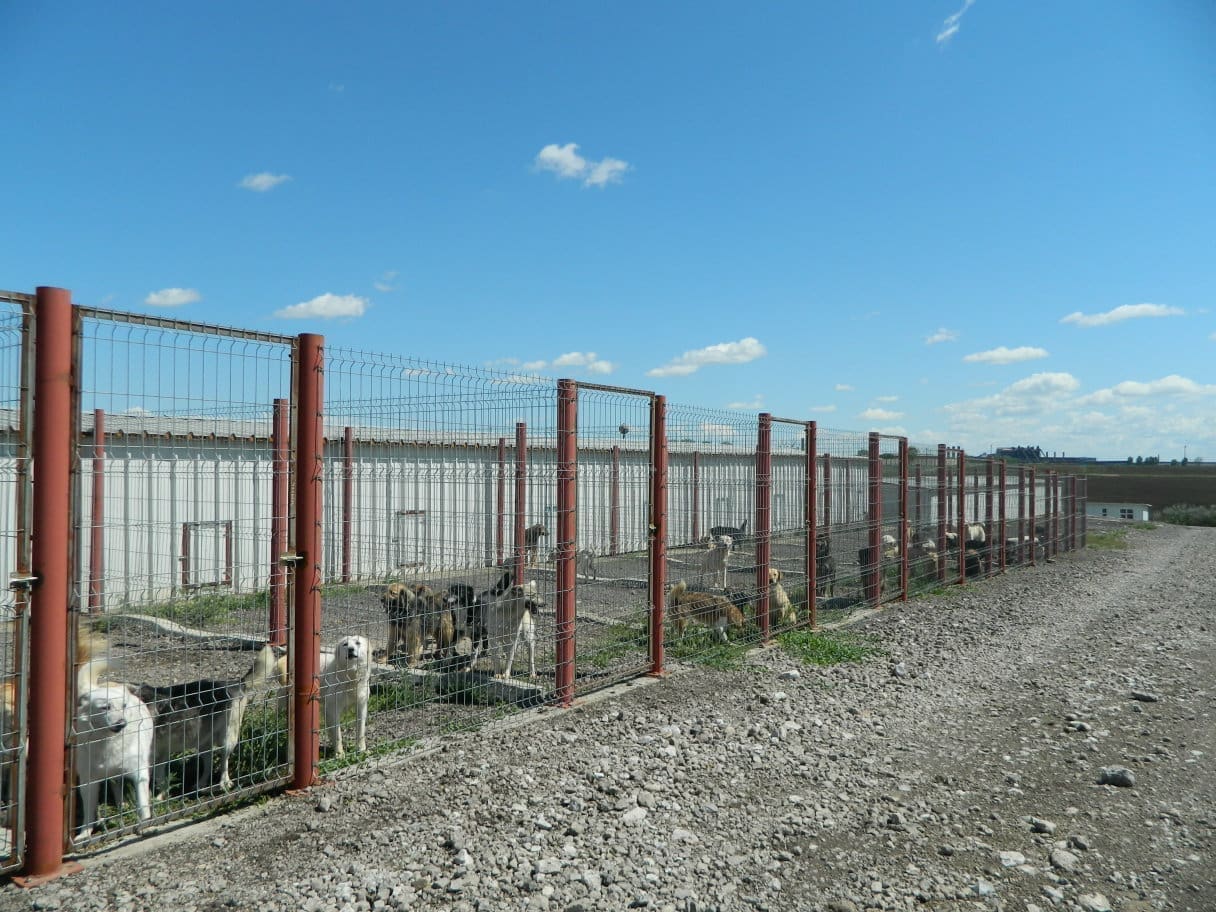
ROLDA, the Romanian League in Defense of Animals, is a leading animal welfare organization dedicated to rescuing and protecting animals in Romania. Their mission is to provide immediate aid through rescue and rehabilitation while also implementing long-term solutions to prevent animal suffering. ROLDA’s initiatives include spay/neuter campaigns, building modern sanctuaries, and community education programs. By addressing the root causes of animal homelessness and neglect, ROLDA is creating a sustainable and compassionate future for animals and communities alike. To support ROLDA’s vital work, visit ROLDA’s website and consider donating at ROLDA’s donation page.
A few days ago, I returned from another trip to the Ukraine. As you read this, please understand that this isn’t a corporate report filled with numbers and statistics (though we can provide those), but something written from the heart—my heart.
I had a goal, to deliver food to the animal centre opened by Olena in Mykolaiv, and a place where I could meet the vulnerable animals with special needs, animals we at ROLDA helped provide aid for, many injuries I had seen only from photographs but now I get to see the recovery myself in person.
I take these journeys often, and part of the journey is delayed at customs.
I came prepared with food and water, knowing customs delays are common. I brought my own provisions to avoid unnecessary stops along the way.
I crossed the Danube at Isaccea and headed to the Palanka checkpoint, where they checked the car again. The next military checkpoint was in Odessa, where sirens repeatedly warned of an air attack. I watched how people behaved, and it’s incredible how war has changed them. Two years ago, at the start of the war, the roads were empty, with hardly any cars or people. Now, people ignore the siren warnings; they park their cars, go shopping, eat at restaurants, walk their dogs, and visit the beaches. They have adapted to living with the war in their daily lives in a way that you must see to truly understand.
The road from Odesa to Mykolaiv had several military checkpoints. The road became very bumpy because of the heavy trucks and military vehicles, although it wasn’t bombed. You could see military defense systems along the road, in the fields, and in the water. The rough roads and chaotic traffic reminded me of home. The round trip was approximately 1000 km.
When I arrived, Olena and her team welcomed me with such warmth and love. Firstly, we unloaded all the food from my car, and then Olena proudly showed me around the center.
As Olena doesn’t speak English and I don’t speak Ukrainian, we both decided to use a translation app on our phones. She would speak on her phone, and the app translated her words into English for me to read or hear. I would then type my responses, which the app translated back into Ukrainian. Although this took a little while, it allowed us to communicate well together.
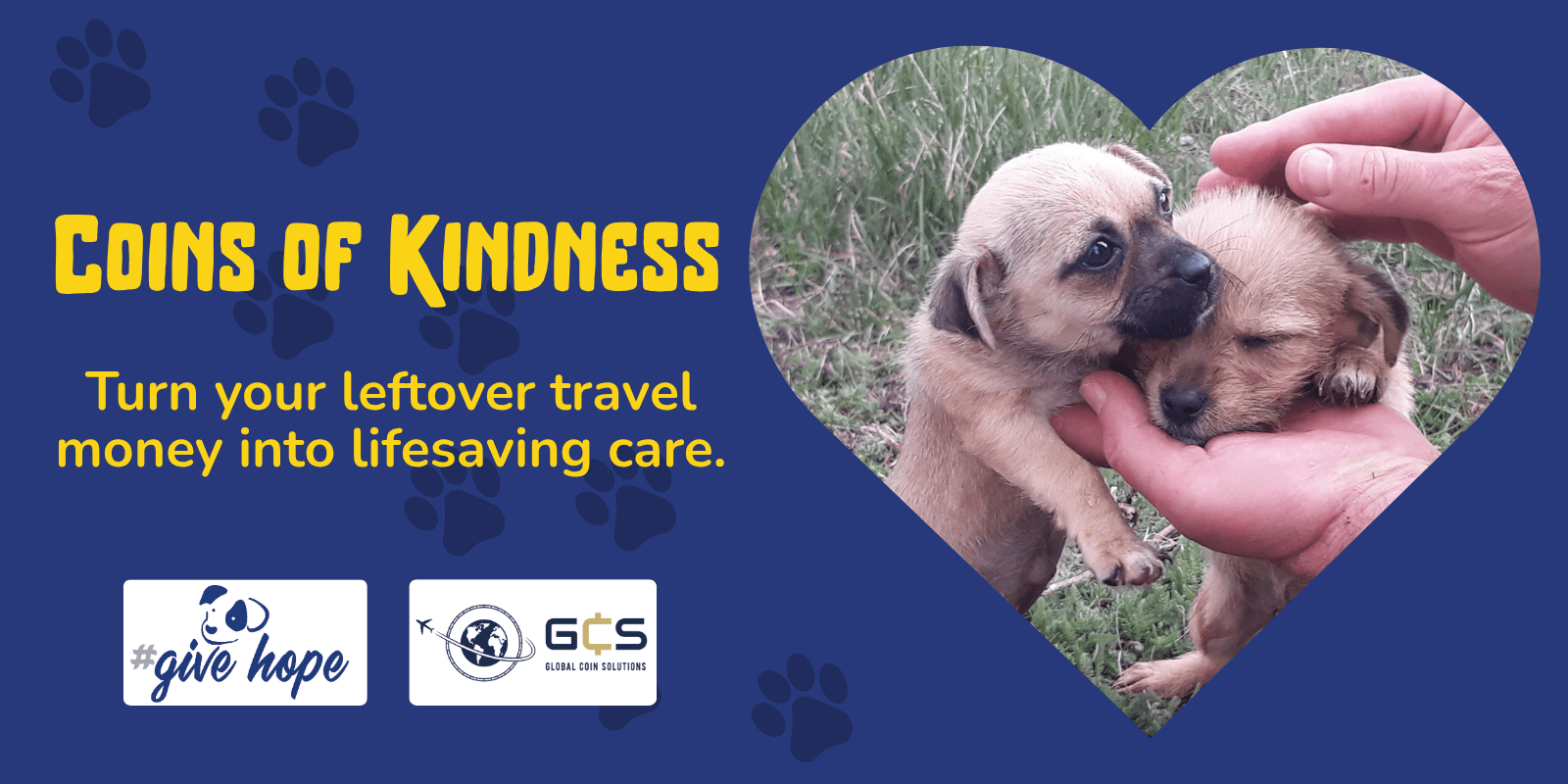
At one point, I saw a coin on the floor. I placed it in Olena’s hand and told her something she would likely never forget: “Back home, I was told that every time you find a coin, you should pick it up because if it’s in your way, it means that someone from Heaven is thinking of you.” I didn’t know her story then, but after learning about her life, I knew the coin held significant meaning for her.
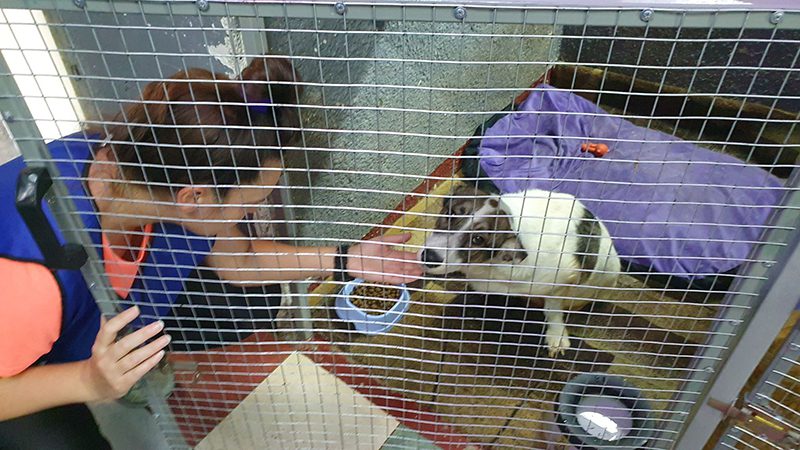
Olena started her organization in memory of her lost family. Her husband died unexpectedly in 2014, leaving her without the will to live. Her grandmother and the animals she rescued gave her life new meaning. Then sadly, she recently lost her grandmother, and now the animals are all she has. Her animal centre is an old building with a basement converted into a small shelter for dogs and cats, a storage room, and two small spaces—one for staff and one for their quarantine area. Despite the challenges of inconsistent water and electricity, Olena does whatever she can to ensure the animals in her care have a future.
As part of ROLDA’s support for #UkraineAnimals, we provide ongoing grants to rescuers and organizations who we partner with. We have supported Olena and learned about Leo, a tomcat, and Lucky, who is a special dog, both of whom we’ve sent money for in the past. It was moving in an incredible way to finally see and interact with them. Lucky was left paralyzed after being hit by a car. Animals with special needs require dedicated care, which is difficult to provide during wartime. Making the decision to put a dog to sleep is challenging, but it should always be guided by what is best for the animal’s well-being. Seeing Lucky’s joy and smile, I understood why Olena found it hard to make that decision.
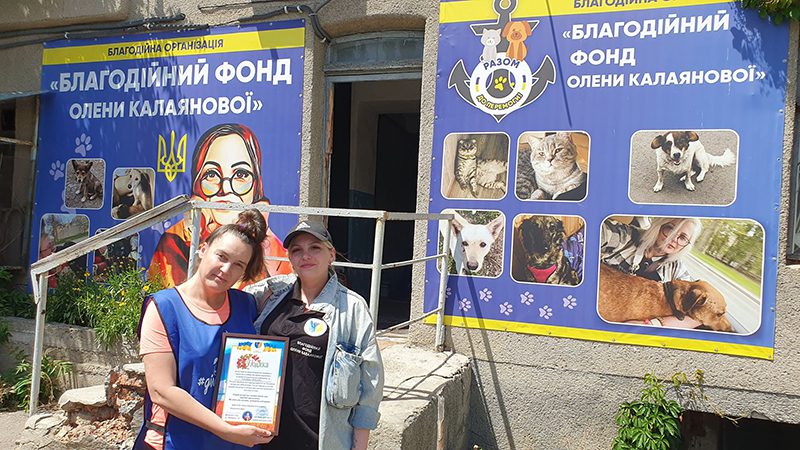
Leo, the rescued tomcat, is recovering after almost losing his life. Given these extraordinary circumstances, we should avoid judgment and make sure to ideally isolate and quarantine animals. In normal times, I would hope for Olena to have a shelter where animals could enjoy sunlight, fresh air, and spacious enclosures. Quarantine areas should have separate areas for dogs and cats, and good ventilation to help reduce the risk of spreading disease. Animals with special needs deserve a chance to thrive when given appropriate medical care and attention.
I was thrilled when Olena suggested I could walk Lucky. It was heartwarming to see how happy he was. Despite the hot day making him tired, he kept moving with his cart, only pausing briefly for a hug.
Leaving the center and saying goodbye to Lucky was bittersweet. Olena and her team graciously showed me around their town, or what remained of it. Rockets damaged many buildings, affecting not just structures but families and lives. In the central plaza, the Ukrainian people displayed captured Russian tanks and vehicles to lift their spirits.
Despite warnings about floating mines, people continued their lives by the river, at the beach, and in the water.
Before I left, Olena showed me the coin I had given her when I arrived and said she would cherish it always. It’s remarkable how we create machines to destroy each other and yet find small ways, like the meaning of a coin, to keep hope alive. Every trip to Ukraine reveals something new. Though I wasn’t near the battle zone this time, I met people dedicated to a cause I deeply care about: animals.
Your generosity can make a world of difference. Every contribution helps save lives and gives homeless animals the care and love they need to find permanent, loving homes. If you’d like to help, please consider donating.
This article contains several key highlights of the interview. For the full interview, watch the entire podcast!
Note: The original recording of this episode was May 1st, 2024.
Recent updates have thrust Captain Paul Watson back into the international spotlight. Watson was arrested in Greenland in connection with his ongoing efforts to protect marine wildlife from illegal whaling and fishing activities. The arrest has ignited a wave of support from environmentalists worldwide, highlighting the relentless challenges faced by activists dedicated to marine conservation. Captain Paul Watson, a pioneering figure in environmental activism, has been a relentless advocate for marine life for over four decades. As the co-founder of Greenpeace and the founder of the Sea Shepherd Conservation Society, Watson’s innovative and often controversial methods have made significant impacts on global marine conservation. Now, with the establishment of the Captain Paul Watson Foundation, he continues his mission with renewed vigor and determination.
The following report was released to us directly from the Captain Paul Watson Foundation in light of his arrest:
Captain Paul Watson was ambushed and arrested in Greenland
Danish police detain Environmental hero and star of “Whale Wars” on international arrest order from Japan.
NUUK, GREENLAND – JULY 21, 2024 – On the morning of Sunday, July 21st, Captain Paul Watson, co-founder of marine conservation Greenpeace, founder of Sea Shepherd and the Captain Paul Watson Foundation (CPWF), was arrested upon arrival in Nuuk, Greenland.
Captain Watson, on board his 72-meter flagship the M/Y JOHN PAUL DEJORIA stopped in Greenland with 25 volunteer crew to refuel, en route to the North West Passage as a part of the CPWF’s Operation Kangei Maru, a mission to intercept Japan’s newly built factory whaling ship Kangei Maru in the North Pacific.
“We were here, and arrested Paul due to an international arrest order from Japan”, stated the leader of the Danish federal police boarding party at the site of the arrest. The crew were given no further information.
The arrest is believed to be related to a former Red Notice issued for Captain Watson’s previous anti-whaling interventions in the Antarctic region. Japan’s Antarctic research whaling program JARPA was declared illegal by the International Court of Justice in 2014.
“We’re completely shocked, as the Red Notice had disappeared a few months ago. We were surprised because it could mean that it had been erased or made confidential. We understand now that Japan made it confidential to lure Paul into a false sense of security. We implore the Danish government to release Captain Watson and not entertain this politically-motivated request”, stated Locky MacLean, Ship Operation’s Director for CPWF.
Operating in breach of the ICJ ruling for several years, Japan eventually ceased Antarctic high-seas whaling in 2016, and now only hunts whales within its territorial waters. CPWF believes Japan plans to resume high-seas whaling in the Southern Ocean and North Pacific as early as 2025, and the reactivation of the Red Notice against Captain Watson is politically motivated and coincides with the launch of a newly built factory whale processing vessel.
In Nuuk, over a dozen Danish police and SWAT team members boarded the M/Y John Paul DeJoria as soon as it made port. After a handcuffed Captain Watson was led off of the ship, he was taken to the local police station. The crew and Foundation have no means of contacting him and have had no further news. At the time of writing, Watson remains in custody and it is unknown whether Denmark will allow Mr. Watson to be extradited to Japan.”
~ Captain Paul Watson Foundation
For more on the recent developments regarding Captain Watson’s arrest, please visit the following links:
– BBC News
– Captain Paul Watson Foundation
– France24
In this episode of “Paws & Reflect,” we dive into Captain Watson’s enduring fight for marine conservation, his philosophy, and the future of his efforts.
A Legacy of Direct Action
Captain Watson’s journey into marine conservation began in a fishing village on the east coast of Canada. From a young age, he was involved in protecting marine wildlife. His passion for conservation led him to become the youngest founding member of Greenpeace in 1972. In 1977, he founded the Sea Shepherd Conservation Society, and in 2022, he established the Captain Paul Watson Foundation.
Throughout his career, Captain Watson has been known for his aggressive non-violence approach—a strategy he developed in 1977. This method involves aggressive intervention without causing harm, a principle that has remained constant in his work. Despite facing opposition and controversy, Watson’s tactics have saved tens of thousands of marine animals, including whales, seals, and dolphins.
Transition to the Captain Paul Watson Foundation
The transition from Sea Shepherd to the Captain Paul Watson Foundation was driven by internal conflicts and differing visions for the future. Captain Watson left Sea Shepherd after being told he was too controversial and confrontational. Determined to continue his mission, he founded the Captain Paul Watson Foundation, ensuring that the principles of aggressive non-violence and direct action remained at the forefront.
The foundation focuses on the protection and defense of marine life, opposing illegal exploitation such as whaling and illegal fishing. Captain Watson’s new organization aims to carry on the work that Sea Shepherd started but with a renewed emphasis on direct intervention and avoiding mainstream compromises.
Upcoming Campaigns: Operation Ice Storm and Operation Bloody Fjords
Captain Watson shared exciting details about two upcoming campaigns:
– Operation Ice Storm will target Icelandic waters, aiming to block and stop two Icelandic whaling ships. The goal is to prevent Christian Lofsson, a wealthy and influential figure in Iceland, from continuing his whaling activities, which are largely opposed by the Icelandic public.
– Operation Bloody Fjords will see the Captain Paul Watson Foundation landing crews in the Faroe Islands to intervene against the killing of pilot whales and dolphins. The campaign aims to get in the way of these illegal activities and draw global attention to the plight of these marine animals.
Challenges and Strategies
One of the biggest challenges in marine conservation is fundraising. Ships and campaigns are expensive, and raising the necessary funds is a constant struggle. However, the actual implementation of strategies and interventions is something Captain Watson is well-versed in. His extensive experience in blocking and intercepting illegal activities has proven effective in saving marine wildlife.
Captain Watson’s foundation also collaborates with other conservation groups, including Sea Shepherd France and Sea Shepherd Brazil. Despite legal battles with Sea Shepherd Global, the foundation continues to work with dedicated partners to protect marine ecosystems.
The Importance of Biocentrism
A significant part of Captain Watson’s philosophy is the concept of biocentrism—the idea that all living organisms have inherent value and are interconnected within the biosphere. This perspective challenges anthropocentrism, which places humans at the center of importance. Captain Watson emphasizes that our survival depends on living in harmony with other species and recognizing the ecological intelligence of all living beings.
Final Thoughts
Captain Paul Watson’s unwavering commitment to marine conservation serves as an inspiration for current and future generations of activists. His message is clear: the fight to protect our oceans is ongoing, and every individual has the power to make a difference. By supporting organizations like the Captain Paul Watson Foundation, volunteering, or simply raising awareness, we can all contribute to preserving the delicate balance of our marine ecosystems.
For more information on how to support Captain Watson’s efforts, visit the Captain Paul Watson Foundation website and consider becoming a monthly donor. Your contributions can help sustain vital campaigns and protect marine life for generations to come.
Guest Bio: Captain Paul Watson
Captain Paul Watson is a marine wildlife conservation and environmental activist. Watson was one of the founding members and directors of Greenpeace. In 1977, he left Greenpeace and founded the Sea Shepherd Conservation Society.
A renowned speaker, accomplished author, master mariner, and lifelong environmentalist, Captain Watson has been awarded many honors for his dedication to the oceans and to the planet.
Among many commendations for his work, he received the Genesis Award for Lifetime Achievement in 1998, was named as one of the Top 20 Environmental Heroes of the 20th Century by Time Magazine in 2000, and was inducted into the U.S. Animal Rights Hall of Fame in Washington D.C. in 2002. He was also awarded the Amazon Peace Prize by the president of Ecuador in 2007. In 2012, Captain Watson became only the second person, after Captain Jacques Cousteau, to be awarded the Jules Verne Award, dedicated to environmentalists and adventurers. In 2022, Captain Paul Watson continues his fight for marine wildlife conservation with the new Captain Paul Watson Foundation – paulwatsonfoundation.org.
About the Host
Alexander Taylor Clayton is the dedicated host of “Paws & Reflect,” a podcast that delves into the deep connections between humans and animals. With a background in anthropology and environmental sustainability, Alexander is passionate about animal welfare and advocating for a better world. Their commitment to making a positive impact shines through in each episode, as they bring insightful conversations with experts and activists to the forefront. Alexander’s goal is to inspire listeners to reflect on their relationship with animals and the natural world, fostering a culture of empathy and action.
ROLDA Information
ROLDA, the Romanian League in Defense of Animals, is a leading animal welfare organization dedicated to rescuing and protecting animals in Romania. Their mission is to provide immediate aid through rescue and rehabilitation while also implementing long-term solutions to prevent animal suffering. ROLDA’s initiatives include spay/neuter campaigns, building modern sanctuaries, and community education programs. By addressing the root causes of animal homelessness and neglect, ROLDA is creating a sustainable and compassionate future for animals and communities alike. To support ROLDA’s vital work, visit ROLDA’s website and consider donating at ROLDA’s donation page.
This article contains several key highlights of the interview. For the full interview, watch the entire podcast!
Exploring the Journey
Dr. Akhtar’s journey into the intersection of human health and animal welfare is a compelling narrative of compassion, science, and advocacy. Originally trained as a neurologist, Dr. Akhtar expanded her expertise to public health, recognizing early in her career the significant impact of animal welfare on human health. Her path was shaped by a keen awareness of the cruel treatment of animals in factory farms and laboratories, and the realization that such treatment also adversely affects human health.
She recounts a pivotal experience that cemented her commitment to this cause: witnessing a distressing experiment on a cat during a neuroscience conference. This moment underscored the ethical dilemmas and scientific shortcomings of animal testing, solidifying her resolve to advocate for better, more humane research methods. She highlights how factory farms contribute to the spread of infectious diseases and how animal testing, aside from being inhumane, often fails to provide reliable results for human health research. This awareness led her to found the Center for Contemporary Sciences, aiming to replace animal testing with advanced, human-relevant methods.
A Pivotal Moment
Dr. Akhtar’s career has been marked by several significant moments, but perhaps none more impactful than her realization of the deep flaws within the current system of animal testing. She discusses how the conventional methods often fall short, failing to accurately predict human responses to drugs and treatments. This not only leads to ineffective medical interventions but also raises profound ethical concerns about the suffering inflicted on animals.
One of the critical turning points in her career was during a conference where she witnessed an experiment on a cat. The sight of the animal’s suffering deeply moved her and highlighted the urgent need for change. Dr. Akhtar emphasizes that the ethical treatment of animals is not just a moral imperative but also a scientific necessity. The inaccuracy of animal testing means that many promising treatments for humans are never realized, while many others fail in human trials despite appearing successful in animals. This inefficiency in the research process prompted her to seek alternative methods that are both humane and scientifically valid.
The Future of Animal Testing
In our conversation, Dr. Akhtar delves into the limitations of current animal testing practices. She points out that animals, despite their biological similarities to humans, often react differently to substances, leading to misleading results. This discrepancy has severe implications for medical research, potentially causing harm to humans when treatments fail or produce adverse effects not observed in animal trials.
Dr. Akhtar advocates for a shift towards using human biology-based methods. Technologies such as organs-on-chips and advanced tissue models offer more reliable and ethical alternatives to animal testing. These methods can simulate human organs’ functions and responses more accurately, providing better data for researchers. For example, organs-on-chips can mimic the complexities of human physiology, offering insights that are not possible through traditional animal testing. Advanced imaging techniques and computational models also allow for detailed analysis of biological processes without involving animals.
This transition is crucial for advancing medical research and ensuring that treatments are safe and effective for humans. Dr. Akhtar’s work at the Center for Contemporary Sciences focuses on promoting these innovative methods. By prioritizing humane and accurate scientific practices, the center aims to revolutionize how research is conducted, ultimately benefiting both human and animal health.
The Power of Positive Messaging
Throughout our discussion, Dr. Akhtar emphasizes the importance of positive messaging in advocacy. Changing deeply ingrained practices requires more than just presenting facts; it requires inspiring change through hopeful and constructive narratives. Highlighting the benefits of a compassionate relationship with animals and showcasing advancements in humane research methods can inspire change and foster a culture of empathy and respect for all living beings.
She shares how stories of successful humane research can captivate and motivate people far more effectively than negative or confrontational approaches. By celebrating the achievements of ethical science, we can shift public perception and encourage broader acceptance and implementation of humane methods. Dr. Akhtar also stresses the importance of education in this process. Informing both the public and healthcare professionals about the connection between human health and animal welfare is essential for driving systemic change.
Call to Action
Dr. Akhtar urges listeners to stand up for their beliefs and take action to shape a kinder world. Whether through writing to media outlets, supporting legislation, or simply practicing what they preach, individuals have the power to drive significant change. She emphasizes that creating a compassionate world requires collective effort and encourages everyone to be a part of this vital movement.
Practical steps include supporting organizations that advocate for humane research, educating others about the benefits of ethical science, and participating in public discussions about animal welfare and public health. Dr. Akhtar also highlights the importance of political engagement. Advocating for policies that support ethical research and animal welfare can lead to legislative changes that institutionalize humane practices.
Final Thoughts
Dr. Aysha Akhtar’s insights on the interconnectedness of human and animal health provide a compelling argument for ethical conservation and research practices. By prioritizing the well-being of animals, we can improve human health outcomes and create a more harmonious world. This episode of Paws & Reflect is a powerful reminder of the impact we can have when we choose compassion and empathy in our interactions with all living beings.
For those inspired by Dr. Akhtar’s message, there are numerous ways to get involved:
● Support the Center for Contemporary Sciences by donating or volunteering.
● Advocate for the use of human biology-based research methods in your local community.
● Educate yourself and others about the benefits of humane research practices.
● Participate in campaigns and initiatives that promote animal welfare and ethical science.
About the Guest Speaker
Aysha Akhtar, M.D., M.P.H., is the Co-founder and CEO of the Center for Contemporary Sciences, (CCS) which is pioneering the transition to replace the use of animals in experimentation with more effective human-relevant testing methods and reduce the risks of pandemics and other human health threats by tackling root causes. A military veteran, she is a double-board certified neurologist and preventive medicine specialist, with a background in public health. Previously she served as Deputy Director of the U.S. Army Traumatic Brain Injury Program. As a Commander in the U.S. Public Health Service Commissioned Corps, Dr. Akhtar is frequently deployed to assist with national public health emergencies.
For a decade, Aysha was a Medical Officer at the Food and Drug Administration, most recently in the Office of Counterterrorism and Emerging Threats, implementing vaccine effectiveness and safety studies and using her Top-Secret Security Clearance to develop national preparedness strategies for public health threats. An international speaker, her work has appeared in numerous articles in The Independent, LA Times, The Hill, and Salon. She has been interviewed for the New Yorker, New York Times, National Geographic, and WIRED, among others. Publications include the Cambridge Quarterly of Healthcare Ethics, Pediatrics, Journal of Public Health Policy, Lancet, and Reviews in the Neurosciences.
Aysha is a Fellow of the Oxford Centre for Animal Ethics. She is the author of the two books, Our Symphony With Animals. On Health, Empathy and Our Shared Destinies and Animals and Public Health, which argues for the need for health institutions to include animals as part of the “public” in public health. Aysha is a TEDx speaker.

About the Host
Alexander Taylor Clayton is the dedicated host of “Paws & Reflect,” a podcast that delves into the deep connections between humans and animals. With a background in anthropology and environmental sustainability, Alexander is passionate about animal welfare and advocating for a better world. Their commitment to making a positive impact shines through in each episode, as they bring insightful conversations with experts and activists to the forefront. Alexander’s goal is to inspire listeners to reflect on their relationship with animals and the natural world, fostering a culture of empathy and action.
ROLDA Information
ROLDA, the Romanian League in Defense of Animals, is a leading animal welfare organization dedicated to rescuing and protecting animals in Romania. Their mission is to provide immediate aid through rescue and rehabilitation while also implementing long-term solutions to prevent animal suffering. ROLDA’s initiatives include spay/neuter campaigns, building modern sanctuaries, and community education programs. By addressing the root causes of animal homelessness and neglect, ROLDA is creating a sustainable and compassionate future for animals and communities alike. To support ROLDA’s vital work, visit ROLDA’s website and consider donating at ROLDA’s donation page.
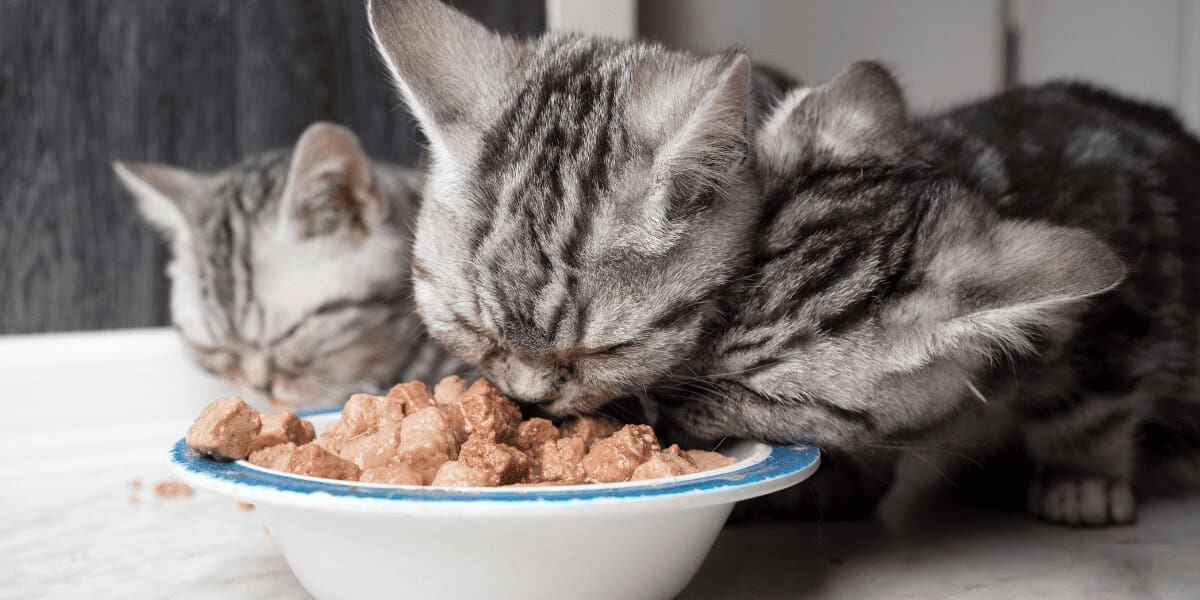
Charlie and Gizmo came to us as two little kittens with big problems. When we first saw them, our hearts broke. They were so sick and scared, but their eyes still sparkled with hope.
Gizmo, the smaller one, had been poisoned. At just 8 months old, her kidneys were as weak as a very old cat’s. Her sister Charlie was fighting too. Her liver was sick, and a virus rendered her with poor vision. She also had trouble using her hind legs.
But here’s the amazing part: these kittens never stopped being kittens! Even when they had to stay in the hospital or get medicine every day, they still wanted to play and purr. They teach us all what it means to be brave and resilient.
Our rescue team worked hard to help them get better. Charlie’s liver improved again, but both kittens still need lots of care. Every day is a challenge, but Charlie and Gizmo face it with courage every day.
They still need help and love. But with friends like you, we believe these little fighters can win their battle and find the happy homes they deserve.
Sharik’s life took a dramatic turn when a car accident left both his front paws crushed. We know nothing of his past, but we’ve been there for him ever since that terrible day.
The accident was devastating. Sharik’s small body was overwhelmed with pain, and he needed help fast. Our team rushed him to a specialist in another city, hoping to save his injured paws.
Even now, watching Sharik try to walk is heartbreaking. He struggles with each step, determined but visibly in obvious pain. The damage to his paws is severe, and we’re worried that some parts might not heal. The vets might have to remove parts of his paws if things don’t improve.
But Sharik isn’t facing this challenge alone. Volunteers are by his side every day. They help with his treatments, comfort him when he’s scared, and encourage him as he fights to recover.
Through all of this, we have a dream for Sharik. We hope that one day, he’ll find a loving family to call his own. A place where he can feel safe and loved, no matter what challenges he faces.
Sharik’s journey isn’t over, but with your help, we can give him the chance he deserves. Together, we can turn his story of pain into one of hope and happiness.
Lada’s world changed in an instant when a car struck her, leaving her broken and immobile on the streets of Ukraine. Thanks to the compassion of strangers who refused to look away, Lada’s cries for help were heard. Her injuries were so severe that she had to be rushed across the country to a specialized clinic – her only hope for survival.
There, skilled surgeons fought to save Lada, carefully placing two implants to stabilize her shattered spine. It was a delicate battle between life and death, but Lada’s spirit proved stronger than her wounds.
Today, Lada rests in the loving arms of devoted rescuers who tend to her every need. They celebrate each small victory – a twitch of her paw, a flicker of feeling returning to her legs. These tiny sparks of progress fuel their hope that one day, against all odds, Lada might stand tall again.
For now, a custom-built cart serves as Lada’s chariot, allowing her to explore the world while her body heals. It’s a long road ahead, but Lada’s journey is one of resilience, compassion, and the unwavering belief that every life is worth fighting for.
Your support could be the turning point in Lada’s story – a chance to transform tragedy into triumph, and to prove that even in the darkest moments, kindness can light the way to a brighter future.
Fundraising with one eye smiling and one eye crying
An honest, raw and emotional update from ROLDA Founder Dana Costin
The war’s horror bled across borders, and as ROLDA stood witness to this unfathomable suffering, like many shocked others, we dashed to offer hope amidst the chaos. We share our soil with Ukraine – they are our brethren in distress, a mere heartbeat away from our base in Galati, Romania.
In 2022, a torrent of desperate souls surged through Poland and Romania, seeking refuge from their ravaged homeland. You could see in their eyes the anguish of being separated from their cherished animals, who were often left to fend for themselves in the onslaught.
Our small team reached out at the border, distributing leaflets translated into Ukrainian to help refugees whose companions bore paws and claws to get veterinary assistance if they needed it.
When the exodus diminished, we continued to help Ukrainians by providing repeated grants to those brave rescuers who chose not to flee but to stay home and help animals amidst the ruins, bombs and bullets.
The rescuers – heroes cloaked in humility – face a daily gauntlet of extreme poverty, makeshift shelters teeming with the lost and the wounded, and a dearth of necessities. Yet, their spirits remain unbroken.
Two years have etched deep lines of worry on my ROLDA Rescue Team’s faces, but what they endure pales in comparison to the tribulations faced by our Ukrainian allies. Overwhelmed yet undeterred, they’re tirelessly expanding a lifeline that stretches across a nation scarred by conflict. And I am immensely proud of them for it.
Of course, none of this would be possible without you and other caring animal lovers who have risen to the challenge of helping to fund this urgent, essential work. Choosing and sharing a glimpse of the stories they are exposed to is an emotionally draining role for my ROLDA team, but it is an essential one to draw attention to the suffering of abandoned dogs and cats. And, thankfully, what can be done to help them.
For full transparency, ROLDA started creating monthly reports showing what we do in Ukraine, whom we are helping, and where. The ROLDA annual report summarises the entire activity for the past year and highlights the most important moments.
Our social media, website, and email updates always present facts, frequent updates, and examples to explain what ROLDA is doing. As a result, the amazing support from the international community enables us to continue assisting over 40 brave animal rescuers all over Ukraine.
Recently, we managed to send a new grant to Aleksey in Kherson, Ukraine. I met Aleksey in person last fall during my brief visit to Ukraine. We travelled together (accompanied by a soldier) in the “grey zone” where many animals were trapped (abandoned, scared, hiding) in houses destroyed by bombs and drones. Land mines make it very dangerous to move around villages here.
I didn’t think travelling to Ukraine would affect me as much as it did. I had sleepless nights thinking of the senseless harm people can inflict on each other and animals. In almost 20 years of running ROLDA, I have seen a lot of shocking injuries and behaviour, but the painfully hard reality which I noticed with my own eyes in Ukraine and which I will never forget.
The moment Aleksey pleaded for anti-mine gear, my world stood still. The sheer absurdity of such a need in a mission to save abandoned souls sent a shiver through my core.
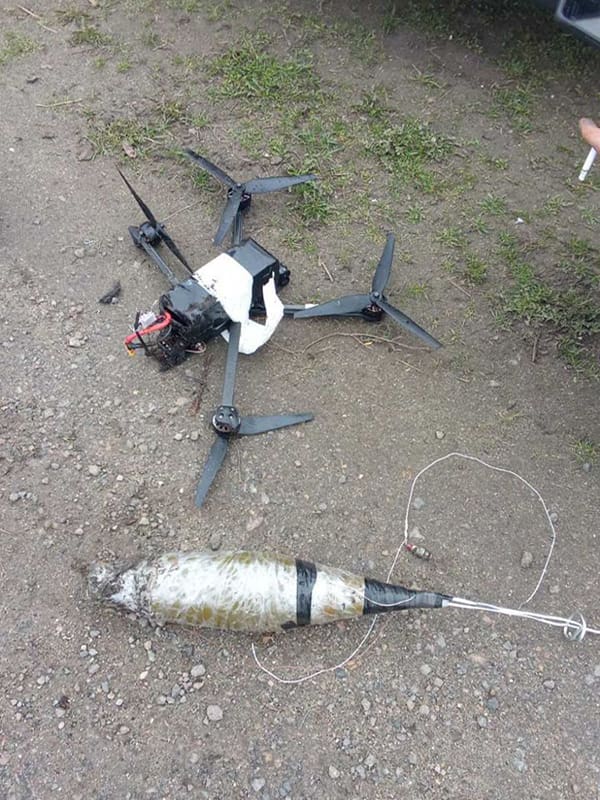
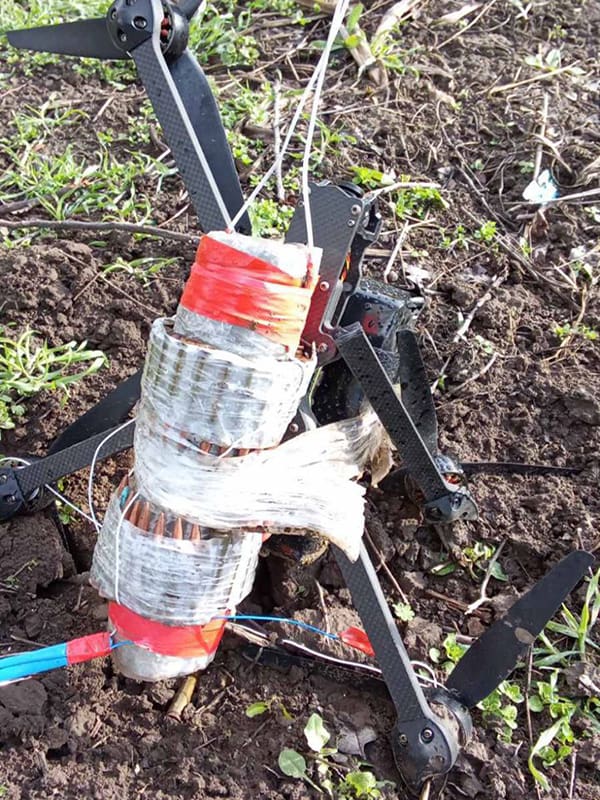
One can understand how the Ukrainian situation worsened by observing how the Ukrainians’ requests to ROLDA changed over time. They went from asking for food to medical equipment and then heavy anti-mine equipment that would enable people to continue going into war zones to rescue dogs and cats. This is a dramatic change.
During my visit to Kherson, I saw various signs warning people about mined areas. I remember taking photos sitting near these signs. We all smiled and kept calm, but I know each of us had a lot on our minds behind those smiles.
During my visit to Ukraine, I was most shocked by people’s adaptability and how life goes on while rockets fly above their heads and houses. While their lives were falling apart, their families were crumbling. I met people showing me their pets in the most natural way while the noise of rockets hitting targets didn’t disturb anyone anymore.
The news of Aleksey’s shooting and the loss of one of his brave drivers is a stark reminder of the high stakes faced by those who dare to care in Ukraine. And when caring people like yourself recognise their bravery and offer financial support, the ROLDA Rescue Team is also inspired to do everything possible.
When we delivered aid to Aleksey to acquire the anti-mine equipment, one of my eyes smiled, knowing that fulfilling his wish would help many more animals. But my other eye cried, remembering my memories from Ukraine and understanding that, now, the situation is much worse.
Some people might be exhausted from hearing about Ukraine and choose to look the other way. But we passed a point of no return when we met and became allies with the Ukrainian animal rescuers who remained there—losing family members or their houses, often living in ruins without windows, heating, or flowing water.
Some voices say that Ukraine might lose the war and the consequences will be terrible. All I know is that right now, some brave souls dress in anti-mine equipment and rescue terrified animals from the most dangerous war zones.
No natural disaster, earthquake, or tsunami caused this situation to happen. What people do to each other and to what surrounds them is what causes this situation to happen.
This latest grant request for Aleksey was heartbreaking for me to fund. My heart cries for Ukraine and their animals. I hope that this nightmare will be over soon.
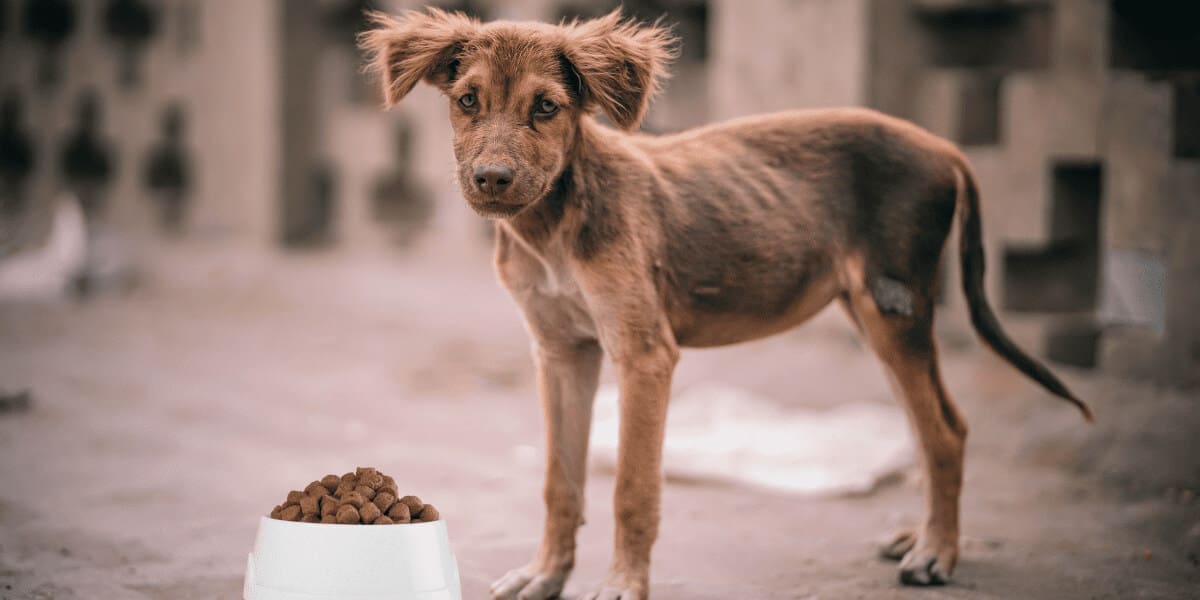
If you would like to help the abandoned, injured and terrified dogs and cats in Ukraine, please donate to ROLDA or consider becoming a monthly supporter. Just $5 from 80 monthly donors allows us to provide 960 highly nutritious food portions.
Thank you for letting me share this heartfelt update with you. I appreciate your taking the time to read it.
This article contains several key highlights of the interview. For the full interview, watch the entire podcast!
Introduction:
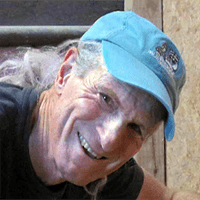
Today, we are honored to introduce Dr. Marc Bekoff, Professor Emeritus of Ecology and Evolutionary Biology at the University of Colorado.
Interview
Alexander: Welcome, Dr. Bekoff. It’s a pleasure to have you here.
Dr. Bekoff: Thank you for having me. It’s a pleasure to be here.
Alexander: Your work has been pivotal in expanding our understanding of animal emotions. Could you share a moment in your research that profoundly changed your perspective on animal consciousness?
Dr. Bekoff: There have been many moments, but one that stands out is from my childhood. Growing up in Brooklyn, I used to talk to all the dogs, cats, birds, and ants. I asked my parents what these animals were thinking and feeling, and they never laughed at me. They always encouraged my curiosity. This early experience guided me into a lifelong career of studying and caring for animals.
Alexander: It sounds like you had a supportive upbringing. How did your parents influence your perspective on animals?
Dr. Bekoff: Yes, my parents were very open-minded. My mother was empathetic, and my father was optimistic. They always told me I could do anything I wanted. This supportive environment allowed me to pursue my passion for understanding and caring for animals.
Alexander: Let’s talk about compassionate conservation. For our listeners who may be new to this concept, how would you define it, and why is it essential in today’s conservation efforts?
Dr. Bekoff: Compassionate conservation developed from the realization that when we step into the lives of wild animals, we are intruders. Traditional conservation often involves harming animals to study them. Compassionate conservation focuses on non-invasive methods, respecting the intrinsic value of every individual animal. The foundational tenets are “first do no harm” and recognizing that the lives of every individual matter.
Alexander: That’s a profound shift from traditional conservation methods. Can you share more about the practical applications of compassionate conservation?
Dr. Bekoff: It involves studying animals in non-invasive ways, avoiding trapping or marking them in harmful ways. This approach ensures that the data we collect are representative of their natural behaviors. In 2010, we held the first international conference on compassionate conservation at the University of Oxford, establishing these principles as foundational to the field.
Alexander: Throughout your career, have there been any particular animal encounters that reinforced or challenged your theories on animal emotions and ethics?
Dr. Bekoff: One memorable experience was studying coyotes in Grand Teton National Park. A female coyote disappeared, and we observed palpable changes in her family’s behavior, indicating they were grieving her absence. This and other observations of animal play and social interactions have shown that animals have rich emotional lives.
Alexander: Your collaborations with Jane Goodall and others have yielded rich discussions and progress. What has been the most surprising or enlightening aspect of working alongside such figures?
Dr. Bekoff: The commitment and relentless work ethic of individuals like Jane Goodall are always inspiring. They are highly motivated to improve the lives of animals and are constantly working to make a positive impact.
Alexander: As our conversation comes to a close, what is the one thought or message you’d like our listeners to pause and reflect on after today’s episode?
Dr. Bekoff: Realize that every individual can make a positive difference in human-animal interactions. Find something you are passionate about and pursue it with determination. Each of us can contribute to a better world for animals and the environment.
Alexander: It sounds like you had a good start growing up with a big heart. Let’s talk about compassionate conservation. For our listeners who may be new to this concept, how would you define it, and why is it essential in today’s conservation efforts?
Dr. Bekoff: Compassionate conservation really developed out of my work and the work of a few others, especially doing field research on animal behavior, behavioral ecology, and social ecology. By realizing that when you step into the life of wild animals, you’re really an intruder, you’re a trespasser. The first thing at a very general level is just being there can change their behavior. But when you start mucking around with them, trapping them, and marking them, especially using inhumane or harmful techniques, you’re not only harming the individual, but you’re studying stressed animals. The data you collect may not be representative of who these animals really are. In 2010, the inaugural conference on compassionate conservation was held at the University of Oxford, and the foundational directives are “first do no harm” and the lives of every individual matter.
Alexander: Would you say that compassionate conservation focuses more on the well-being of individual animals rather than just populations or species as a whole?
Dr. Bekoff: Yes, absolutely. Traditional conservation often plays the numbers game, but compassionate conservation emphasizes the well-being of every single individual. It’s not about how many animals are in a population, but about the quality of life for each animal. The goal is to ensure that animals live safe, pain-free lives.
Alexander: That’s a significant shift. Have you seen any pushback or criticism of compassionate conservation?
Dr. Bekoff: Yes, there are critics who argue that compassionate conservation doesn’t prioritize biodiversity or ecosystem health. However, this is a misconception. Compassionate conservation is deeply concerned with these issues but approaches them through the lens of individual animal welfare. The idea that you have to harm or kill some animals to save others is fundamentally flawed and ethically questionable.
Alexander: That’s very insightful. As we wrap up, what do you hope listeners take away from this conversation about compassionate conservation and the emotional lives of animals?
Dr. Bekoff: I hope listeners understand that each individual animal’s life matters and that we can study and conserve animals without causing them harm. Every person can make a positive difference by being mindful of the impact their actions have on animals and by advocating for humane treatment in all aspects of life.
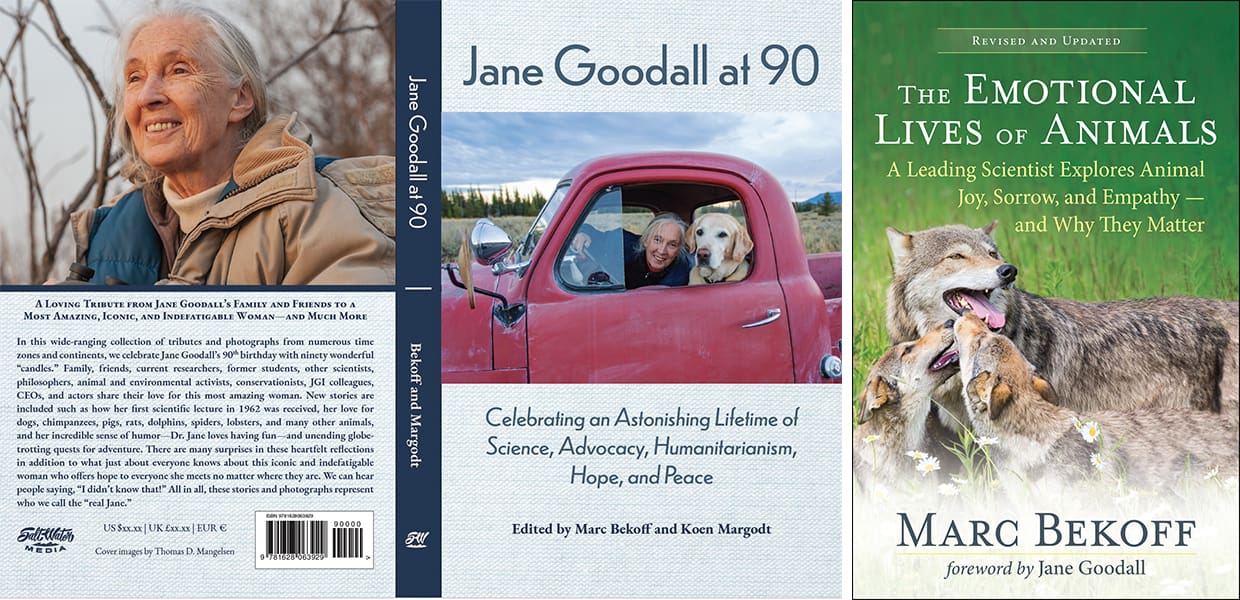
Alexander: Thank you so much, Dr. Bekoff, for sharing your invaluable insights and experiences with us today. Your dedication to compassionate conservation and understanding animal emotions is truly inspiring. For our listeners, you can find more about Dr. Bekoff’s work on his homepage, marcbekoff.com, and check out his latest books, The Emotional Lives of Animals and the collaborative work celebrating Dr. Jane Goodall’s 90th birthday, 90 Candles. We hope today’s discussion has provided you with a deeper understanding of the importance of compassionate conservation and the profound emotional lives of animals. Remember, each of us has the power to make a difference. Thank you for joining us, and we look forward to continuing this journey together.
About the Guest Speaker
A professor emeritus of Ecology and Evolutionary Biology at the University of Colorado, Boulder, Marc has published 31 books (or 41, depending on how you count multi-volume encyclopedias). He has won many awards for his research on animal behavior, animal emotions (cognitive ethology), compassionate conservation, and animal protection, has worked closely with Jane Goodall as co-chair of the ethics committee of the Jane Goodall Institute, and is a former Guggenheim Fellow. He also works closely with inmates at the Boulder County Jail. In June 2022, Marc was recognized as a Hero by the Academy of Dog Trainers. His books include The Animals’ Agenda: Freedom, Compassion, and Coexistence in the Human Age, Canine Confidential: Why Dogs Do What They Do, Unleashing Your Dog: A Field Guide to Giving Your Canine Companion the Best Life Possible, and A Dog’s World: Imagining the Lives of Dogs in a World Without Humans. Marc’s latest books are Dogs Demystified: An A to Z Guide to All Things Canine, the second edition of The Emotional Lives of Animals: A Leading Scientist Explores Animal Joy, Sorrow, and Empathy―and Why They Matter, and Jane Goodall at 90: Celebrating an Astonishing Lifetime of Science, Advocacy, Humanitarianism, Hope, and Peace. Many of his books can be seen here.) He also publishes regularly for Psychology Today. His homepage is marcbekoff.com. In 1986, Marc won the Master’s Tour du Haut, aka the age-graded Tour de France.
About the Host
Alexander Taylor Clayton is the dedicated host of “Paws & Reflect,” a podcast that delves into the deep connections between humans and animals. With a background in anthropology and environmental sustainability, Alexander is passionate about animal welfare and advocating for a better world. Their commitment to making a positive impact shines through in each episode, as they bring insightful conversations with experts and activists to the forefront. Alexander’s goal is to inspire listeners to reflect on their relationship with animals and the natural world, fostering a culture of empathy and action.
ROLDA Information
ROLDA, the Romanian League in Defense of Animals, is a leading animal welfare organization dedicated to rescuing and protecting animals in Romania. Their mission is to provide immediate aid through rescue and rehabilitation while also implementing long-term solutions to prevent animal suffering. ROLDA’s initiatives include spay/neuter campaigns, building modern sanctuaries, and community education programs. By addressing the root causes of animal homelessness and neglect, ROLDA is creating a sustainable and compassionate future for animals and communities alike. To support ROLDA’s vital work, visit ROLDA’s website and consider donating at ROLDA’s donation page.