non-US support +44 (0)161 531 8801
















The Things We Carry: Brownie’s Journey from the Streets to Safety
Story is from The Great Catsby – A ROLDA-funded local cat rescue partner
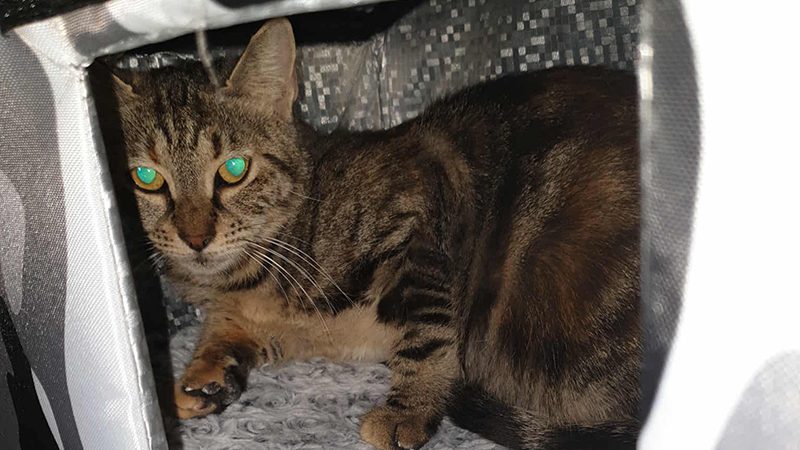
The woman who reached out to us didn’t know what else to do. For weeks, she had been watching them. A small brown cat and her two tiny kittens were surviving in the grubby, desolate gap between apartment buildings, where no one claimed responsibility for their existence.
Each day, she brought what food she could, watching as winter crept closer with its promise of frost and snow. Each night, she worried whether they would still be there in the morning.
When she finally contacted us, her message was simple but weighted with urgency: “I don’t know what to do with them. The cold season will surely mean the end for all of them.”
She was right, of course. The streets show no mercy to small cats when winter arrives. But winter would have been only one of many dangers. Traffic, disease, predators, starvation – the threats are endless for animals unlucky enough to be born or abandoned in the narrow spaces between buildings, where they exist as nobody’s problem.
A Fragile Agreement
We faced our own impossible mathematics. Our shelter was already beyond capacity. There wasn’t space for even a needle, as we say, let alone three more cats. But turning away wasn’t an option either. So, we proposed an agreement: we would provide all the medical care this little family needed, but they would need to remain in foster care with the woman who had contacted us.
It was a fragile arrangement, dependent on trust and commitment from both sides. Fortunately, it held.
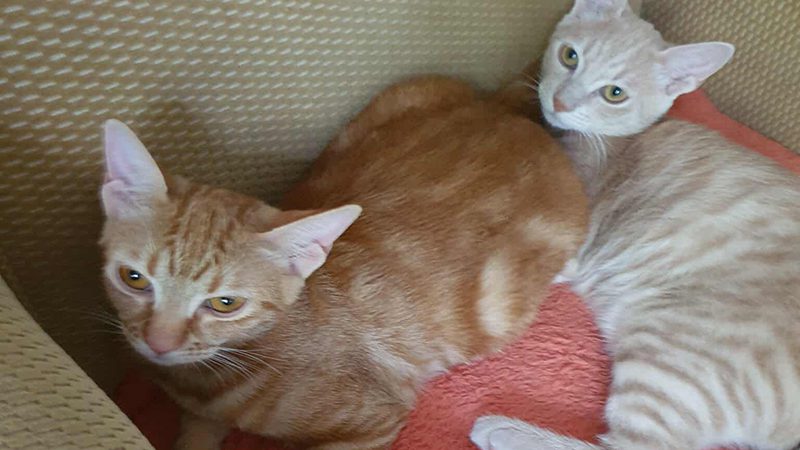
The mother cat, who got named Brownie, arrived with her two kittens, a boy and a girl who would soon be called Mic and Gina. At first glance, they seemed like any other street cats: thin, wary, and carrying that particular tension that comes from constant vigilance. But of course, perfectly healthy cats straight from the street are rare. Very rare.
Peeling Back the Layers
The first veterinary consultation revealed what we had expected: respiratory virus symptoms in all three, accompanied by the usual parasites that plague street cats. They needed deworming, FIV/FeLV testing, triple viral testing; the standard protocol that helps us understand what we’re really dealing with.
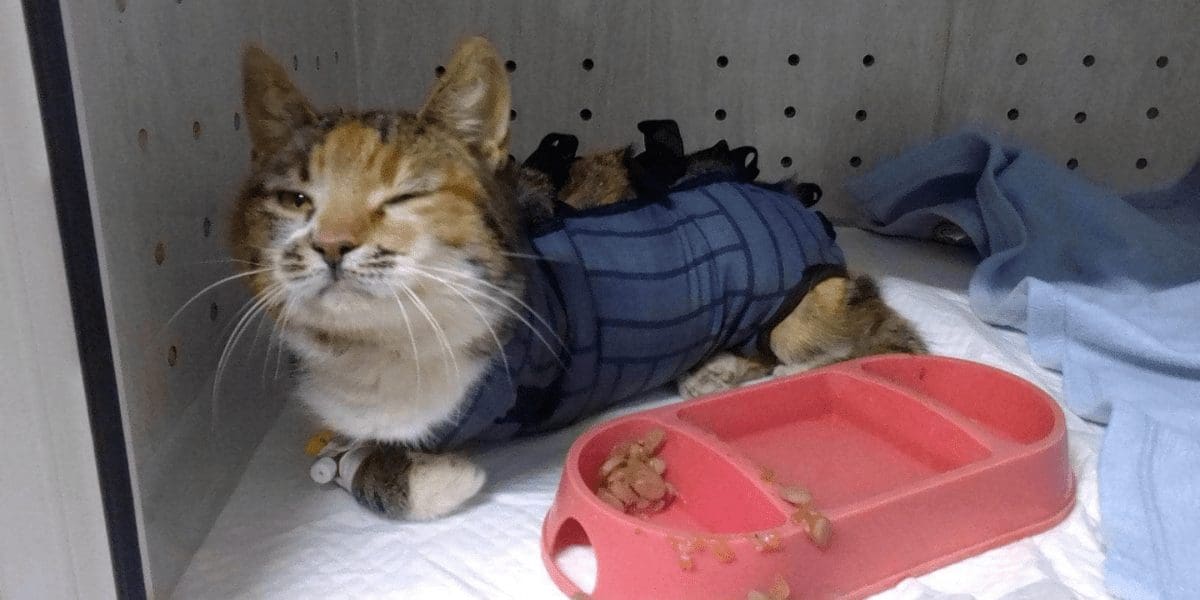
Up to this point, nothing was particularly unusual. They all received their initial treatments. But Mum Brownie’s overall condition was concerning enough to the veterinarians that they recommended she stay hospitalised. It wasn’t just one thing – it was the cumulative weight of everything she had endured. Her body told the story of her life on the streets and motherhood in ways that broke our hearts.
There was another challenge, too: Brownie was terrified. This wasn’t a cat who allowed herself to be handled, or even touched. Years of survival had taught her that humans meant danger, and she wasn’t ready to unlearn that lesson. We understood, though. We know that what these cats need most isn’t just food and medicine. It’s the chance to finally feel the safety of a home, hear a gentle voice, and see a look that shows something other than contempt or threat.
The Discovery
The truly frightening moment came during Brownie’s spay surgery. Under sedation, she could finally be properly examined, and that’s when the veterinarian discovered something that made everyone’s breath catch – a growth under her tongue.
The possibilities raced through our minds, most of them dark. There was a high chance this could be a tumor, potentially malignant cancer. For a street cat who had already survived so much, the cruelty of this discovery felt overwhelming.
Tissue samples were taken immediately and sent to the laboratory for histopathological analysis. Then came the waiting. Two weeks that felt like months, where every possible outcome played through our minds. Brownie, of course, knew nothing of our anxiety. She simply continued being herself: frightened, defensive, but fighting to survive in the only way she knew how.
The Weight of Relief
When the results finally arrived, we felt a wave of relief so profound it left us hi-fiving and grateful all day. The growth was not neoplastic. Not cancer. Brownie had been lucky once again.
But luck is relative, and the news wasn’t entirely good. The laboratory suggested it was an autoimmune reaction that had led to the formation of an oral pyogenic granuloma, also called a hemangiomatous granuloma. It was a mouthful of medical terminology that essentially meant Brownie’s own immune system had turned against her, creating this problematic growth.
The recommended treatment was surgical removal, but when the veterinarians assessed the location, they delivered more difficult news. The growth was positioned in such a way that removing it with clean margins would be nearly impossible without risking damage to the tongue’s supporting structure. In their words, attempting surgery could literally cause her tongue to tear.
No one wanted to take that risk.
Instead, following the doctors’ advice, we chose a different path: medium to long-term corticosteroid treatment. It wasn’t our first choice. Corticosteroids have their own complications, but in this case, they offered the best chance to reduce the lesion’s size and keep it under control. The veterinarians also mentioned the possibility of laser therapy, which might help. It was something we would evaluate once Brownie was more stable and settled.
The Long Road of Small Victories
With her immediate medical crisis addressed, Brownie was finally discharged and reunited with her kittens in foster care. Watching them together was like witnessing a small miracle. Despite everything she had been through – the streets, the illness, the hospitalisation, the fear – Brownie remained devoted to her Mic and Gina. Her maternal instinct had survived when so many other things had been worn away.
The kittens themselves were facing their own battles. They needed to complete their vaccination course, but first they had to overcome a persistent combination of herpesvirus, stubborn parasites, and Giardia. It was another reminder of just how much street cats carry – layers upon layers of illness and infection, each needing its own treatment, its own timeline.
Mic, despite his name meaning “Small” in Romanian, was already showing signs that he wouldn’t stay small for long. His foster mother joked that he would grow into a “big Small,” and watching his appetite and energy, we believed it. Gina was more reserved, but she, too, was gaining strength daily.
And Brownie? Slowly, cautiously, she was beginning to change.
She still wouldn’t let herself be touched. That bridge was still too far to cross. But she had started coming out of her hiding spots when her foster mother was in the room. She showed herself, watched from a distance, and most encouragingly, she had developed what her foster mother called a “glorious appetite.” This wasn’t just good for Brownie’s recovery; it was the key to getting her medication into her, hidden in the food she now eagerly consumed.
These were small victories, perhaps, but in the context of a cat who had spent her entire life frightened and defensive, each one represented a monumental shift. The fact that she felt safe enough to emerge, to eat openly, to exist in the presence of a human without cowering; these were transformations worth celebrating.
What Street Life Leaves Behind
Brownie’s story illustrates something we see repeatedly in our work: the sheer scale of issues that stray animals must navigate just to survive. Across Romania, thousands upon thousands of cats and dogs live this same precarious existence, invisible to most people who pass them daily. It’s never just one thing. It’s always a cascade of interconnected problems, each one making the others worse.
A respiratory virus weakens the immune system, making cats more susceptible to parasites. Parasites drain nutrients that should be used to fight infections. Constant stress from living on the streets triggers autoimmune responses like Brownie’s. The lack of proper nutrition means wounds don’t heal, illnesses linger, and bodies wear out far too soon. And underlying it all is the psychological trauma—the fear, the constant vigilance, the learned mistrust of humans who might kick or throw things or chase them away.
When we take in a street cat, we’re not just treating one problem. We’re unravelling years of accumulated damage, addressing layers of need that go far beyond the obvious. It requires patience, resources, expertise, and time; so much time. There are no quick fixes for animals like Brownie. The veterinary consultations, the laboratory tests, the medications, the follow-up care, and the foster home where she can finally rest. All of these pieces must come together to give her a real chance at recovery.
This is only possible because of the compassion of people who understand that every life matters, even the small brown cat living between apartment buildings. The supporters who believe, as we do, that no animal should have to face the accumulated weight of street life alone. Their generosity transforms what would be an impossible task into something achievable, one cat at a time.
A Life Worth Living
Now, settled in foster care with her kittens safe beside her, Brownie has something she’s never had before: time. Time to heal. Time to learn that not all humans mean harm. Time to discover that the world can offer more than hunger, cold, and fear.
Her kittens, Mic and Gina, will have an even better gift—they’ll grow up never knowing the full harshness their mother endured. They’ll learn early that humans can be kind, that food comes regularly, and that warmth is constant. When they’re ready, we hope to find them families as wonderful as they are. And perhaps, with more time and patience, we’ll be able to set a similar goal for Brownie.
For now, we’re taking every small victory as it comes. Brownie emerges from her hiding spot more and more often to watch her foster mother. The way she runs to her food bowl, no longer cautious about showing hunger. The fact that she and her babies are safe, receiving the medical care they need, and knowing something other than survival mode.
Their lives are completely changed now. This is what life should be. Not just endurance, but something truly worth living. A mother cat who can raise her kittens without constant fear. Kittens who can play and grow without fighting for every meal. Small moments of peace that, to them, must feel like miracles.
In the photos from their foster home, you can see the transformation beginning. Brownie’s eyes, while still wary, have lost some of their desperate edge. The kittens tumble over each other with the careless joy of children who feel safe. And in those images, in those small daily victories, we see why this work matters, why people like you choose to care about animals they’ve never met, living in places they may never visit.
Because every cat like Brownie carries the weight of the streets with them. Every mother fighting to keep her babies alive deserves the chance to finally rest. And every small life saved reminds us that compassion, patience, and refusing to give up can truly change everything.
Brownie’s journey is far from over, but she’s no longer walking it alone. She has her foster mother’s quiet presence, her kittens’ warmth beside her, and the support of people who believe her life has value. That combination of individual dedication and collective compassion makes stories like Brownie’s possible. It’s what allows us to say yes when someone reaches out about a frightened cat and her babies facing winter. It’s what enables us to provide weeks of hospitalisation, expensive diagnostic tests, ongoing medication, and the patience required to help a traumatised animal learn to trust again.
And that, perhaps, is how people coming together to help makes all the difference.
Do you want to hear more news about our stories?
Related content
Supporting Rescue Dogs Through Donations When Adoption Is Not an Option
And as the rescue van took the suffering dog away, the people in town sighed with relief, thinking the poor soul was now safe and off to live a better life. The End Cute, but wrong! As an organization dedicated to bettering the lives of dogs and animals in general, ROLDA’s mission is to get ... The Things We Carry: Brownie’s Journey from the Streets to Safety
Why Regular Donations Are Essential for Keeping Rescue Shelters Running
What do you think is the most expensive part of running a dog shelter? Some people might think it’s the dramatic animal rescue missions. Others might say it’s the complicated medical procedures needed to put the poor animals back together or even the latest recovery and rehabilitation therapies. Both groups are wrong. The most expensive ... The Things We Carry: Brownie’s Journey from the Streets to Safety
The Life-Changing Impact of Dog Adoption on Both Pets and Their New Families
Who benefits more from a shelter adoption? The dog that has just received a chance at the perfect life in a loving home with a caring family? Or the family that has just become whole with the addition of the cutest, most loyal, and most lovable member? Both sides will. It’s a win-win type of ... The Things We Carry: Brownie’s Journey from the Streets to Safety
Creating Hope for Homeless Dogs: How Every Act of Kindness Makes a Difference
Overwhelmed. This is how animal lovers feel when they see so many struggling animals. Some people try to help, try to save the ones they come across. But once they start seeing the need, they cannot unsee it, and there are always so many animals in distress. Who could ever help them all? That is ... The Things We Carry: Brownie’s Journey from the Streets to Safety
How Shelter Dogs Teach Us the True Meaning of Unconditional Love
Something that will never cease to amaze us in our line of work is how animals that end up in our shelter after having experienced neglect, malnourishment, cruelty, and abandonment at the hands of our fellow men can still wag their tails when they see people. Even we, the rescuers, are sometimes put off by ... The Things We Carry: Brownie’s Journey from the Streets to Safety