non-US support +44 (0)161 531 8801






















Why Does My Dog Lick Their Paws?
Common Causes Every Owner Should Know
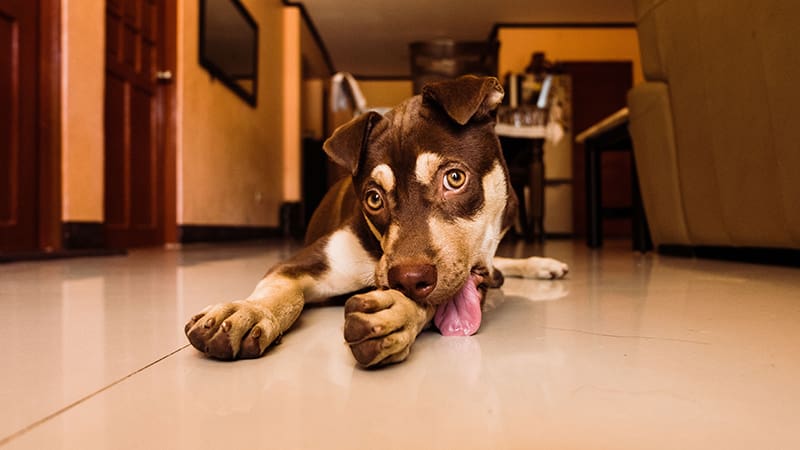
It’s a quiet evening at home, and everybody has found something to do before bedtime. Then you notice your dog focused on licking their paw. You know this is normal, and you’ve seen them do it a couple of times. But could it be happening a little too often?
Whenever this question comes up, vets usually recommend that you don’t panic. The first step in all of these situations is usually observation. Does your dog do this more often all of a sudden? Is it only one paw? Is the licking gentle, or is your dog doing it intensely, as if they’re trying to relieve itching or pain?
A vet visit will likely answer most questions, but it helps to know a few things so you can tell the difference between situations. When is this normal, and when should you react?
Paw Licking as Part of Normal Grooming
There’s probably nothing wrong
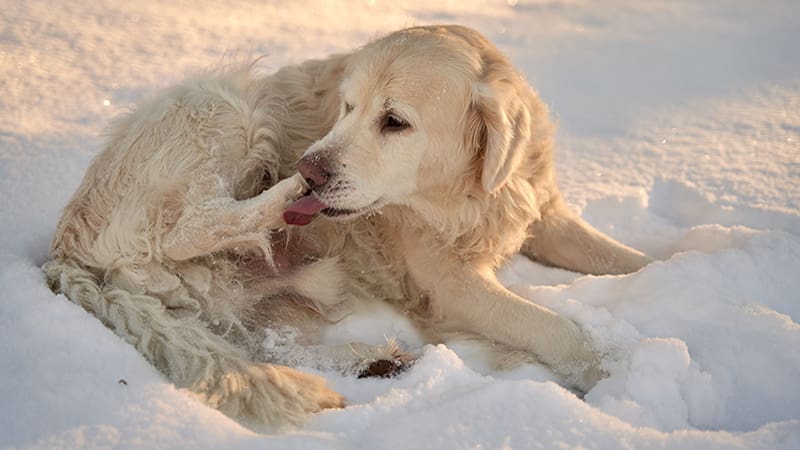
Paw licking is a normal part of a dog’s personal grooming, and it’s usually nothing to worry about. Dogs may also lick their paws as a way to settle down before bed. In many cases, it’s simply a way to clean their paws after a walk or a play session in the grass.
If the licking is gentle and unhurried, and your dog moves from one paw to the other before continuing up the leg, it’s probably nothing to worry about.
When it’s time to start paying attention
It all comes down to frequency and intensity. Normal grooming sessions might end with a few satisfied ‘mlems’ before your dog finally falls asleep. However, if you notice your dog constantly returning to their paws, licking too intensely, chewing on the skin, and focusing on them a little too much, it may be time to step in.
You may be dealing with persistent licking if your dog does this several times a day, interrupts walks or playtime to lick, or repeatedly chews at their paws. If they focus on just one paw, that may be another clue that something is bothering them.
Another reason for concern is if you can’t distract your dog from licking with a walk, playtime, their favorite toy, or even a treat.
What to look for
Gently inspect the paws.
● Look for redness, swelling, bad odor, or any kind of discharge.
● Discoloration or irritated areas may be harder to spot if your dog keeps the skin constantly damp. So, be gentle but thorough during your inspection.
● Thickened skin on the paw can be a sign that repeated licking is starting to damage the skin.
● Look at the fur around the paws. Constant licking and the moisture it creates can irritate the skin and contribute to hair loss. In some cases, the fur around the paw can change color.
If the paw licking is accompanied by limping, or your dog avoids putting weight on the leg, check for cuts, wounds, and insect stings. If you can’t see an obvious injury, joint pain could also be a possibility.
Common Causes of Excessive Licking
Even if your dog’s licking is excessive and not just normal grooming, don’t panic. Some causes are easy to address, while others may need medical attention. Either way, the first step is to work out what’s causing the licking.
1. Itchy paws
Your dog could be licking their paws to relieve itching. Allergies are one possible cause.
If your dog seems itchy on all four paws, check for swelling and think about possible triggers. These could include food or environmental allergens, or contact with an irritant – for example, if your dog has walked through an area treated with chemicals.
If allergies are suspected, your vet will look for the causes and try to match the treatment to them. Think back to when the excessive licking started: have there been any changes in your dog’s diet? Have they eaten something off the ground, or walked through a chemically treated area?
Your dog may focus on just one paw, licking it repeatedly and chewing between their toes. Check for ticks, fleas, or other signs of irritation. Ticks can attach between the toes, where they may be difficult to spot. They can also transmit infections.
Parasites can cause itching directly, and some can also trigger allergic reactions that worsen the itching.
2. Pain caused by minor injuries
If your dog is in pain, you may notice them protecting the affected leg or avoiding putting weight on it. They might even pull away when you try to look, or lick the paw while you inspect it.
It could be something as simple as a small object stuck between the toes that you can safely remove. Also, check for visible wounds, cuts, and even an insect sting. Look closely, but don’t try to dig out anything embedded in the skin. A retained stinger or other foreign object can cause irritation or an infection, so contact your vet if you can’t remove it easily.
3. Joint pain
If your dog avoids putting weight on a leg but you can’t see an obvious wound or injury, joint pain may be the cause. Joint problems become more common as dogs get older.
In these cases, you might notice your dog focusing on one paw and leg more than the others. The licking may be an instinctive response to discomfort, but it won’t address the underlying joint problem. Repeated licking can also irritate the skin, creating another problem on top of the original discomfort.
4. Boredom or anxiety
As with nail-biting in humans, some dogs lick their paws when they’re bored, lonely, or anxious. This form of intensive grooming can be a way for them to self-soothe. While it may seem harmless at first, repeated licking can damage the skin and, in some cases, lead to a condition called lick granuloma (also known as acral lick dermatitis).
Treatment for Excessive Licking
Before recommending treatment, the vet will need to determine what’s causing the excessive licking. This is where you come in: tell your vet how your dog normally behaves and what has changed.
If an allergy is the cause, the veterinarian may prescribe medication, recommend a diet trial, or suggest ways to reduce allergen exposure. That is why identifying the source matters:
● Minor paw injuries may only need local treatment, depending on the type and severity of the injury.
● If parasites are the cause, your vet may recommend adjusting your parasite-prevention routine.
● Arthritis treatment depends on your dog’s condition and may involve medication, lifestyle changes, or other forms of management.
● If boredom is contributing to the behavior, more play, exercise, and mental stimulation may help.
● If anxiety is involved, your dog may need a more targeted approach.
A little paw licking is usually nothing to worry about. But when it becomes frequent, intense, or difficult to interrupt, it’s worth paying attention. Your dog may be trying to tell you something is irritating, hurting, or making them uncomfortable. So take a closer look, track any changes, and don’t hesitate to ask your vet for help. Sometimes, a small change in your dog’s routine is the first clue that something needs attention.
Do you want to hear more news about our stories?
You can unsubscribe from our newsletter at any time. See Privacy Policy
Subscribe footer org
Related content
Dog Dental Care
How to Keep Your Dog’s Teeth and Gums Healthy Some new dog owners may be surprised to learn that they need to include dental care in their dog’s hygiene routine. It’s not that they are oblivious or careless, but more that they expect this to be a problem in their furry friend’s old age. Yet, ... Why Does My Dog Lick Their Paws?
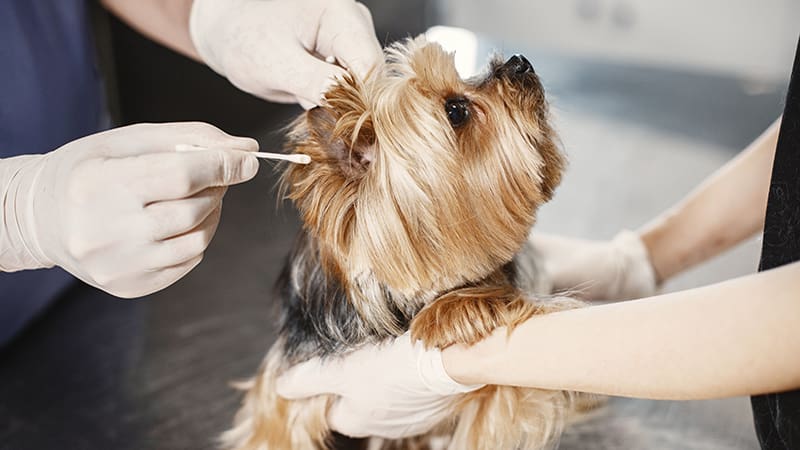
How to Clean Your Dog’s Ears Safely and Know When Something Is Wrong
Keeping your dog’s ears clean is part of the normal hygiene and grooming routine. You may need to do this occasionally to prevent buildup of wax, debris, and dirt. The frequency of these cleanings depends mainly on the dog’s breed and ear shape, as well as their routine and activity level. This means that some ... Why Does My Dog Lick Their Paws?
Why Do Dogs Eat Grass? What Does This Common Behavior Really Mean
Is it a problem, a cry for help, a phase, or a curiosity? Every dog owner has wondered what grass-eating means. And, more importantly, whether they need to intervene or just let their dogs do it and move on. It may put your mind at ease to know this is perfectly normal behavior in healthy ... Why Does My Dog Lick Their Paws?
How Often Should You Bathe Your Dog? A Practical Guide for Every Coat Type
Bath time! Probably one of the more stress-inducing moments for households with pets. Maybe it’s because some dogs feel more comfortable in an icy-cold, dirty puddle than in warm bath water in the safety of their own home, or because their pet parents bathe them too often. Don’t feel bad if you haven’t figured it ... Why Does My Dog Lick Their Paws?
Why Is My Dog Drinking So Much Water? When Thirst Becomes a Warning Sign
‘Didn’t I just fill your water bowl?’ This is how it starts: you notice your dog’s water bowl is often empty. Like any responsible dog owner, you start to wonder whether your dog is drinking more water than usual and whether this should concern you. Before jumping to conclusions, know that there are many reasons ... Why Does My Dog Lick Their Paws?