non-US support +44 (0)161 531 8801
























How to Help Your Dog Overcome Separation Anxiety
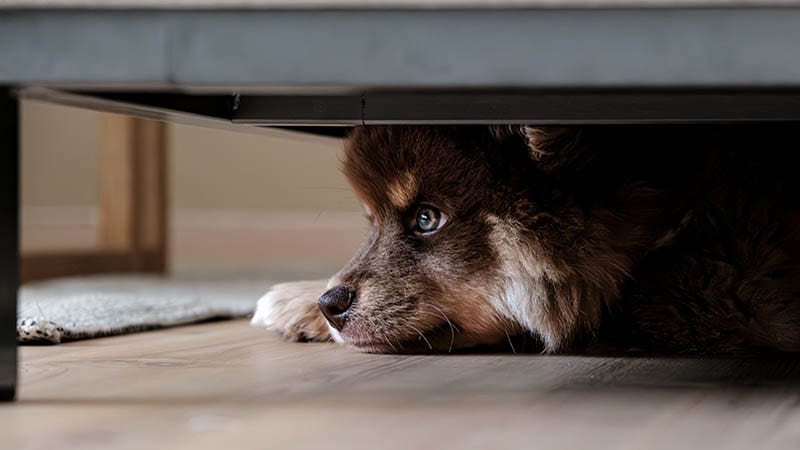
It’s normal for a dog to have separation anxiety whenever you leave your home, especially in the beginning. If it’s right after you’ve spent time together getting comfortable with one another, and you suddenly go, leaving them home alone, it might not feel right. And you can understand that.
There comes a point when your understanding reaches its limit, and you hope your dog will move on from the issue; otherwise, it becomes hard to imagine your future together. So, it’s important for your dog to learn to be alone, at least during errands and ideally when you’re away for work.
It’s ok to give them time and space, be accommodating, understand, and be available. Still, it’s also advisable that, at some point, you start moving toward a more healed version of your dynamic, one in which your dog is comfortable being by himself and you can comfortably do your own things.
All dogs can get separation anxiety, but it is more common with adopted shelter dogs, mainly because they have probably been abandoned in the past and waited for someone who never came back for them. This type of betrayal can leave deep scars, and it is to be expected that once a dog forms an attachment to another person, he will desperately cling to them and feel distressed when they are not around.
Is this permanent? It could be if you handle things poorly from the very beginning and don’t understand that this is something you both need to work through. Here are some valuable tips for handling things from the start to help grow your dog’s confidence and independence.
Step 1 – Recognizing you are dealing with separation anxiety
You just brought your dog home, and after getting used to one another and giving her lots of attention, you are ready to step back into your routine, which may include time away from home for work, shopping, going to the gym, or eating out.
When you come back home, you find out from your neighbors that your dog has been barking and howling ever since you left, and you go inside to find the place turned upside down, with pee or poop in the corner (despite having made sure you walked your dog before heading out precisely for that reason).
You can have one of these or all of these, but what matters most is that you understand that they were all powered by the same distressing fear that you left and would never return. This is what separation anxiety looks like. The only variation possible between them is the severity with which it manifests. Based on this, you can determine how much action you need to take and when.
A dog that cannot be left alone at all would be problematic for any owner, including those with a large family and many people who help out. Therefore, the separation anxiety needs to be addressed.
Step 2 – Encouraging your dog to enjoy alone time when you’re at home
Pulling away from your dog in a fit of anger over what he has done to your home is not a good idea. Neither is punishment.
If you think about it from your dog’s perspective, your dog probably thought you had left for good, or that he had been abandoned again. Imagine how distressing it would be for your friend to have to go through that again.
Once you’ve calmed down and maybe cleaned the house, you can reassure your dog that you are not going anywhere if you can help it and that he is once again safe in your company. Don’t create an unsafe space for your dog as punishment. You would be hurting him more than you would want to.
Instead, when everyone is friendly and calm, start teaching your dog how to have soothing alone time while you are still in the house. This way, the dog will have the experience of doing something fun you were not involved in and can turn to that activity when you leave the house.
Toys will usually help with that. But don’t just plop them down by your dog’s side and expect him to know what to do with them right away. Shelter dogs, rescued and abandoned dogs, didn’t have anyone to teach them how to play.
Use puzzle feeders, chew toys, snuffle mats, and treat-dispensing toys. You can play with your dog first until he realizes he doesn’t need you to get the final reward. The game should be fun on its own, for the game or for the treat. After that, encourage your dog to play more often while you move away. The first step of this is achieved when he can calmly be in another room, playing with his toys.
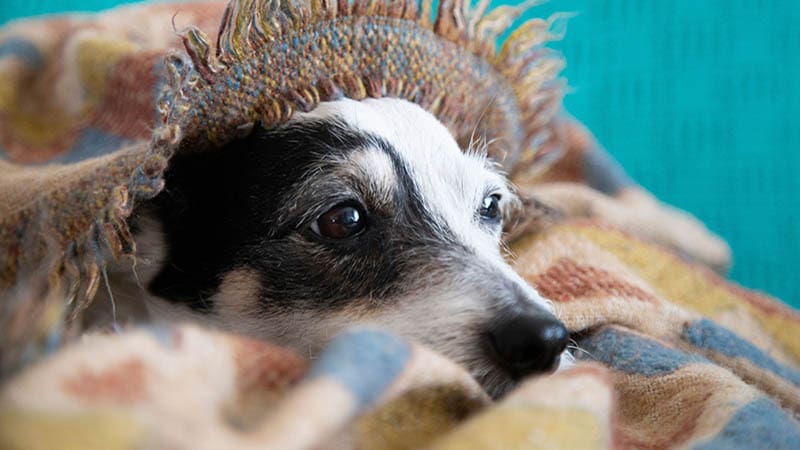
It also helps to create a special and cozy space for your dog, one that feels very nice and personal. If you have a blanket or a pillow they prefer, place it there. They probably love it because it smells like you.
When you are home, take time to spend with your dog, time you can comfortably include in your routine and be consistent with. Afterward, you can encourage him to spend time with his toys or in his cozy spot.
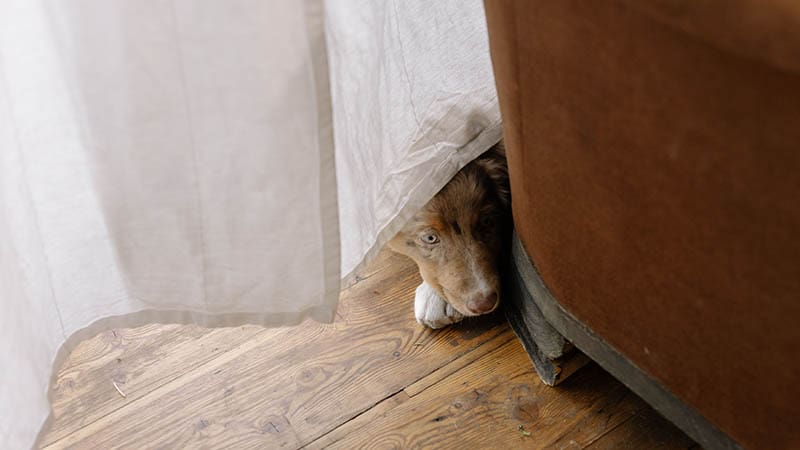
Step 3 – Baby steps to being alone
Desensitization training is essential in cases like this, as it helps your dog become comfortable with something he would otherwise find uncomfortable.
With separation anxiety, the process starts with being out of the house for very brief intervals. What matters most is that your dog sees you returning every time. It is not necessarily the being alone part that troubles him, but the part where he is afraid you might never return. Seeing you come back again and again rewires the brain, allowing him to perceive a reality different from what he used to know.
Once your dog learns that you don’t disappear when you leave the house, it’s time to increase the time spent on the other side of the door. Just don’t go from 2 minutes to 2 hours right away. Do it slowly so that the difference is not perceived as a shock. From 5 to 10 minutes, from 10 to 20, and so on.
It might sound like this could take a lot of time, when in fact it is an investment in your dog’s mental rehabilitation and in your own home dynamics. Also, the slower you do it at first and still register progress, the better the overall results.
When to seek specialized help
If you have completed these three steps in the correct order, without rushing through them, without punishment, and without withdrawing affection, and yet your dog’s behavior keeps worsening, maybe it’s time to consult a specialist.
Underneath the separation anxiety, there could be something else, something triggered by the same thing, but something that operates on a different level. There could be other types of trauma. There could be something in your house that scares your dog and causes extreme reactions when left alone.
What to never do when dealing with separation anxiety
Anxiety means a difficulty in coping with a specific situation. In this case, it’s about your dog being separated from you for fear of abandonment or loss.
Under no circumstances should you force your dog to overcome his anxiety by leaving him alone for hours on end, hoping that he will eventually get over it. This will only worsen its condition and give you more to fix in the end.
Once you start the process, take baby steps and only move forward when you notice your dog is ready to move with you. Even if it’s a baby step, you are not achieving anything by forcing results unless there is willingness on your dog’s part. Remember that it will only take too long if you have to keep going back because you rushed through it in the first place.

Do you want to hear more news about our stories?
Related content
Why Is My Dog Drinking So Much Water? When Thirst Becomes a Warning Sign
‘Didn’t I just fill your water bowl?’ This is how it starts: you notice your dog’s water bowl is often empty. Like any responsible dog owner, you start to wonder whether your dog is drinking more water than usual and whether this should concern you. Before jumping to conclusions, know that there are many reasons ... How to Help Your Dog Overcome Separation Anxiety
Why Legacy Donations Can Create a Brighter Future for Shelter Dogs
Every donation we receive is an act of compassion toward our dogs. We are grateful for each one and for every person who wants to help us change the story for thousands of dogs. And if donating makes you feel happy for having contributed and become part of the story, know that there is a ... How to Help Your Dog Overcome Separation Anxiety
How Adoption Stories Inspire More People to Help Animals in Need
One of our favorite online trends is the posting of pictures with happy dogs and their new families, with those big ‘ADOPTED’ signs! And it’s hard not to share in the enthusiasm. The adoptive family took their time setting things up; they got the floof ready, bathed, brushed, and smelling like a million bucks. And ... How to Help Your Dog Overcome Separation Anxiety
How Sponsoring a Shelter Dog Can Change a Life Before Adoption
Adopting a shelter dog is the most beautiful act of kindness people could ever do in their lives. It is a gesture in which they take in a soul that was once abandoned and give it a home and a purpose. And then, they get to watch it thrive, and their lives grow richer and ... How to Help Your Dog Overcome Separation Anxiety
Supporting Rescue Dogs Through Donations When Adoption Is Not an Option
And as the rescue van took the suffering dog away, the people in town sighed with relief, thinking the poor soul was now safe and off to live a better life. The End Cute, but wrong! As an organization dedicated to bettering the lives of dogs and animals in general, ROLDA’s mission is to get ... How to Help Your Dog Overcome Separation Anxiety