non-US support +44 (0)161 531 8801


























Essential Training Tips for Your Newly Adopted Dog

What can be more beautiful than adopting a dog? Though it’s an act of love, it can most certainly be a significant adjustment to both of your daily routines. Therefore, no matter how accommodating you want to be with your new friend, do note that laying down some rules and gently training him are good recommendations that will make both your lives better.
As a new pet owner, your life will change and revolve around meeting the needs of your dog, at least in the beginning. But more than you, your dog will need structure and routine to help him settle in, as well as consistency and predictability to help him thrive.
We refer to it as training the dog, but it’s more about helping both the dog and the owner learn to coexist. It’s not focused on obedience but on building trust and connection.
Create a Safe Space for Your Dog
The first few days your dog spends at home are for observation and adjustment to the new environment, new people, and new lifestyle. Avoid starting with strict commands right away and refrain from being forceful. Allowing a few days for your dog to settle in will not negatively affect your future training efforts.
These days are for exploring and gently introducing a schedule you can both get on board with. Let your dog study your routine first, see how it fits in your life, and make a steady feeding, sleep, walk, and playtime schedule.
Also, it would be best to avoid having too many people over at this time.
Your Presence and Predictable Bonding Time
The best way to train your dog is by establishing trust first. A calm tone and assertive body language will get you a long way, much better than yelling or speaking to your dog in an angry or commanding tone, even when he gets a couple of things wrong the first time around.
Establishing a bond before you start training will make your dog more open to the process, as he will trust you and willingly follow your instructions.
Training Basics
Name Recognition
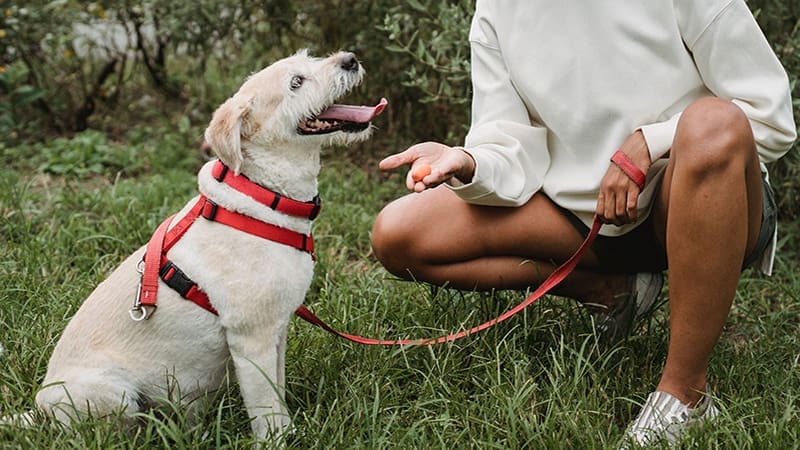
This is the first thing to practice, and if you do it right, your dog will learn its own name in those first days of ‘orientation’. If the connection between the name and your dog has not been made clear to him, use treats and gentle praise every time he responds to it. This type of association works great for canines.
First Commands
The main things your dog must know are come, stay, sit, leave it, and down. These are by far the most-used commands, and it’s ok to insist on whichever your dog is struggling with. The best way to handle it is to keep training sessions to no more than 10 minutes, repeat them often, and be consistent.
Consistency is key. Let’s take the down command, for example. If you tell the dog to get down after he jumps on a neighbor to greet him, and then skip it the next couple of times, don’t be surprised if your dog gets confused. Dogs understand from clear examples and repetition. If you create exceptions, even the smartest dog will get things mixed up.
Be Calm and Use Only Positive Reinforcement
Reward good behavior with treats, praise, and play. As much as things can get frustrating at times, abstain from using punishments as a form of training. You might get the opposite effect: creating fear and confusion.
House Training
The best way to do this is to take the dog out regularly, after meals, naps, and play, and praise and give treats when it goes. Soon, a connection will be made between the two. Also, try not to get angry when the dog has accidents until this part of the training is done.
Crate Training
To help your dog comfortably stay inside the crate, introduce him gradually and ensure he doesn’t associate the crate with punishment. Avoid scolding or sending your dog into the crate angrily, as the confined space might be perceived as punishment.
Give treats whenever your dog successfully spends time inside, and gradually increase the duration. Also, make sure not to make crate time longer than necessary. Remember, in some instances, it is a safe space to use, not an all-time thing.
Walking and Accepting the Leash
This could be a challenge at first, but you can both do it. The key is to do things gradually, create opportunities for small victories, give lots of praise, and work from there. Dogs are very malleable.
Introduce the leash slowly. If you’re unaware of your dog’s history, make sure this item isn’t a trigger item. Some dogs, while out in the streets, have been beaten with various objects like sticks, walking canes, umbrellas, or belts. Others may have been chained.
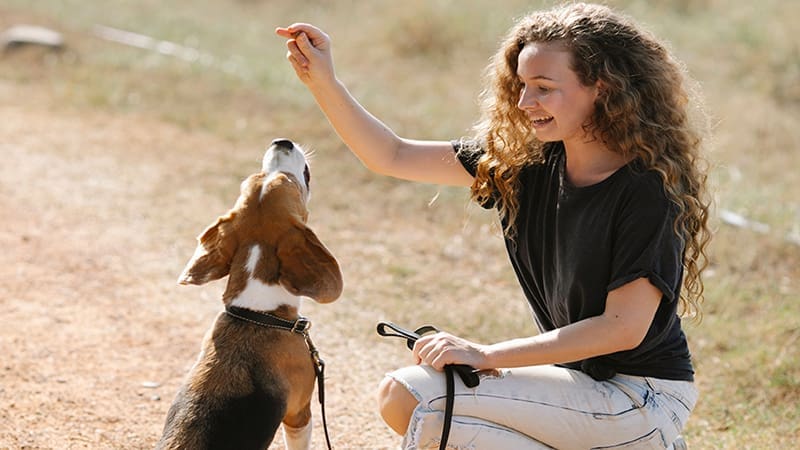
When introducing the leash, test the waters first to see how your dog reacts. If he flinches or pulls away, you need to break down your actions into even smaller steps. Leave the leash at hand so your dog becomes comfortable with it. Slowly touch or pet your dog while holding him, so he understands that nothing bad happens when you bring the leash close.
When your new friend is comfortable enough, attach the leash to his collar and give praise and treats without pulling on it. Then take it off, and do it again later, increasing the time spent with the leash attached to the collar. When you are confident your dog is ok with it, take the leash and try to lead him gently around the room.
Small steps and short training sessions will be enough. Don’t insist if you see signs of frustration or fear. Stop and try again later.
Once your dog is used to wearing the leash and taking your lead, try it in a quiet, open area outside. This way, there will be no distractions. Increase gradually until your dog learns to walk on a leash anywhere.
Socializing – Meeting New People
All experts recommend pushing visits and house parties to later. Give yourselves the time you need to get used to the new routine. Having people from outside the house will only complicate things and delay your training results.
Once your dog has completed most of his basic training, it’s important to start socializing him. Your friends will come back, and eventually, you’ll have visitors. To integrate your dog into your life, he needs to learn appropriate behavior when guests are present.
Doing it gradually is still the best option, but also check with your dog and make sure you do things at his pace. Start slowly with some of the least triggering friends (some people tend to be more energetic and agitated; therefore, they risk transferring this vibe to a dog that scares easily). Your calmer friends can serve as role models, and you can reward your dog for his good behavior when they are there.
Once he has mastered being around calm people, move on to the more energetic and challenging settings like lively individuals and crowded houses, if that’s something you’d usually do. Leave children last and always keep an eye on them.
Socializing – Meeting New Dogs
It’s best to leave this part for the end, so that in case you need to get your dog to listen to you, there is already good practice in that direction. You don’t want a dog that hasn’t yet mastered the leave it or down command, going crazy in the park, and not coming back when you call it.
Common Challenges In Training Adopted Dogs
A dog’s past experience as a stray can leave lingering fear and anxiety, even in protected environments. While your intentions are good and you want your home to be the safest space for your new friend, their nervous system may not have fully adapted to this reassurance yet
Be patient, give your dog the time and space he needs, and, instead of insisting on working on basic training, work more on your bond. Once strengthened, you will see how much easier everything becomes.
Also, whenever things get too frustrating or you feel like you are running out of options, reach out to the shelter and contact a training professional. They can give you the help you need.

Do you want to hear more news about our stories?
Related content
How Adoption Stories Inspire More People to Help Animals in Need
One of our favorite online trends is the posting of pictures with happy dogs and their new families, with those big ‘ADOPTED’ signs! And it’s hard not to share in the enthusiasm. The adoptive family took their time setting things up; they got the floof ready, bathed, brushed, and smelling like a million bucks. And ... Essential Training Tips for Your Newly Adopted Dog
How Sponsoring a Shelter Dog Can Change a Life Before Adoption
Adopting a shelter dog is the most beautiful act of kindness people could ever do in their lives. It is a gesture in which they take in a soul that was once abandoned and give it a home and a purpose. And then, they get to watch it thrive, and their lives grow richer and ... Essential Training Tips for Your Newly Adopted Dog
Supporting Rescue Dogs Through Donations When Adoption Is Not an Option
And as the rescue van took the suffering dog away, the people in town sighed with relief, thinking the poor soul was now safe and off to live a better life. The End Cute, but wrong! As an organization dedicated to bettering the lives of dogs and animals in general, ROLDA’s mission is to get ... Essential Training Tips for Your Newly Adopted Dog
Why Regular Donations Are Essential for Keeping Rescue Shelters Running
What do you think is the most expensive part of running a dog shelter? Some people might think it’s the dramatic animal rescue missions. Others might say it’s the complicated medical procedures needed to put the poor animals back together or even the latest recovery and rehabilitation therapies. Both groups are wrong. The most expensive ... Essential Training Tips for Your Newly Adopted Dog

The Life-Changing Impact of Dog Adoption on Both Pets and Their New Families
Who benefits more from a shelter adoption? The dog that has just received a chance at the perfect life in a loving home with a caring family? Or the family that has just become whole with the addition of the cutest, most loyal, and most lovable member? Both sides will. It’s a win-win type of ... Essential Training Tips for Your Newly Adopted Dog