non-US support +44 (0)161 531 8801













Chained Heart: The Story of Kiko
Kiko was born a carefree puppy whose eyes shone with curiosity and happiness. As with every innocent soul brought into this world, there is an intuitive compass within us that tells us we cannot navigate this life without guidance in our early years. Perhaps it’s the unique and unbreakable bond we form in our mother’s womb, where we feel safe and nurtured, that we come out with an unquestionable sense of security and comfort—a powerful connection that tells us our mother will always protect us from harm. She will provide us with what we need and teach us to take care of ourselves, so the world cannot hurt us. That’s the way it should be.
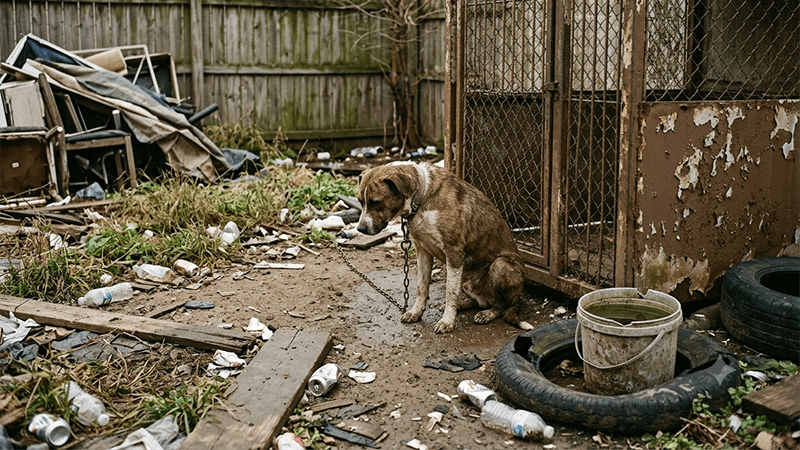
Sadly, Kiko had only a glimpse of this promising life and just a few weeks with his mother. Once he could walk and run, once his vision was fully formed, once he began to appreciate the sunlight, the sky, stars, the fresh air and sound of rainfall, once he grew accustomed to the warmth of his mother’s fur and bosom…once he began to believe life would always be this easy and comfortable…darkness set in. Fate, cruel and indifferent, cast Kiko into a world of neglect and abuse. Torn from his mother, he was chained to a rusty cage in a backyard filled with filth and decay.
If you had found Kiko chained in that backyard, could you have walked away?
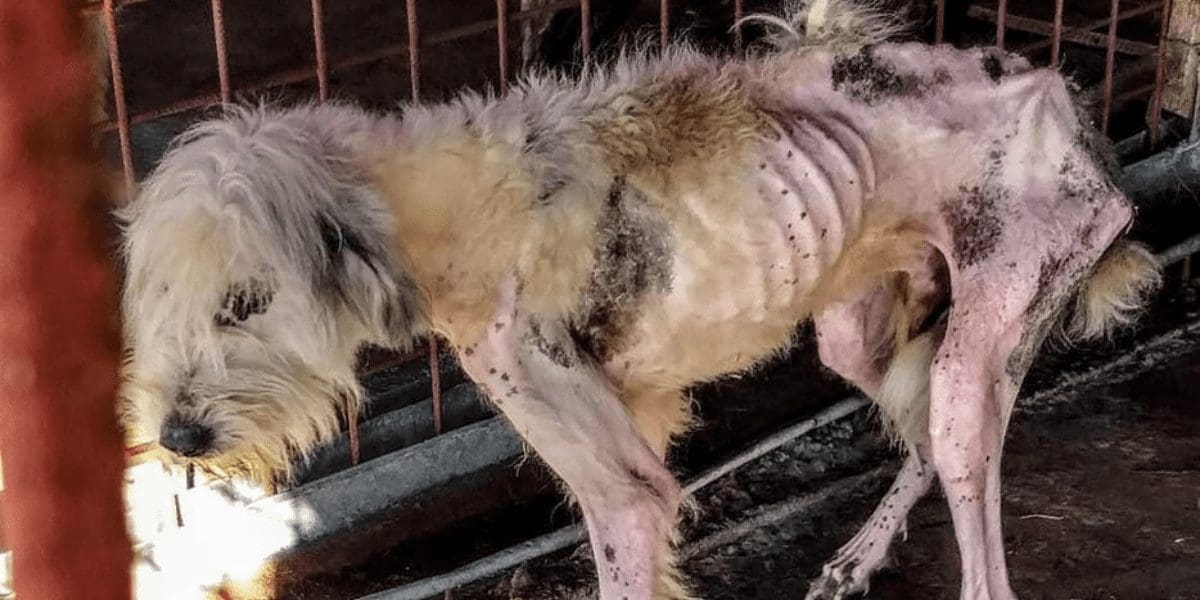
The heavy, rusted chain clamped tightly around his fragile neck shrank Kiko’s world to a few measly steps behind bars, isolated and confined. Days bled into nights, his paws left bloody and sore from his own desperate pacing. His coat became matted and clumped with urine, dirt, and feces. When the rotting stench became too much for his owners, they sprayed him with cold water from afar, his filth left to dry in the cage where he slept. Around him, trash piled up: broken bottles, scrapped metal, old tires… things once useful, now forgotten—just like him.
During intense heat, the cage burned Kiko’s paws, and the chain cinched the fur on his neck. The blistering cold was merciless in winter, his thin fur offering little protection from the biting wind that flowed without mercy. On long, lonely nights, hunger gnawed at his belly while fear consumed his heart. The constant ache in his muscles from the unforgiving chain became a part of him, and the silence of neglect pressed down heavier than any weight.
Kiko’s water bowl was often dry and dirty. His food was tossed at him, stale and crawling with ants, sometimes moldy, sometimes rotten. He vomited often from the rancid food he was fed, and each time he ate his own vomit because he would get whipped if his owners found out. Whenever they came near, he shook with fear.
Sometimes, other dogs would bark in the distance, a reminder of a world Kiko could not reach. He rarely barked because he would be punished for doing so. But when he knew no one was home, he would let out a soft, docile “woof” to see if someone would hear him. Sometimes he would do so just to remember how he sounded, to remind himself he still had a voice, because the only voices he knew were sharp, angry, and distant. He hoped the wind would carry his gentle bark to a kind soul who could rescue him…or at least who could indulge him with a single touch he also longed for—a gesture to prove he wasn’t invisible. But only darkness answered, night after night, leaving him to wonder if anyone would ever save him.
For years, Kiko watched the world from his cage, which he eventually entrusted to keep him safe. He saw birds take flight, squirrels chase the wind, and felt the pulse of life beyond his chain. In his chest, his heart beat with longing—a wild, aching hope for freedom, for kindness, for a day when the chain would snap and he could run into the horizon that seemed peaceful and welcoming. But the days passed by, and yet he waited, his hope not completely gone yet, envisioning himself running to where the land and sky meet, fueled by his dream of being loved. He still believed. Still had hope.
Now at seven years of age, Kiko’s eyes, once beaming with life, grew dull and haunted, showing nothing but the emptiness that kept growing inside him. But a tiny spark refused to die. When the world was quiet, and the moonlight slipped through the cracks, Kiko still dreamt of a better life. A life with a loving family who appreciated him, who valued his unconditional love, who fed him and kept him safe as his mother once did. A family who would finally give him a name…because he’s never had one.
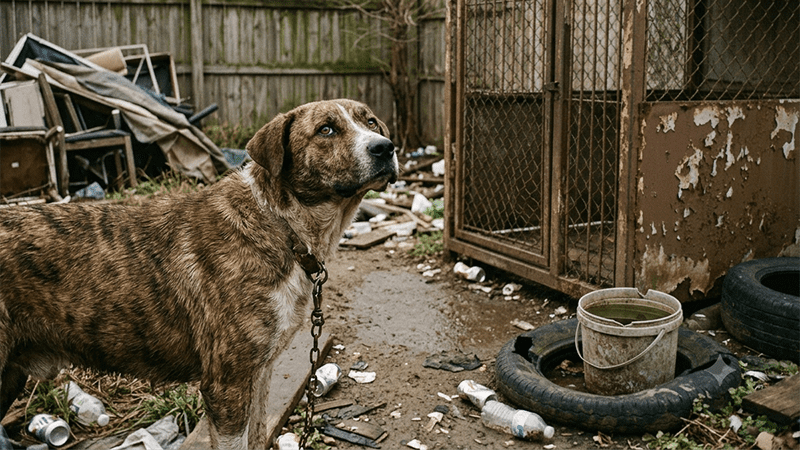
He was never given one.
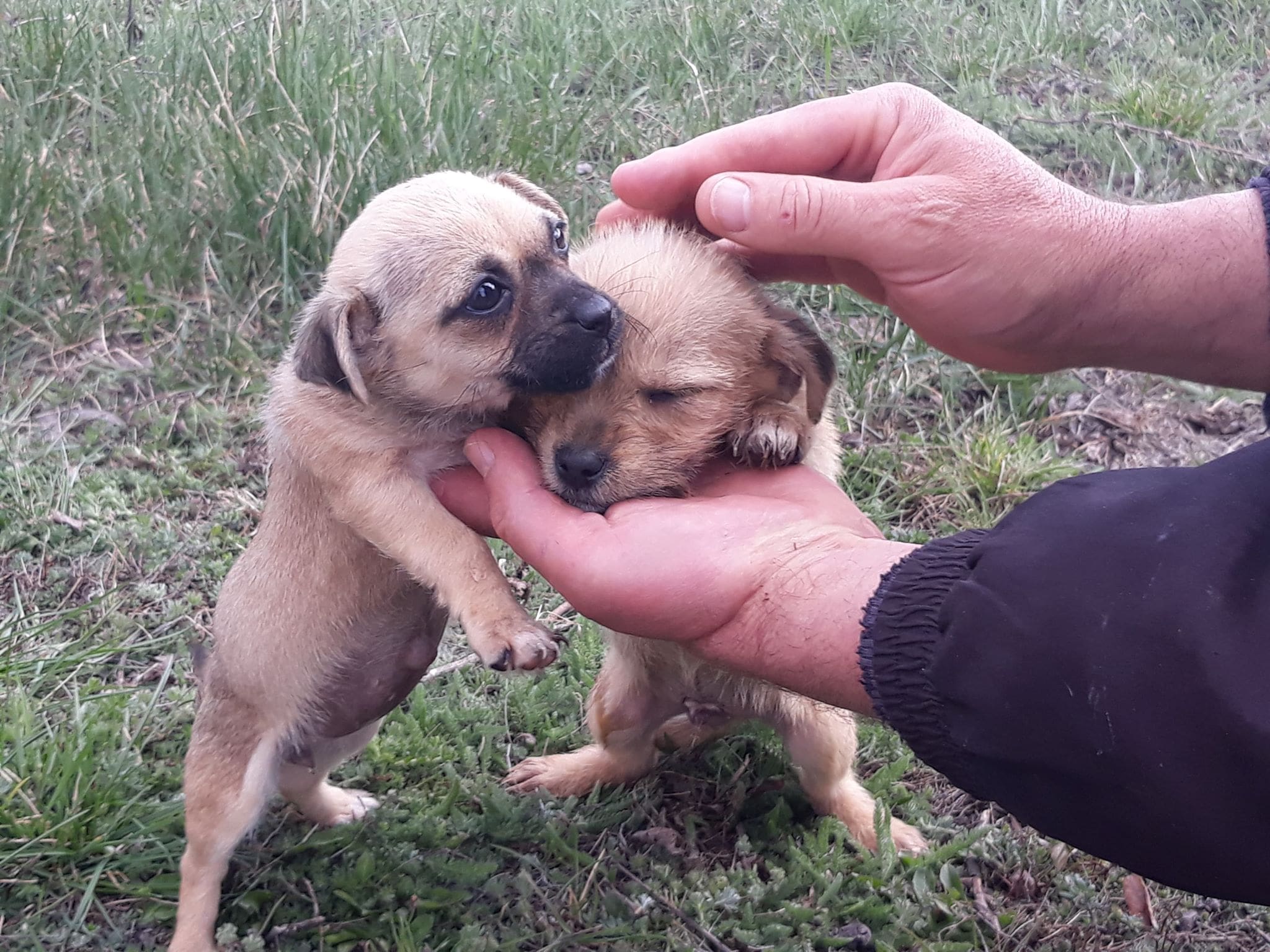
Kiko represents the thousands of dogs in Romania who are chained and caged, neglected and abused. His story is the reality for them all. Male and female, puppies and adults, purchased, stolen, or picked up as strays. Then, confined and regarded as “the dog” or “the mutt” or something far more vulgar. Never named; just called names.
And for what? Why get a dog if you’re only going to keep them locked away? Some say to protect their home or business, others to keep as pets (just not in the house), others say it’s so they don’t run away. Many don’t think it’s cruel, others think they are actually saving them from being in the streets, and, sadly, some just don’t care…they take pleasure in seeing an innocent animal suffer.
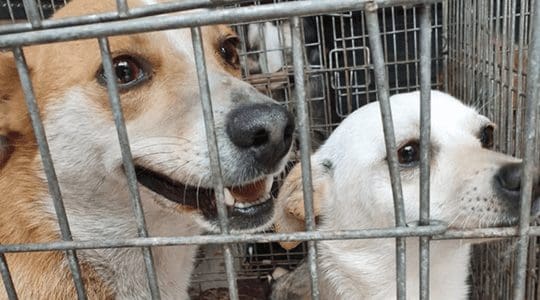
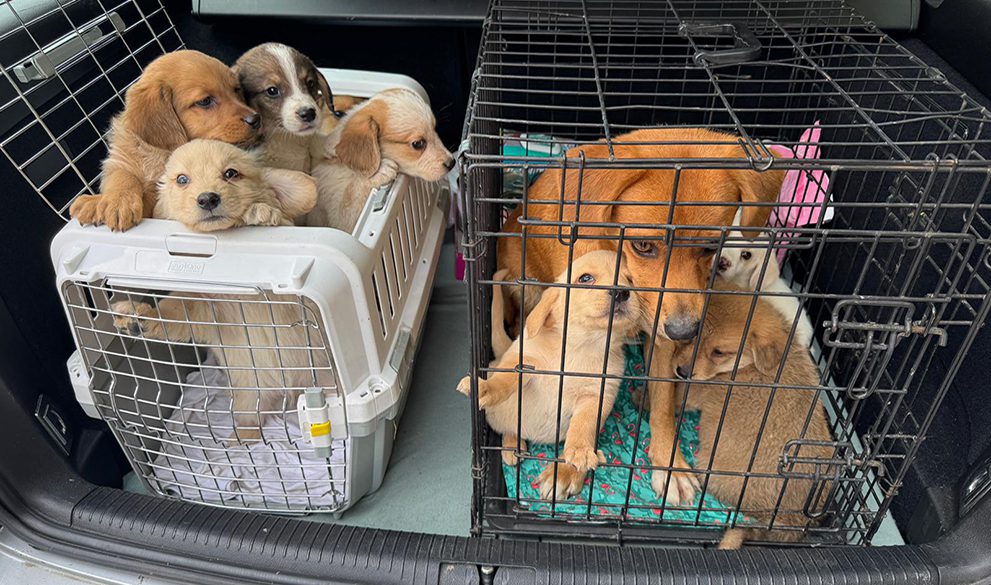
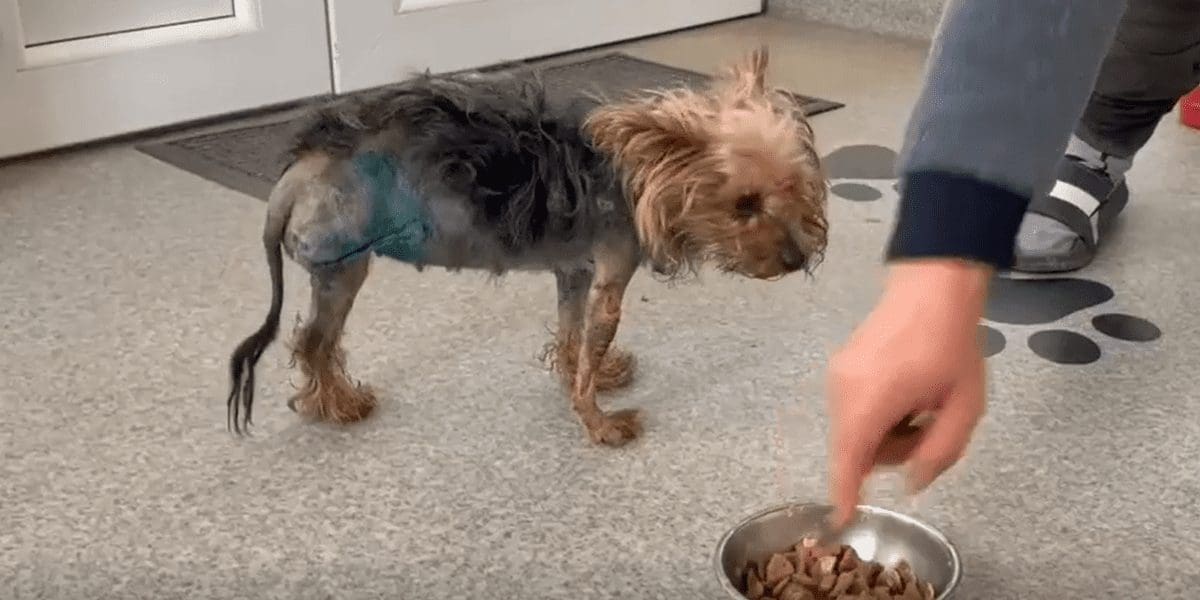
Rescuing dogs like Kiko can be tricky and dangerous. The confrontations with the owners can get intense and complicated—sometimes the law protects their rights, sometimes it’s difficult to prove animal abuse. We have rescued many dogs like Kiko. We have treated the scars on their necks, cleaned the blood from their paws, trimmed and washed their matted fur, fed them through IVs, hospitalized them in urgent care, we have had to teach them to walk again, trust again, eat again…the amount of suffering they’ve gone through will often take years to heal.
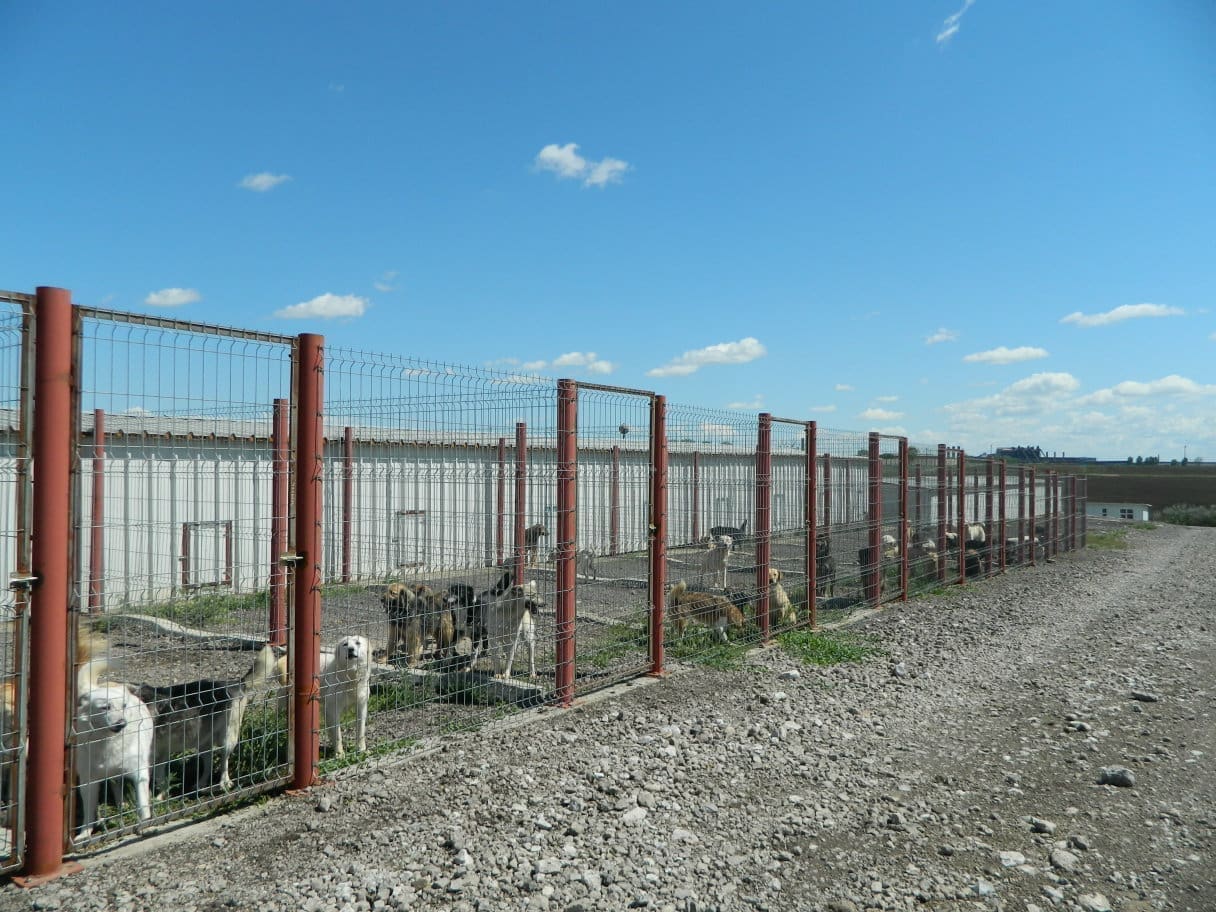
Each time we rescued a dog like Kiko and brought them to our shelter, the last thing we wanted to do was put them in one of our kennels, even though we knew they would be safe and treated with kindness and compassion. How do we explain to them that this kennel is different? That here, they will not be neglected or abused? How do we explain to a rescued stray who was “free” roaming the streets, that they will be better off here in our shelter without the same “freedom” they once had? We can’t, but we hope that in time—with every hearty meal, every bubbly bath, every walk and run—they will understand.
We designed our current shelter to help us save as many dogs as possible without risking overcrowding. Seven hundred dogs running free would be chaos and even dangerous and irresponsible. And while they have many freedoms at ROLDA, we know we can give them more.
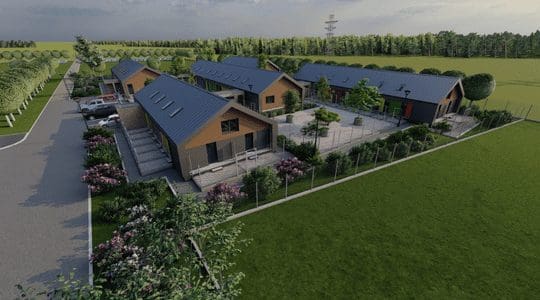
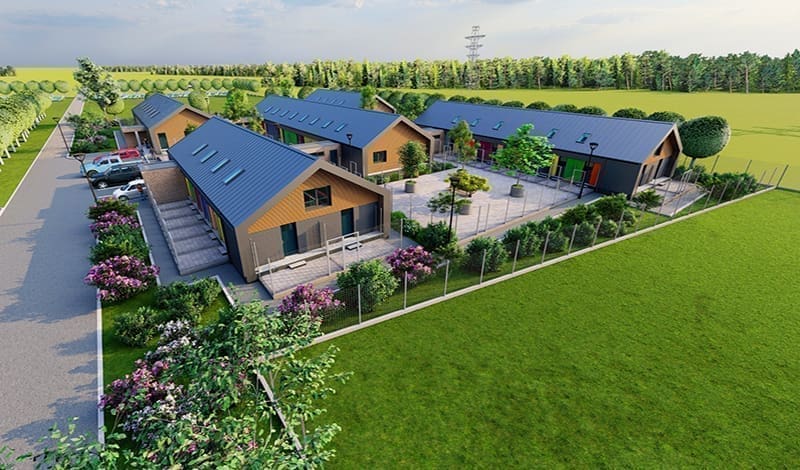
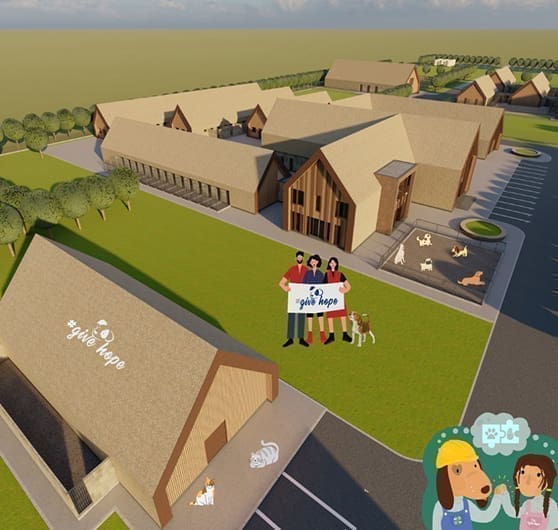
For years, we have been planning a shift to become a cage-free sanctuary while keeping the safety and well-being of our dogs top priority. Now, after years of waiting, we are finally beginning our transformation. At our inaugural shelter, the smaller of the two, is being transformed into Little Haven—the first-ever cage-free animal shelter in Romania. Here, dogs like Kiko can transition into a more liberating, stress-free environment right away, not having to spend a few hours a day in a kennel. This may not be true freedom, but we are committed to helping them realize that they do not belong in a cage or need to be enchained. We will work with them day and night to help them feel they are worthy of love, compassion, and respect.
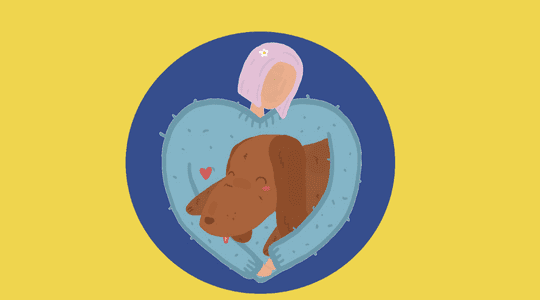
Freedom is not the end of Kiko’s story, but a fragile beginning. The scars on his neck will fade, the feeling of emptiness will begin to fill, and his spirit—once nearly broken—will finally begin to mend. His journey from darkness to light is a testament to resilience, and a reminder that every chained heart is waiting for someone to free it.
Will you help turn fear into safety, hunger into nourishment and loneliness into love?
The name Kiko stands for “joyful child,” “hopeful child,” or “rejoicing child.” He was once full of joy with his mother. He never lost hope after all he endured. Now he can rejoice in being free and safe.
There are thousands of dogs like Kiko in Romania, each enchained and incarcerated, each silently aching and longing for freedom. Your compassion can break those chains. Help us turn their stories of heartbreak into stories of hope.
What if your gift meant one more dog could experience freedom instead of another year on a chain?
With your support, their freedom is possible.
Do you want to hear more news about our stories?
Related content
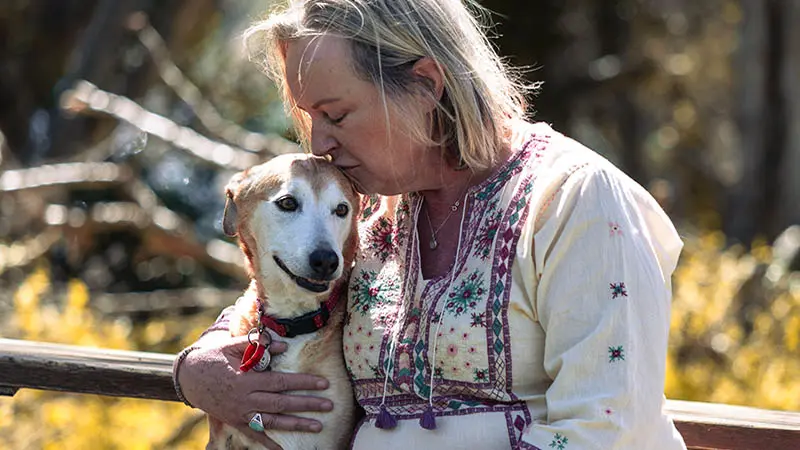
How Adoption Stories Inspire More People to Help Animals in Need
One of our favorite online trends is the posting of pictures with happy dogs and their new families, with those big ‘ADOPTED’ signs! And it’s hard not to share in the enthusiasm. The adoptive family took their time setting things up; they got the floof ready, bathed, brushed, and smelling like a million bucks. And ... Chained Heart: The Story of Kiko
How Sponsoring a Shelter Dog Can Change a Life Before Adoption
Adopting a shelter dog is the most beautiful act of kindness people could ever do in their lives. It is a gesture in which they take in a soul that was once abandoned and give it a home and a purpose. And then, they get to watch it thrive, and their lives grow richer and ... Chained Heart: The Story of Kiko
Supporting Rescue Dogs Through Donations When Adoption Is Not an Option
And as the rescue van took the suffering dog away, the people in town sighed with relief, thinking the poor soul was now safe and off to live a better life. The End Cute, but wrong! As an organization dedicated to bettering the lives of dogs and animals in general, ROLDA’s mission is to get ... Chained Heart: The Story of Kiko
Why Regular Donations Are Essential for Keeping Rescue Shelters Running
What do you think is the most expensive part of running a dog shelter? Some people might think it’s the dramatic animal rescue missions. Others might say it’s the complicated medical procedures needed to put the poor animals back together or even the latest recovery and rehabilitation therapies. Both groups are wrong. The most expensive ... Chained Heart: The Story of Kiko
The Life-Changing Impact of Dog Adoption on Both Pets and Their New Families
Who benefits more from a shelter adoption? The dog that has just received a chance at the perfect life in a loving home with a caring family? Or the family that has just become whole with the addition of the cutest, most loyal, and most lovable member? Both sides will. It’s a win-win type of ... Chained Heart: The Story of Kiko