non-US support +44 (0)161 531 8801




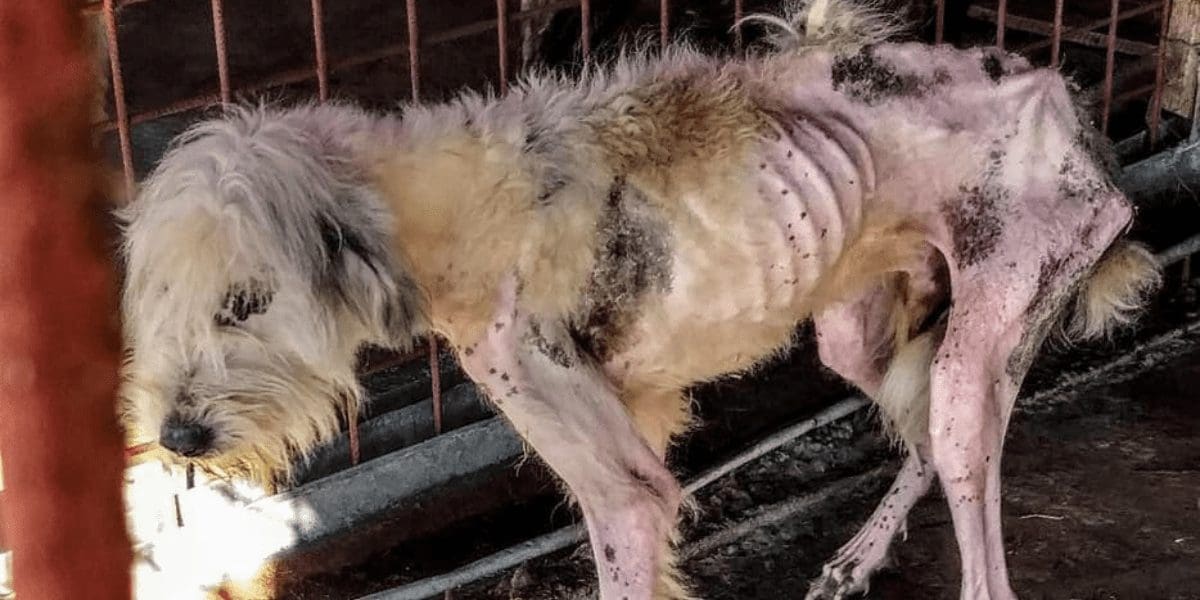


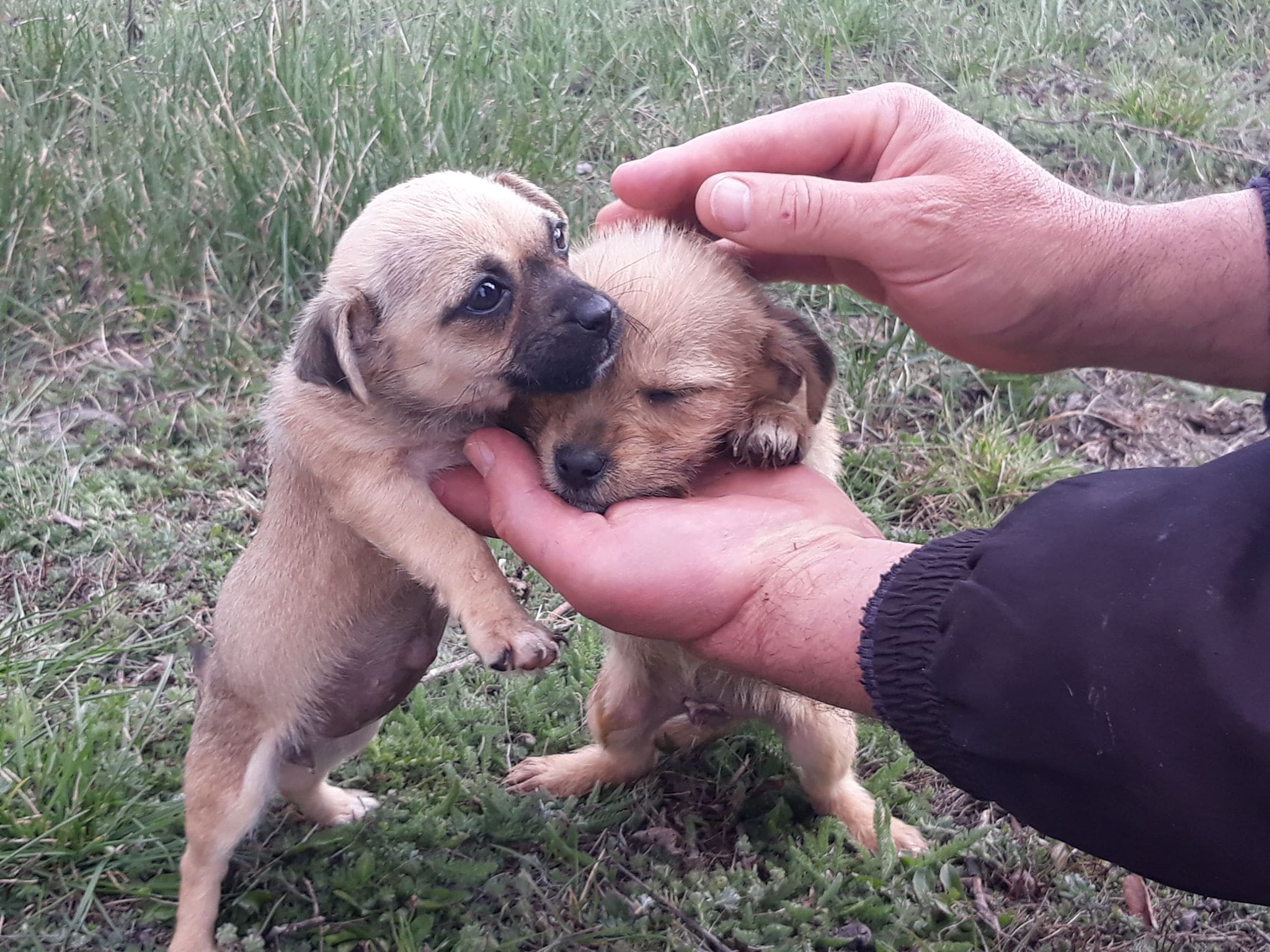
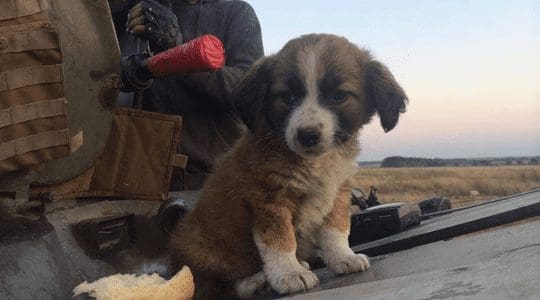






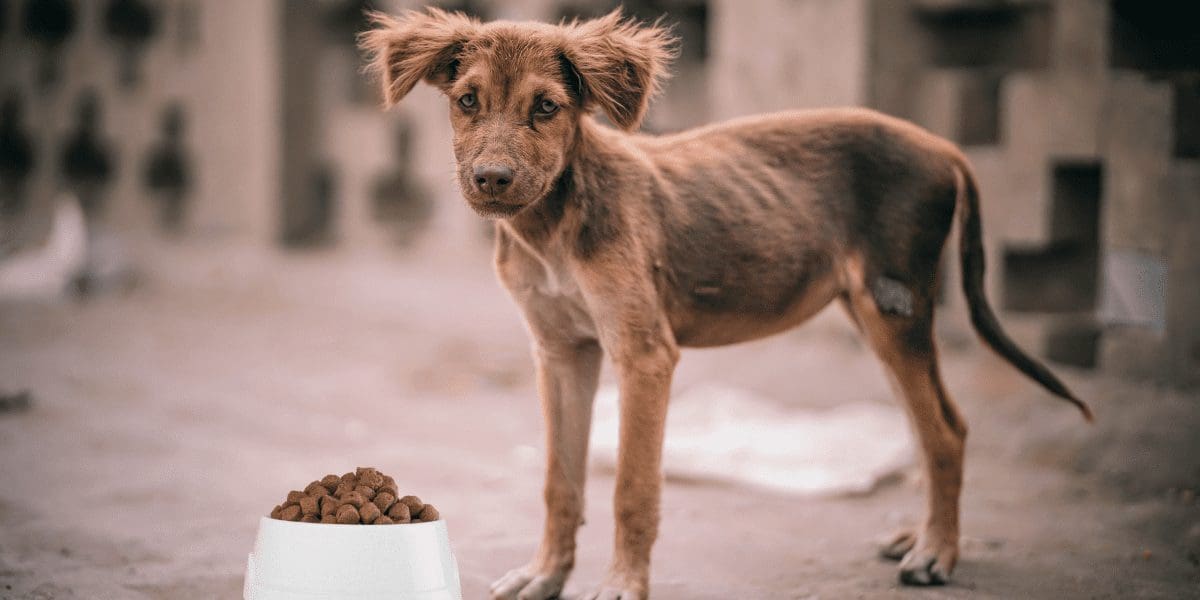


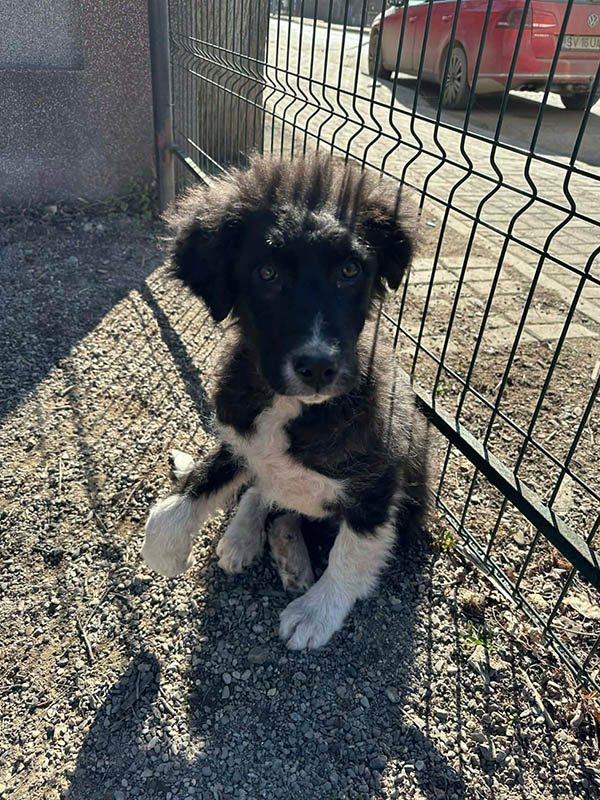
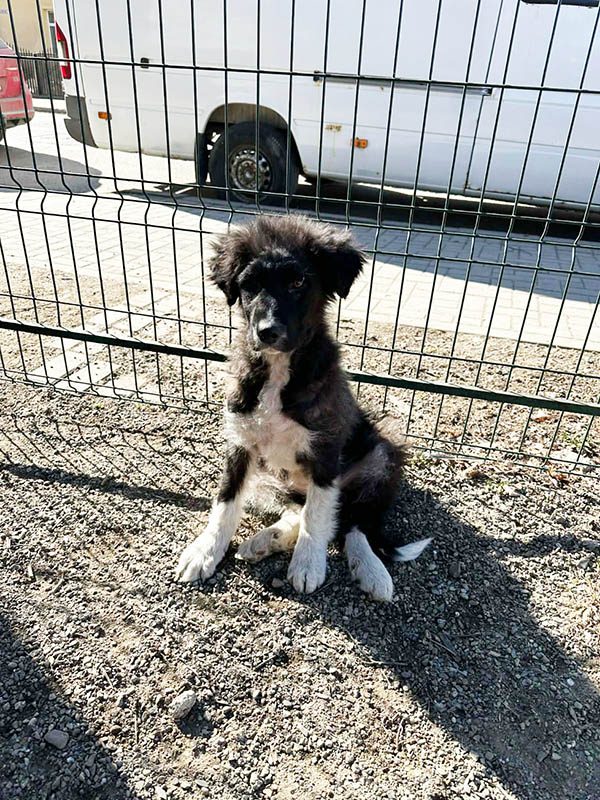
Aria appeared as a stray in Câmpulung Moldovenesc, a town in northeastern Romania, in very poor physical condition.
She was first noticed by a young local woman, who, having no means to take her in, walked from gate to gate carrying her and asking neighbours whether anyone could offer temporary shelter. The case was escalated to the ROLDA Rescue Team via an associate of Nas Rece, Inima Calda.
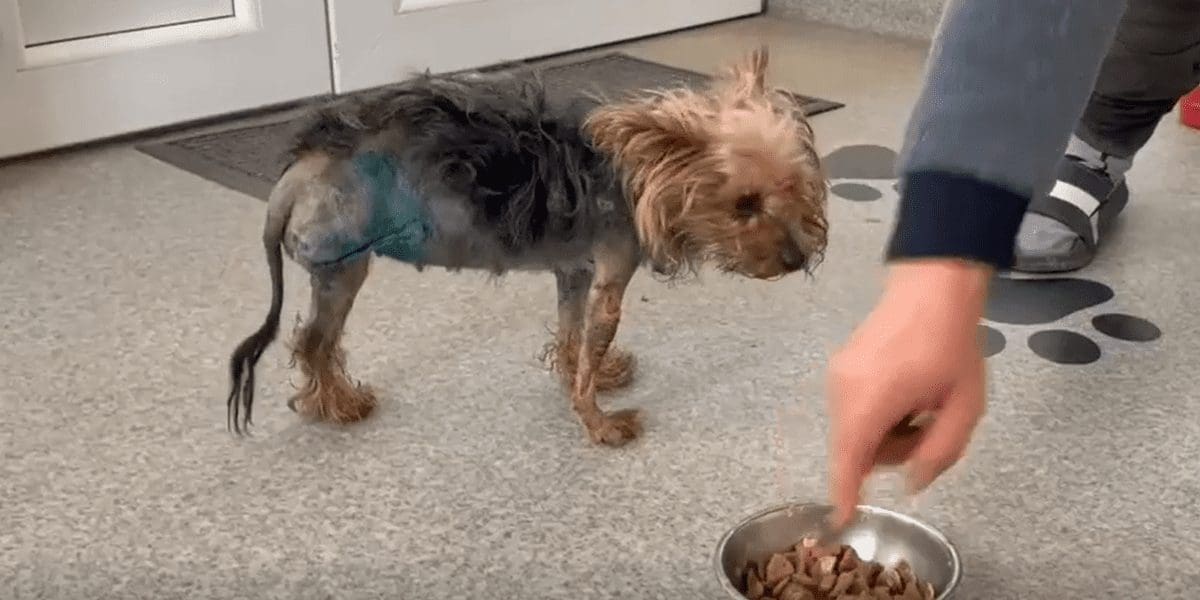
Aria presented in severely poor condition consistent with prolonged nutritional deprivation. The most notable visual finding was a marked deformity of the front limbs, with a “bear paw” appearance characteristic of advanced rickets. Skin condition was also poor, with patchy fur loss and signs of dermatological inflammation.
Advanced rickets: a metabolic bone disease occurring in young, developing canines and caused by a deficiency of calcium, phosphorus, or vitamin D. The disease produces softening and deformation of the skeleton, with clinical signs ranging from mild lameness in early presentation through bowed limbs, structural skeletal damage, folding fractures, and chronic pain as it progresses.
Concurrent skin inflammation, likely secondary to malnutrition and prolonged exposure during the period prior to rescue.
Treatment Plan
• Calcium and phosphorus supplementation to address the underlying nutritional deficiency
• Appropriate, nutritious feeding to support recovery and continued healthy bone development
• Treatment of concurrent skin inflammation
• Foster placement with ongoing monitoring
• Further veterinary review as treatment progresses
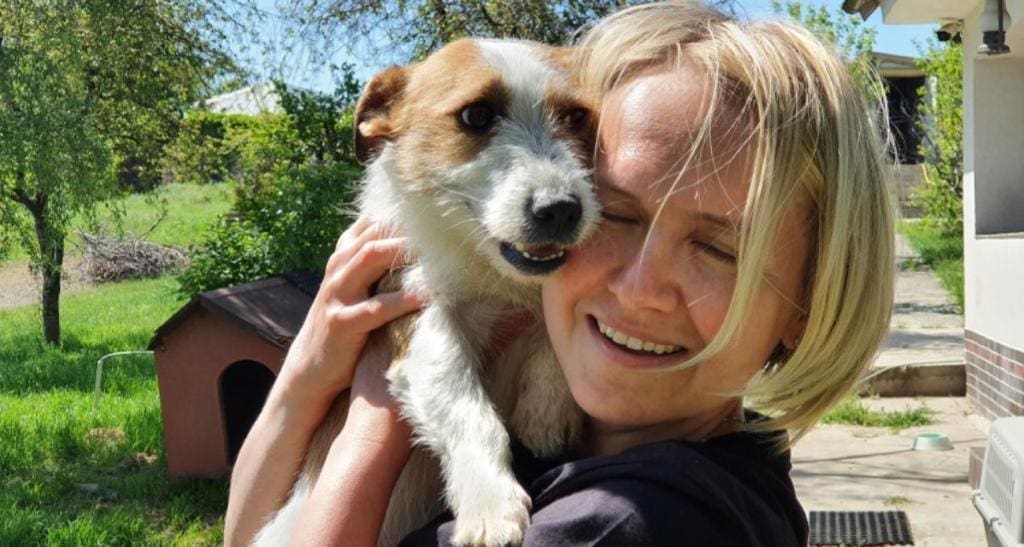
Response to treatment has been excellent. Aria’s front limbs have straightened, her coat has regrown, and her general condition has normalised. The foster placement converted to a permanent adoption (a “failed foster”). Aria now lives with her adoptive family alongside a canine companion, Benny.
This case illustrates the scale of nutritional illness seen in stray populations across rural and semi-urban Romania. Rickets, when caught early enough, is both preventable and treatable; the determining factor is identification and escalation, which depend on community members willing to act. With consistent supplementation and proper nutrition, prognosis for meaningful recovery is hopeful, as Aria’s outcome demonstrates.
They stopped the car, opened the door, and drove away. Pusha stood on the road watching them go, quizzical. He had been a household pet. He had known warmth, familiar smells, the sound of people he trusted. In a single moment, all of that was taken away.
He was most likely left behind because caring for a dog with weak front legs had become inconvenient. Because Pusha, who needed medical attention, had become a burden they no longer wanted to carry. So they put him out on the road and drove away.
Ukraine is home to hundreds of thousands of stray animals. Many were born into that life. Pusha was not. He arrived on the streets already struggling, with no idea how to survive out there. A kind local woman named Katya noticed him. She began bringing food each day, doing what little she could to help him survive. It wasn’t much, but it kept him going. Then she heard it happen.
The sound of a car. The impact. Pusha had been hit. Katya ran to him. He was heavily injured and stressed, unable to move properly. She refused to leave him there suffering, and she reached out to her local rescue shelter for help.
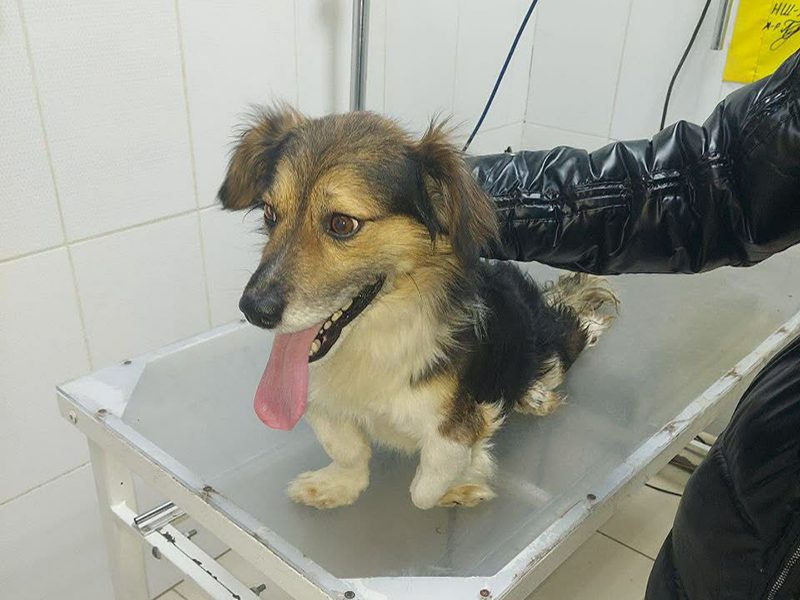
The shelter rushed Pusha to the clinic. The damage to his spine was severe. He will probably never walk without some form of assistance. It is a devastating thing to consider for a dog not yet old, not yet given a real chance at life.
But during the examination, the vets discovered something else.
Pusha had heartworms.
Spread by mosquitoes, heartworms attack the heart and lungs and can stay hidden for months before any symptoms appear.
For Pusha, the infection makes anaesthesia far too dangerous right now. Surgery on his spine and weakened legs will have to wait. First, he must complete a long course of heartworm treatment. Until his heart is strong enough, Pusha will rely on a wheelchair just to move.
This is the reality for abandoned animals. Even when help finally arrives, recovery is rarely simple. It takes time, specialist care, and the kind of quiet, ongoing commitment that doesn’t make headlines but makes all the difference.
Look at the photos of Pusha, and you will see something that surprises most people. Despite everything, despite the abandonment, the accident, the spinal damage, the hidden infection, he is still a dog with his tongue out and warmth in his eyes. He still wants to connect. He still looks, tentatively, like he might be willing to trust again.
Dog-loving ROLDA supporters ensure that dogs like Pusha receive the treatment they need without delay or compromise and get a chance at a fair life again.
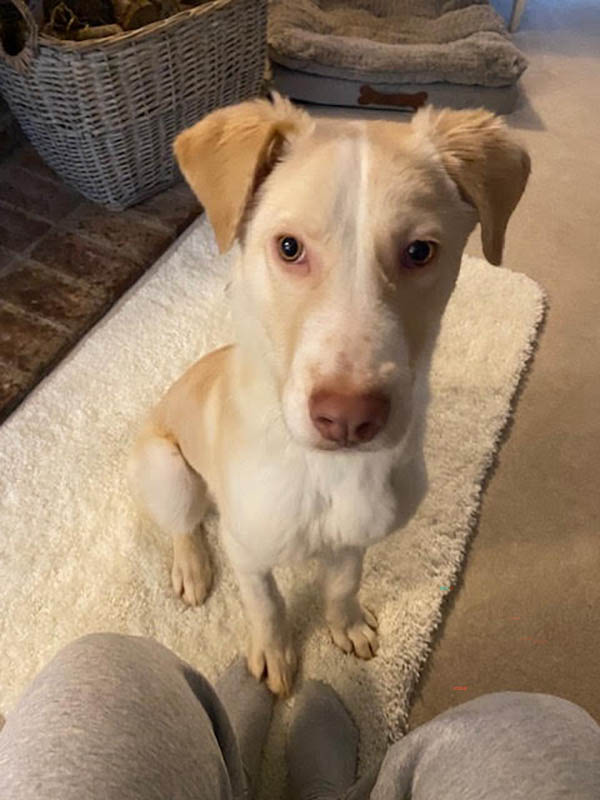
Teddy’s story began on the streets of Romania, where he and his brother Toby were found trying to survive alone. They were still puppies, vulnerable and all alone, struggling to learn how to navigate the world with very little protection.
When they arrived in our care, it quickly became clear that Teddy needed urgent medical intervention. A severe injury to his tail left us with only one option if we wanted to save his life: we had to amputate a part of his tail.
At the time, our focus was on getting him through surgery and ensuring he recovered safely. What we did not anticipate was that this emergency procedure could later place his future at risk.
The Uncertainty Around UK Legislation
In late 2025, there was widespread uncertainty surrounding UK legislation regarding dogs with docked tails. The guidance was unclear, and there was concern about how potential changes might affect rescue dogs travelling to the UK for adoption. For dogs like Teddy, whose tail had been amputated for medical reasons, this ambiguity created genuine worry.
We were faced with a difficult decision. Waiting for full clarification could have meant missing the opportunity to bring him to the UK altogether. Acting quickly carried its own risks, yet it also gave Teddy a chance to move forward without delay.

Our team chose to act.
Rescue work often involves complex decisions made behind the scenes, balancing legal frameworks, animal welfare, and long-term outcomes. Moving Teddy to the UK while we still could was one of those decisions that required both urgency and faith.
In January, Teddy arrived in the UK and went into an emergency foster placement. Shortly afterwards, he moved into foster care with one of our ROLDA team members.
At just eight months old, Teddy had already experienced a tumultuous start to life. He had survived on the streets, undergone surgery, travelled across borders, and adjusted to entirely new surroundings. Despite everything he had been through, he remained remarkably gentle and open-hearted.
He is the sweetest boy, endlessly eager to learn and deeply people-focused. Training sessions quickly became a favourite for him, and his enthusiasm for life, kept his foster family endlessly enamoured with him.
This brave boy approaches the world with curiosity rather than fear, which is a testament to both his resilience and the care he received from our shelter team in Romania.
It was clear from the beginning that this was a dog ready to love wholeheartedly.
Our team worked tirelessly behind the scenes to find him the best possible match. Through our UK adoptions programme, Teddy was matched with a couple whose lifestyle fits him beautifully.
From the moment they saw him, they saw beyond his shortened tail and recognised the joyful, intelligent, affectionate dog he really is.
The UK legislation regarding docked tails and ears has been clarified, easing the uncertainty that surrounded dogs like Teddy. Even so, we remain deeply grateful that we made the decision to move him when we did. Acting during that period of uncertainty ensured he was here, visible, and able to connect with his future family.
Timing can change everything in rescue. In Teddy’s case, it meant the difference between waiting in limbo and beginning his second chance.
So many people connected with Teddy’s story and helped amplify his journey. Supporters shared his posts, engaged with his updates, and kept his story circulating. That collective effort played a vital real role in helping him find his family.
Today, Teddy is thriving in a home filled with love, adventure, and stability. His past no longer defines him. The amazing future that lies ahead of him does.
There are still many other dogs waiting for their second chance. Fostering creates space for more rescues, and adopting transforms a life forever. Teddy’s story is proof of what is possible when compassion meets action, and it reminds us that every open home can become the start of someone’s second chance.
Abandoned, drowned or left to starve. Too often, this is the fate of old dogs who are no longer wanted.
The man who brought these two elderly girls to us believed he was doing the right thing by trekking four kilometres with them to our shelter.
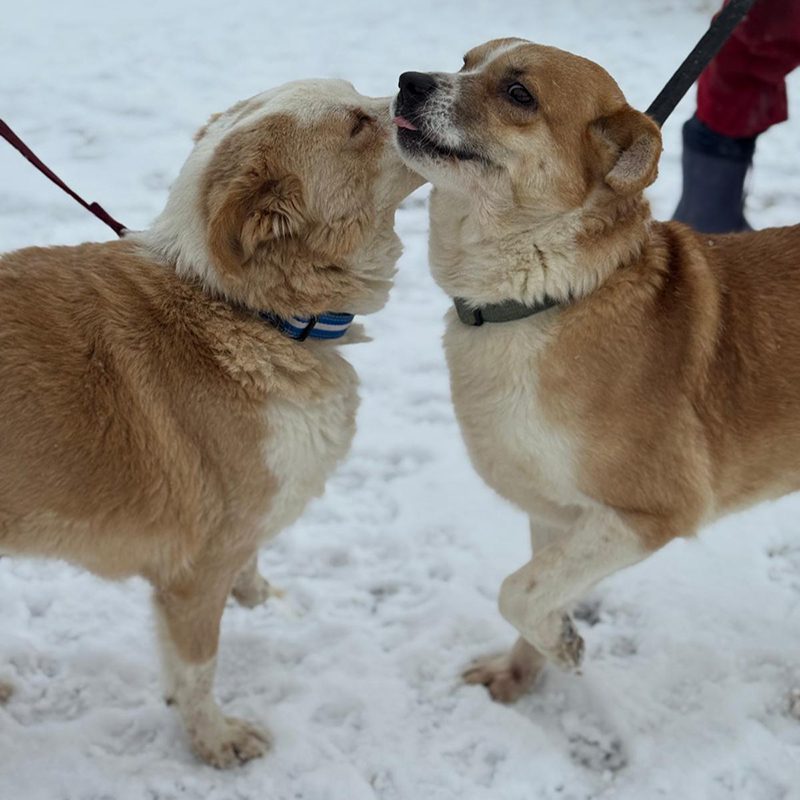
They are now in our care. Vaccinated first and soon to be sterilised, their tired little bodies tell us much of their troubled history. Years spent at the end of a chain have left their marks: a badly torn ear, an eye clouded blind. Both are at least 8–9 years old.
But even after everything, their eyes still search gently for kindness. There is a softness in them that suffering could not take away.
When our first social media post about them went online, it sparked anger. Many people reacted. Many cursed the man who surrendered them. But just two people donated.
The reality is this: he did not abandon them in the woods. He did not drown them. He walked over four kilometres, believing he was giving them a safer future. It doesn’t erase the years they lost. It doesn’t undo the neglect. But it gave them a chance.
Now they have a roof. Food and water every day. A clean kennel. A kind voice. They are not active or demanding. They sit quietly, side by side, waiting for a caress. After years on chains, they walk beautifully on a leash. They are gentle. Calm. Grateful for the smallest kindness.
Old dogs are often overlooked. People rush past them in favour of puppies. Applications rarely come. For these girls, the chances of adoption are slim.
But old dogs are not “too late.”
They deserve peace. They deserve dignity. They deserve a soft ending after a hard life. They may not have many years ahead of them, but the years they have left should be warm, safe, and filled with care. That is the future we want for them.
If you’re a ROLDA supporter, this is what you are giving them: food in their bowls, medical care when they need it, warm bedding in winter, and the quiet reassurance that they will never be chained again.
For these sweet girls, love may not come in the form of adoption. But it can still come, and I can see now in their eyes that they feel it. Thank you for making this happen.
Each day brings new challenges, and each day, hope rises as another innocent life is given a second chance. Some stories, though, touch our hearts more deeply than others.
When one of our ROLDA Rescue Heroes received an urgent call, it was about a tiny soul fighting to survive in the shadows of Bethlehem, unnoticed by the small, uncaring world around him. The only world he had known until then.
Alone and silent on the side of the road, this puppy was wracked with pain from a terrible injury that left his paw severely swollen and infected. It was a situation no creature, let alone a puppy, should ever have to endure. We may never know what cruelty or accident led him here, but we do know his suffering was immense, and his spirit was unbroken.
With hope as his companion, he was rushed to the veterinary clinic, where every second counted.
The compassionate vets fought valiantly to save his tiny paw, refusing to give up on this brave little one. But sometimes, love means making the hardest decisions.
The damage was too severe. Infection threatened his life, and there was only one way to give him a future. His paw had to be amputated—a heartbreaking choice, but one that offered hope instead of despair.
That day, heartbreak and hope walked hand in hand. The choice that broke our hearts also opened the door to his future. A brighter future.
Today, this little hero is recovering, wrapped in warmth, care, and love. The pain of his past is behind him, replaced by the promise of new beginnings.
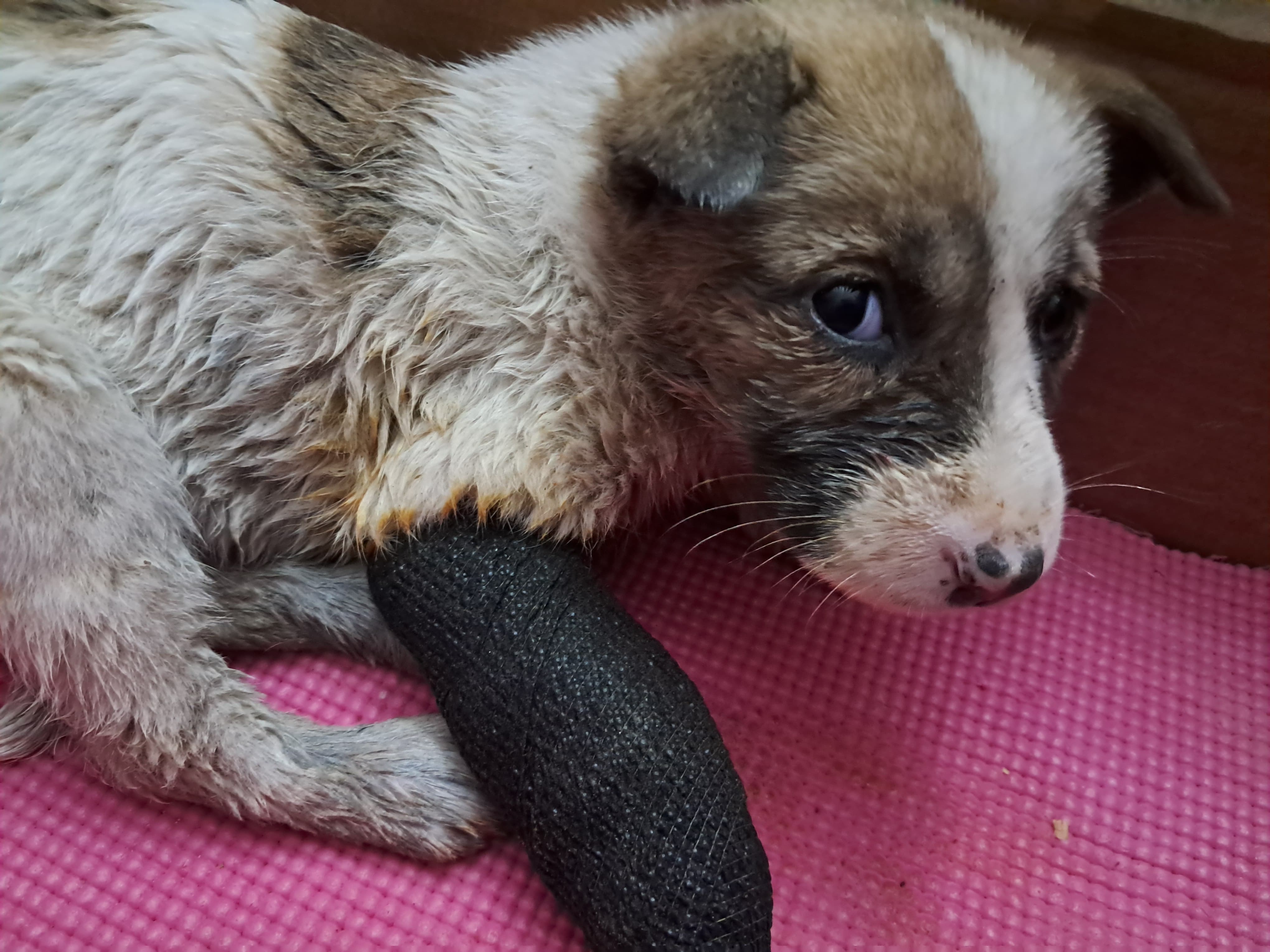
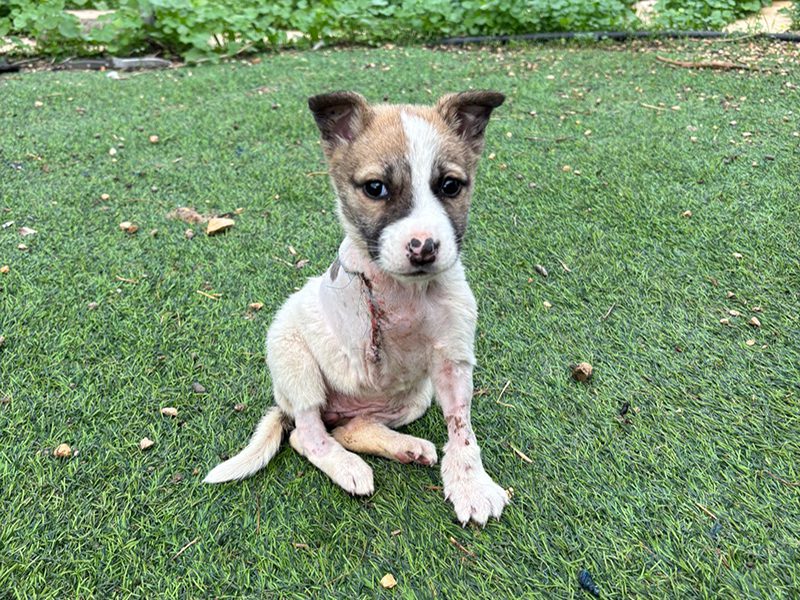
He is finally free from pain, and despite all he’s endured, he inspires everyone he meets with his strength and gentle spirit. His resilience reminds us that even in our darkest moments, hope can shine through. He teaches us the power of never giving up, no matter the odds. He may walk on three legs, but his heart is whole—and every step he takes is a testament to the healing power of love.
There are so many more souls waiting for a second chance. With your kindness and support, we can keep writing stories of hope—one precious life at a time.
ROLDA Rescue Heroes in Bethlehem
ROLDA’s work has always been primarily rooted in Romania, but over the years, we’ve learned an important truth. We cannot be everywhere, and there is a lot of power in collaboration. That is why, when animals are suffering in conflict-affected areas, we choose collaboration over borders and competition. By partnering with trusted local rescuers, we are able to support animals who would otherwise be left without food, medical care, or a chance to survive.
Right now, in and around Bethlehem, dogs and cats are being abandoned, injured, and left hungry as the ongoing conflict continues. Local rescuers are doing everything they can, but clinics and shelters are overwhelmed, resources are limited, and emergencies are arriving every single day. Through our Global Emergency Program, ROLDA is working alongside a local rescue team in Bethlehem to help provide urgent food, veterinary care, life-saving medicines, and transport so animals can reach safety and treatment in time.
Please help us continue rescuing puppies like him.
Donate to support emergency surgeries and recovery care. Every rescue begins with compassion — and continues with you.
This is Alfie. This is what it looks like to be born into life as an unwanted stray.
From birth, this small black kitten sat on the streets of Tulcea, cold, hurting, and unnoticed. His eyes had, at some point, been so badly damaged that he could no longer see. So, this kitten, blind to the world, hoped for someone to notice him and show him kindness.
For days, no one did. But one of our partner animal rescue teams, The Great Catsby, sees its mission as intervening to change stories like poor Alfie’s. So, when someone called and told them about Alfie, they immediately went looking.
For three days, the team searched, fearing the worst each time the sun set without any sign of the vulnerable kitten. Were they too late?
On the fourth day, when hope was almost gone, he was finally spotted. Fragile and starving, it was clear Alfie had already endured more than any baby should. He was so malnourished that it was hard to believe the tiny kitten was already three months old. Most disturbingly, the severe damage to his eyes showed signs of prolonged suffering without care, something no animal should ever have to experience.
Upon finding him, Alfie was rushed to the vet. We refused to allow his suffering to continue any longer. The vet confirmed our fears. Neither of Alfie’s eyes could be saved, and he would face the world forever blind.
What followed was a long, difficult month of recovery, setbacks, and more pain than any kitten should know. Still, Alfie fought. Quietly. Bravely.
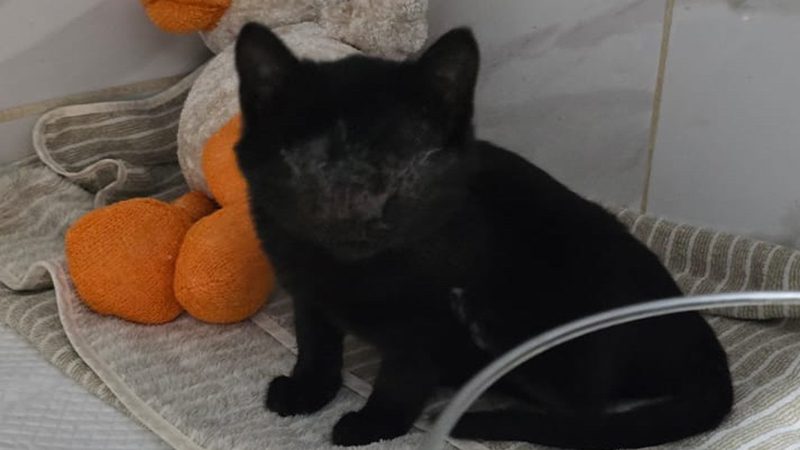
Today, Alfie is a resilient young cat who is finally friendly, calm and trusting after surviving terrible odds. Despite losing his sight, he now knows warmth, comfort, and kindness. But Alfie’s story is only one of many. Across Romania and Ukraine, there are thousands of kittens just like him. They are born on the streets, their only memories consisting of illness, hunger, cold, and cruelty. Most live unseen until it is too late.
This is why we ask for your support.
Because without care, injuries become fatal.
Without treatment, pain becomes the norm.
Without compassion, these lives simply disappear.
If Alfie’s story touched you, please consider supporting our work so that you help the next kitten in need. Your donation won’t just change one life, it gives hope to all the unseen strays still waiting for kindness.
The small terrier sat where her family had left her, waiting for them to come back. She didn’t understand why they’d walked away. She couldn’t comprehend that at ten years old, with tumors growing on her belly, she was now considered disposable.
How long did Alya wait before she realized they weren’t returning?
In Ukraine, where the ongoing war has displaced millions and shattered countless lives, abandoned pets have become an all-too-common tragedy. Some families flee and cannot take their animals. Others, facing impossible choices between survival and sentiment, leave their pets behind. But Alya’s story is different, and perhaps more heartbreaking; her owners didn’t flee danger. They simply decided an aging dog with health problems was no longer worth keeping.
When Inessa, who runs a ROLDA-sponsored shelter in Ukraine, found Alya, the physical evidence of neglect was unmistakable. The tumors on her mammary glands had grown large and painful. Her body showed the telltale signs of a dog who had spent years breeding, producing litter after litter, only to be discarded when she was no longer useful. At ten years old, Alya should have been enjoying her senior years in the comfort of the home she’d known. She deserved some gratitude and loyalty in her old age. Instead, she was alone, sick, and abandoned.
For older dogs with serious health conditions, time is not a luxury. Mammary tumors in dogs can be malignant, and without intervention, they grow, spread, and cause immeasurable suffering. Alya needed help immediately.
Thanks to supporters who make ROLDA’s work in Ukraine possible, Inessa was able to rush Alya into surgery. The procedure was extensive: removing the tumors from one side of her mammary chain and spaying her to prevent future health complications. The surgery went well, and Alya is now recovering safely at the shelter.
But her journey isn’t over yet. In one month, when her body has healed sufficiently, she’ll need to return to the clinic for a second surgery to remove the tumors from her other side. It’s a lot to ask of a ten-year-old dog who has already been through so much.
Yet despite everything she’s endured (the abandonment, the pain, the confusion of finding herself in unfamiliar surroundings), Alya’s eyes still hold a gentle sweetness. She still wags her tail when someone approaches. She still believes that people can be kind.
Dogs like Alya represent a crisis that extends far beyond individual heartbreak. Senior dogs are the most likely to be abandoned when families face hardship or simply decide that caring for an aging pet is too inconvenient. In war-torn Ukraine, where resources are stretched impossibly thin and survival itself is uncertain, these vulnerable animals face even bleaker prospects.
Without shelters like the one Inessa runs, and without the international support that ROLDA supporters offer, dogs like Alya would have nowhere to turn. The surgery she received, the careful post-operative care she’s receiving now, and the second surgery she’ll need next month all require funding that local resources simply cannot provide.
This is where you, as part of the ROLDA community, make the difference between life and death.
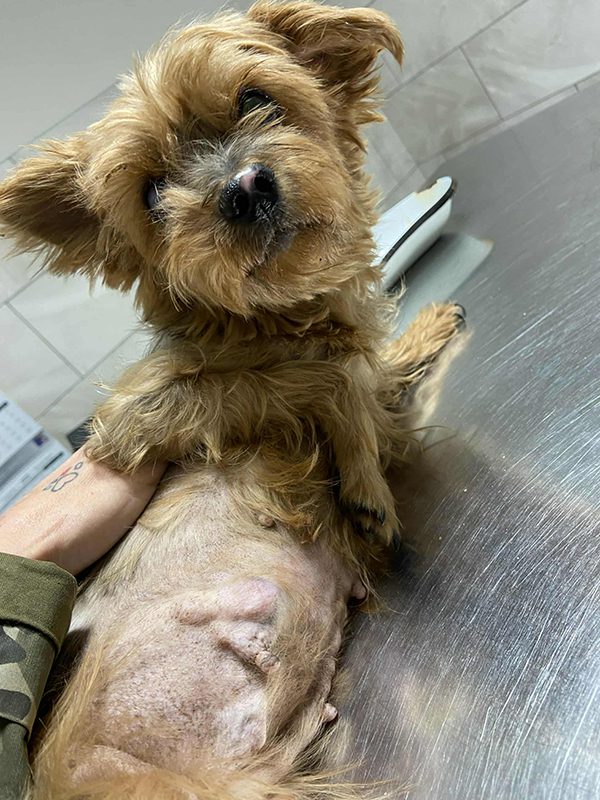
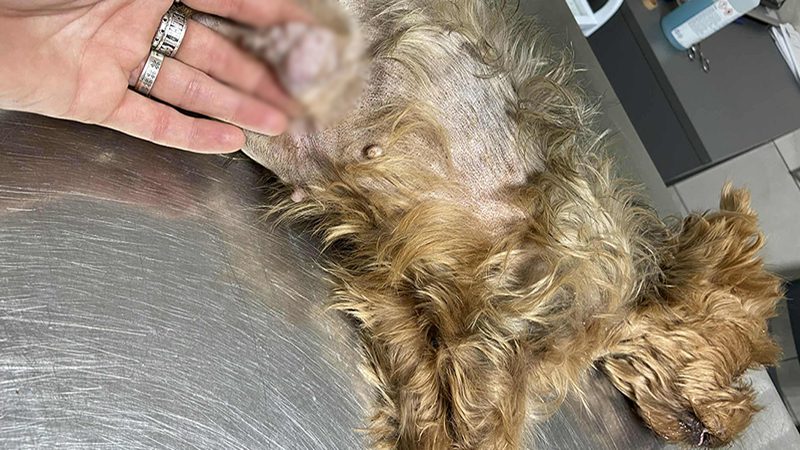
Alya will spend her recovery time surrounded by people who see her value, who understand that ten years of loyalty and love deserves better than abandonment. She’ll receive the medical attention she needs, the gentle care that eases her pain, and the dignity that every living being deserves.
When she’s fully healed, Alya will have the chance at something her previous owners denied her: a peaceful, comfortable senior life where she is wanted, valued, and loved.
Your support makes stories like Alya’s possible. In a country where war has created so much suffering, where abandoned animals face impossible odds, and where every act of rescue requires courage and resources, your donations become lifelines. They transform abandonment into hope, neglect into healing, and despair into second chances.
Alya waited where her family had left her, not understanding why they had gone. But she’s not waiting anymore. She’s recovering, healing, and discovering that while some people abandon, others choose to save.
Story from a small animal rescue in Targu Frumos that ROLDA supports
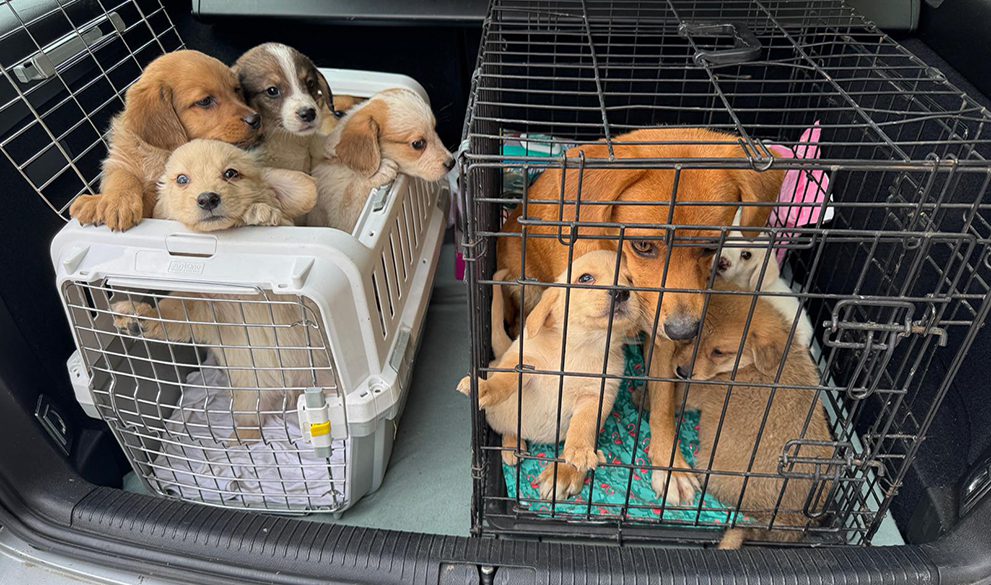
The call came about a mother dog and her puppies. “Take them, we don’t want them”.
The rescuer’s answer was honest: “I can’t help. I’m completely full. I have no space.”
But honesty doesn’t always end the conversation. The calls kept coming, every single day. The pressure mounted. Finally, she agreed to visit, hoping to at least explain the situation face-to-face and offer what little help she could.
When she arrived, she proposed a compromise. She would vaccinate the puppies now and take them after the second vaccine, when she might have space. It was the best she could offer, given her small shelter’s capacity. But the response was immediate and aggressive. Threats were made. A crowd began to gather in the street. She left, alone and shaken.
Still, she kept her promise. She returned with vaccines and food, hoping that would buy time for everyone. Two days later, the calls resumed with new urgency and darker threats. If she didn’t come immediately to take the dogs, they would be killed.
The Weight of Limited Space
For small rescue operations, space isn’t just a logistical challenge. It’s the difference between life and death. When you’re already beyond capacity, taking in more animals isn’t a simple act of compassion. It means figuring out where to put a protective mother dog with puppies, animals who need their own safe space away from other dogs who might see them as a threat.
The rescuer spent three days searching for solutions, turning over every possibility in her mind. Where could they go? How could she make it work? Every scenario seemed impossible.
But the threats continued. Finally, she made her decision. Impossible or not, she would bring them home.
When Courage Means Calling for Help
When she arrived to collect the dogs, the situation escalated again. More threats, more drama, declarations that they wouldn’t give her the dogs now because she hadn’t come immediately when first called. The contradictions didn’t matter. The danger did.
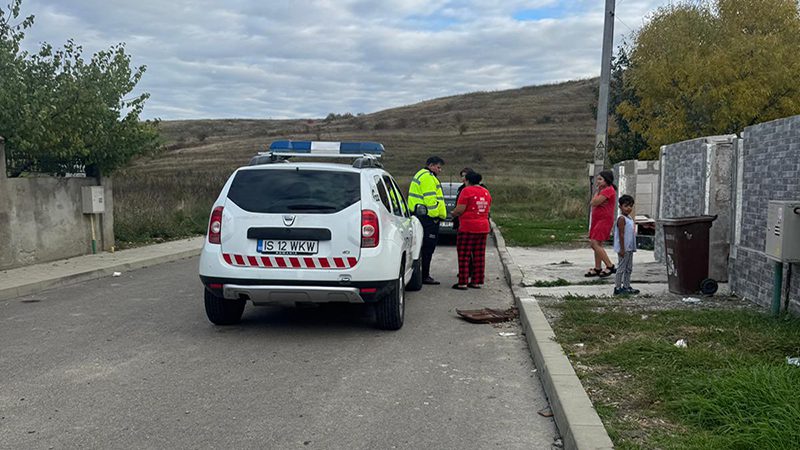
She called the police.
It’s a detail that matters, because it illustrates something people don’t always understand about animal rescue work. Sometimes saving animals means putting yourself at risk. Sometimes it means standing firm in the face of threats. Sometimes it means knowing when you need backup to do what’s right.
With police assistance, she took the dogs home.
Small Victories in Impossible Circumstances
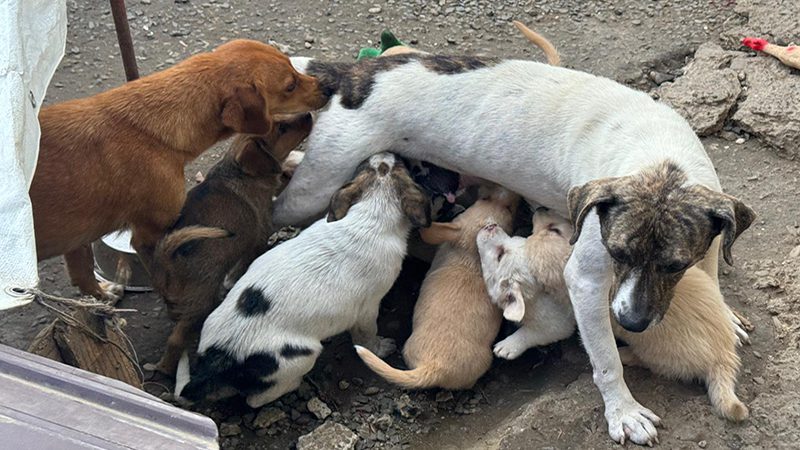
What happened next was its own small miracle. The rescuer already had another female dog at her shelter who had recently had puppies. When the new mother and her puppies arrived, something unexpected happened. The resident mother accepted all the puppies as her own. The two mothers got along well, settling into a peaceful coexistence that made the impossible overcrowding just slightly more manageable.
It wasn’t a perfect solution. The shelter was still beyond capacity. Space was still desperately tight. But the dogs were safe, fed, and no longer under threat of being killed to make a point.
The Reality Behind the Rescue
This is what animal rescue looks like in the small towns and villages across Romania. It’s not always heartwarming stories of grateful families surrendering beloved pets they can no longer care for. Sometimes it’s navigating threats and pressure. Sometimes it’s being alone and scared, but doing it anyway. Sometimes it’s calling the police to protect yourself while you protect animals.
Small rescue operations like the one in Târgu Frumos face these situations with alarming frequency. They’re asked to do the impossible with limited resources, and when they can’t, they face consequences that range from guilt and pressure to outright threats.
ROLDA supports these small rescues precisely because of moments like this. Because when a rescuer is backed into a corner, trying to do the right thing with no space and no resources, they shouldn’t have to face it completely alone. The food, medical supplies, and support we can provide don’t solve every problem, but they make the impossible slightly less impossible.
The mother dogs and their puppies are safe now. They’re eating well, the puppies are growing, and the two mothers are sharing the responsibility of caring for all their babies. It’s a happy ending that almost didn’t happen. If you are a ROLDA supporter, you helped make this happen.
Story is from The Great Catsby – A ROLDA-funded local cat rescue partner
The woman who reached out to us didn’t know what else to do. For weeks, she had been watching them. A small brown cat and her two tiny kittens were surviving in the grubby, desolate gap between apartment buildings, where no one claimed responsibility for their existence.
Each day, she brought what food she could, watching as winter crept closer with its promise of frost and snow. Each night, she worried whether they would still be there in the morning.
When she finally contacted us, her message was simple but weighted with urgency: “I don’t know what to do with them. The cold season will surely mean the end for all of them.”
She was right, of course. The streets show no mercy to small cats when winter arrives. But winter would have been only one of many dangers. Traffic, disease, predators, starvation – the threats are endless for animals unlucky enough to be born or abandoned in the narrow spaces between buildings, where they exist as nobody’s problem.
A Fragile Agreement
We faced our own impossible mathematics. Our shelter was already beyond capacity. There wasn’t space for even a needle, as we say, let alone three more cats. But turning away wasn’t an option either. So, we proposed an agreement: we would provide all the medical care this little family needed, but they would need to remain in foster care with the woman who had contacted us.
It was a fragile arrangement, dependent on trust and commitment from both sides. Fortunately, it held.
The mother cat, who got named Brownie, arrived with her two kittens, a boy and a girl who would soon be called Mic and Gina. At first glance, they seemed like any other street cats: thin, wary, and carrying that particular tension that comes from constant vigilance. But of course, perfectly healthy cats straight from the street are rare. Very rare.
Peeling Back the Layers
The first veterinary consultation revealed what we had expected: respiratory virus symptoms in all three, accompanied by the usual parasites that plague street cats. They needed deworming, FIV/FeLV testing, triple viral testing; the standard protocol that helps us understand what we’re really dealing with.
Up to this point, nothing was particularly unusual. They all received their initial treatments. But Mum Brownie’s overall condition was concerning enough to the veterinarians that they recommended she stay hospitalised. It wasn’t just one thing – it was the cumulative weight of everything she had endured. Her body told the story of her life on the streets and motherhood in ways that broke our hearts.
There was another challenge, too: Brownie was terrified. This wasn’t a cat who allowed herself to be handled, or even touched. Years of survival had taught her that humans meant danger, and she wasn’t ready to unlearn that lesson. We understood, though. We know that what these cats need most isn’t just food and medicine. It’s the chance to finally feel the safety of a home, hear a gentle voice, and see a look that shows something other than contempt or threat.
The Discovery
The truly frightening moment came during Brownie’s spay surgery. Under sedation, she could finally be properly examined, and that’s when the veterinarian discovered something that made everyone’s breath catch – a growth under her tongue.
The possibilities raced through our minds, most of them dark. There was a high chance this could be a tumor, potentially malignant cancer. For a street cat who had already survived so much, the cruelty of this discovery felt overwhelming.
Tissue samples were taken immediately and sent to the laboratory for histopathological analysis. Then came the waiting. Two weeks that felt like months, where every possible outcome played through our minds. Brownie, of course, knew nothing of our anxiety. She simply continued being herself: frightened, defensive, but fighting to survive in the only way she knew how.
The Weight of Relief
When the results finally arrived, we felt a wave of relief so profound it left us hi-fiving and grateful all day. The growth was not neoplastic. Not cancer. Brownie had been lucky once again.
But luck is relative, and the news wasn’t entirely good. The laboratory suggested it was an autoimmune reaction that had led to the formation of an oral pyogenic granuloma, also called a hemangiomatous granuloma. It was a mouthful of medical terminology that essentially meant Brownie’s own immune system had turned against her, creating this problematic growth.
The recommended treatment was surgical removal, but when the veterinarians assessed the location, they delivered more difficult news. The growth was positioned in such a way that removing it with clean margins would be nearly impossible without risking damage to the tongue’s supporting structure. In their words, attempting surgery could literally cause her tongue to tear.
No one wanted to take that risk.
Instead, following the doctors’ advice, we chose a different path: medium to long-term corticosteroid treatment. It wasn’t our first choice. Corticosteroids have their own complications, but in this case, they offered the best chance to reduce the lesion’s size and keep it under control. The veterinarians also mentioned the possibility of laser therapy, which might help. It was something we would evaluate once Brownie was more stable and settled.
The Long Road of Small Victories
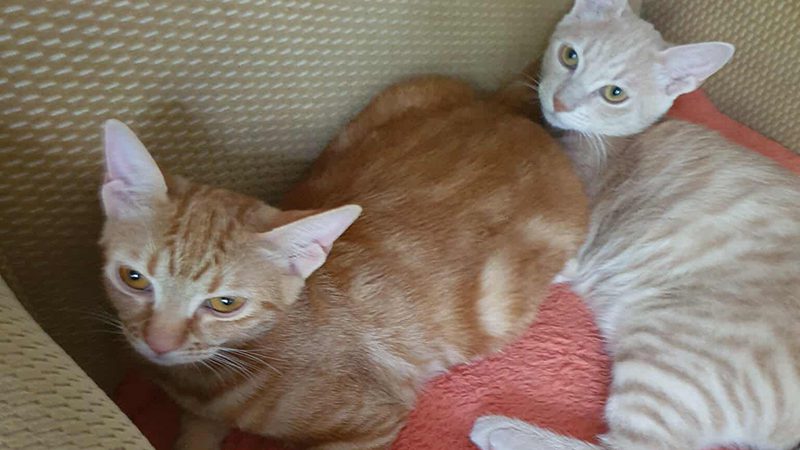
With her immediate medical crisis addressed, Brownie was finally discharged and reunited with her kittens in foster care. Watching them together was like witnessing a small miracle. Despite everything she had been through – the streets, the illness, the hospitalisation, the fear – Brownie remained devoted to her Mic and Gina. Her maternal instinct had survived when so many other things had been worn away.
The kittens themselves were facing their own battles. They needed to complete their vaccination course, but first they had to overcome a persistent combination of herpesvirus, stubborn parasites, and Giardia. It was another reminder of just how much street cats carry – layers upon layers of illness and infection, each needing its own treatment, its own timeline.
Mic, despite his name meaning “Small” in Romanian, was already showing signs that he wouldn’t stay small for long. His foster mother joked that he would grow into a “big Small,” and watching his appetite and energy, we believed it. Gina was more reserved, but she, too, was gaining strength daily.
And Brownie? Slowly, cautiously, she was beginning to change.
She still wouldn’t let herself be touched. That bridge was still too far to cross. But she had started coming out of her hiding spots when her foster mother was in the room. She showed herself, watched from a distance, and most encouragingly, she had developed what her foster mother called a “glorious appetite.” This wasn’t just good for Brownie’s recovery; it was the key to getting her medication into her, hidden in the food she now eagerly consumed.
These were small victories, perhaps, but in the context of a cat who had spent her entire life frightened and defensive, each one represented a monumental shift. The fact that she felt safe enough to emerge, to eat openly, to exist in the presence of a human without cowering; these were transformations worth celebrating.
What Street Life Leaves Behind
Brownie’s story illustrates something we see repeatedly in our work: the sheer scale of issues that stray animals must navigate just to survive. Across Romania, thousands upon thousands of cats and dogs live this same precarious existence, invisible to most people who pass them daily. It’s never just one thing. It’s always a cascade of interconnected problems, each one making the others worse.
A respiratory virus weakens the immune system, making cats more susceptible to parasites. Parasites drain nutrients that should be used to fight infections. Constant stress from living on the streets triggers autoimmune responses like Brownie’s. The lack of proper nutrition means wounds don’t heal, illnesses linger, and bodies wear out far too soon. And underlying it all is the psychological trauma—the fear, the constant vigilance, the learned mistrust of humans who might kick or throw things or chase them away.
When we take in a street cat, we’re not just treating one problem. We’re unravelling years of accumulated damage, addressing layers of need that go far beyond the obvious. It requires patience, resources, expertise, and time; so much time. There are no quick fixes for animals like Brownie. The veterinary consultations, the laboratory tests, the medications, the follow-up care, and the foster home where she can finally rest. All of these pieces must come together to give her a real chance at recovery.
This is only possible because of the compassion of people who understand that every life matters, even the small brown cat living between apartment buildings. The supporters who believe, as we do, that no animal should have to face the accumulated weight of street life alone. Their generosity transforms what would be an impossible task into something achievable, one cat at a time.
A Life Worth Living
Now, settled in foster care with her kittens safe beside her, Brownie has something she’s never had before: time. Time to heal. Time to learn that not all humans mean harm. Time to discover that the world can offer more than hunger, cold, and fear.
Her kittens, Mic and Gina, will have an even better gift—they’ll grow up never knowing the full harshness their mother endured. They’ll learn early that humans can be kind, that food comes regularly, and that warmth is constant. When they’re ready, we hope to find them families as wonderful as they are. And perhaps, with more time and patience, we’ll be able to set a similar goal for Brownie.
For now, we’re taking every small victory as it comes. Brownie emerges from her hiding spot more and more often to watch her foster mother. The way she runs to her food bowl, no longer cautious about showing hunger. The fact that she and her babies are safe, receiving the medical care they need, and knowing something other than survival mode.
Their lives are completely changed now. This is what life should be. Not just endurance, but something truly worth living. A mother cat who can raise her kittens without constant fear. Kittens who can play and grow without fighting for every meal. Small moments of peace that, to them, must feel like miracles.
In the photos from their foster home, you can see the transformation beginning. Brownie’s eyes, while still wary, have lost some of their desperate edge. The kittens tumble over each other with the careless joy of children who feel safe. And in those images, in those small daily victories, we see why this work matters, why people like you choose to care about animals they’ve never met, living in places they may never visit.
Because every cat like Brownie carries the weight of the streets with them. Every mother fighting to keep her babies alive deserves the chance to finally rest. And every small life saved reminds us that compassion, patience, and refusing to give up can truly change everything.
Brownie’s journey is far from over, but she’s no longer walking it alone. She has her foster mother’s quiet presence, her kittens’ warmth beside her, and the support of people who believe her life has value. That combination of individual dedication and collective compassion makes stories like Brownie’s possible. It’s what allows us to say yes when someone reaches out about a frightened cat and her babies facing winter. It’s what enables us to provide weeks of hospitalisation, expensive diagnostic tests, ongoing medication, and the patience required to help a traumatised animal learn to trust again.
And that, perhaps, is how people coming together to help makes all the difference.