non-US support +44 (0)161 531 8801

























How to Trim Your Dog’s Nails Without Causing Stress or Injury
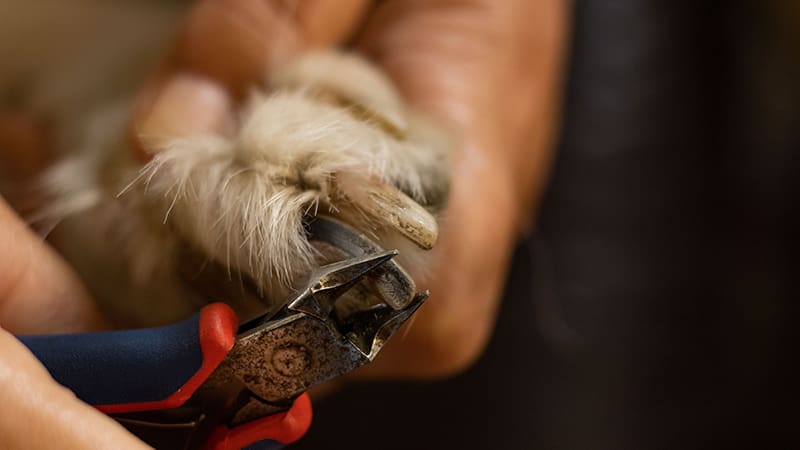
If you’ve never trimmed your dog’s nails before and you’re just starting this journey, congratulations! This is your chance to do things right from the start and avoid having a dog that gets traumatized and runs for cover every time those clippers come out.
And if you’ve done your research, you’ve probably heard stories from other pet parents who dread nail clipping as much as their furry friends do. Of course, we get it! We know how difficult it is to handle something this delicate, especially when your scared dog is physically struggling to get away while you know those nails are too long to be left alone.
You can always use a groomer, or even have the nails trimmed at the vet if your dog needs sedation, but those aren’t permanent fixes, right? This should be something you can do at home. And we are determined to help you.
Understanding the Anatomy of Dog Nails
When you set out to do something, it’s best to do it right from the very beginning. In this case, learning about dog nails can be very useful.
Dogs usually have four weight-bearing toes on each paw, and some also have dewclaws, which are extra digits positioned higher up the leg. Think of it as a thumb. Because it’s elevated, this nail never wears down from walking on pavement. It can also snag more easily on things during play, so don’t forget to check it when trimming your dog’s nails.
The most important thing to know about dog nails is that they have something called a quick, the part of the nail that contains blood vessels and nerve endings. When you trim the nail, aim to remove only the overgrown outer portion without cutting into the quick. Otherwise, you risk causing pain and bleeding.
Until you know exactly when to clip your dog’s nails and how much to remove without cutting into the quick, always trim a small amount at a time. A good rule of thumb is to leave a small margin between the end of the nail and where you can see the quick. You can often see the quick through light-colored nails, but it can be difficult to judge where it ends in darker nails. Shining a flashlight underneath them can sometimes help.
Another important thing to keep in mind is that the quick grows along with the nail. So if your dog’s nails have grown longer, the quick inside them has too. Don’t try to cut a very overgrown nail back to its old length in one go, because the quick may have extended farther into the nail. Instead, trim the nail gradually, taking small amounts off at a time and repeating the process regularly. As the nail becomes shorter, the quick can gradually recede.
Why Is Nail Trimming Traumatic for Some Dogs?
And why is it also traumatic for some dog owners? Once you understand how dog nails are shaped and how to cut them properly, the next step is building your confidence while helping your dog feel safe enough to cooperate.
The problem comes when your dog has had a bad experience in the past, doesn’t like having their paws handled, is afraid of being restrained while you work, or is simply too anxious or excited to sit still.
One common reason dogs become afraid of nail trimming is having had their quick clipped before. It may be very painful, and it may explain why your friend gets anxious every time they see you coming toward them with the clippers.
The good news is that helping a dog who is already afraid of nail trimming uses many of the same gradual steps as introducing nail care to a puppy or a dog who has never experienced it. It’s just slower.
Easing Your Way into Clipping Your Dog’s Nails
Gradual Progression and Lots of Treats
First, show your dog that nail clippers aren’t something to be afraid of. A good trick is to keep the clippers in the same place as the treats. When you go to grab a treat, take out the treats and then the clippers. Your dog may become curious about the clippers and gradually start associating them with something positive.
Once your dog has had a chance to see them, put them away and repeat the process each time you reward your dog. Then switch. When you go for the treat, take out the clippers first. Eventually, your dog may start looking at the clippers expectantly because they’ve learned that the clippers predict something good.
Let your dog inspect the clippers at their own pace. They need to feel very comfortable around them.
Next, get them used to the sound. Take some pasta, a straw, or a toothpick and pinch the edge for your dog to hear the sound. It should not be loud or anxiety-inducing.
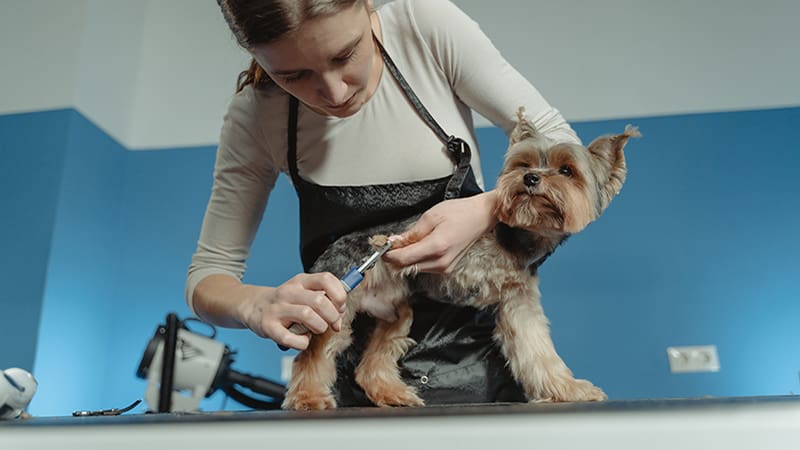
When you want to put those clippers in action, start by finding a comfortable place for you and your dog. Sit down on a towel, a bathroom mat, or a yoga mat. Make sure the surface isn’t slippery in case your dog wants to walk away. Make it easy for them, and always be willing to pause if you notice your dog becoming uncomfortable.
Time to Trim
Start slowly, with gentle touches higher up on your dog’s leg before gradually moving toward the paw. This will make your dog less anxious. If even this step is a challenge, pause and try again another time. First, touch your dog’s shoulder. Reward with a treat and praise. Gently move your hand to the elbow. If your dog is still comfortable and calm, reward, praise, and move to the wrist.
Wait until your dog is comfortable with you holding their paw. Once you’ve reached this phase, reward, praise, and move to the phase where you can hold one paw in one hand and the clippers in the other.
Depending on how comfortable your dog is, you can also introduce phases for touching the toe, the nail, and even touching them with the clippers without snipping.
Remember! Always be willing to pause and walk away. If you get just one step further every time, it’s still progress.
Before you actually cut the nail, do a squeeze test. Position the clippers around the nail without actually cutting. If your dog shies away or tries to pull their paw back, stop. Give them a treat, take a break, and try again later at an easier step.
It’s also important to assess each nail individually, because the quick may not be the same length in every nail. Often, digits two and five need less trimming than the middle digits (three and four).
First Aid
Keep a styptic pencil or styptic powder available just in case any bleeding occurs. Apply styptic powder or use a styptic pencil according to the product instructions to help stop minor bleeding. They can also come in handy if your dog chips a nail while playing or catches a dewclaw on something. If bleeding doesn’t stop after several minutes of pressure, or the nail is badly torn, contact your vet.
How Often Should You Trim Your Dog’s Nails
How often your dog needs a trim depends on their individual nails, activity level, and where they walk. Some dogs wear down their nails naturally through regular activity, especially on hard surfaces, while others need regular trims. Your vet or professional groomer can help you work out how often your dog needs a trim.
Older dogs and dogs that get less exercise may have fewer opportunities to wear down their nails naturally, so check their paws regularly.
When Do Your Dog’s Nails Need Trimming?
Just because you can hear your dog’s nails as they walk through your home does not mean they need immediate trimming. The best way to tell is to check your dog’s paws and nails regularly.
Overgrown nails can press back into the pad and surrounding tissue, causing redness and inflammation. If left untrimmed, severely overgrown nails can become painful and may even lead to infection. As nails get excessively long, they can change how your dog places its paws and walks.
Severely overgrown or painful nails should be assessed by a vet. If a large portion of the nail needs to be removed, your vet can decide on the safest way to do it, which may include sedation if your dog is in pain or unable to cooperate.
Nail trimming doesn’t have to become a battle you and your dog dread every few weeks. The goal isn’t to get all the nails done as quickly as possible; it’s to make the experience predictable, safe, and increasingly boring. Go slowly, reward cooperation, and stop before your dog becomes overwhelmed. With enough patience, those clippers can become just another part of your grooming routine rather than something that sends your dog running for cover.
Do you want to hear more news about our stories?
You can unsubscribe from our newsletter at any time. See Privacy Policy
Subscribe footer
Related content
Dog Dental Care
How to Keep Your Dog’s Teeth and Gums Healthy Some new dog owners may be surprised to learn that they need to include dental care in their dog’s hygiene routine. It’s not that they are oblivious or careless, but more that they expect this to be a problem in their furry friend’s old age. Yet, ... How to Trim Your Dog’s Nails Without Causing Stress or Injury
How to Clean Your Dog’s Ears Safely and Know When Something Is Wrong
Keeping your dog’s ears clean is part of the normal hygiene and grooming routine. You may need to do this occasionally to prevent buildup of wax, debris, and dirt. The frequency of these cleanings depends mainly on the dog’s breed and ear shape, as well as their routine and activity level. This means that some ... How to Trim Your Dog’s Nails Without Causing Stress or Injury
Why Do Dogs Eat Grass? What Does This Common Behavior Really Mean
Is it a problem, a cry for help, a phase, or a curiosity? Every dog owner has wondered what grass-eating means. And, more importantly, whether they need to intervene or just let their dogs do it and move on. It may put your mind at ease to know this is perfectly normal behavior in healthy ... How to Trim Your Dog’s Nails Without Causing Stress or Injury
How Often Should You Bathe Your Dog? A Practical Guide for Every Coat Type
Bath time! Probably one of the more stress-inducing moments for households with pets. Maybe it’s because some dogs feel more comfortable in an icy-cold, dirty puddle than in warm bath water in the safety of their own home, or because their pet parents bathe them too often. Don’t feel bad if you haven’t figured it ... How to Trim Your Dog’s Nails Without Causing Stress or Injury
Why Is My Dog Drinking So Much Water? When Thirst Becomes a Warning Sign
‘Didn’t I just fill your water bowl?’ This is how it starts: you notice your dog’s water bowl is often empty. Like any responsible dog owner, you start to wonder whether your dog is drinking more water than usual and whether this should concern you. Before jumping to conclusions, know that there are many reasons ... How to Trim Your Dog’s Nails Without Causing Stress or Injury