non-US support +44 (0)161 531 8801


























How Often Should You Bathe Your Dog? A Practical Guide for Every Coat Type
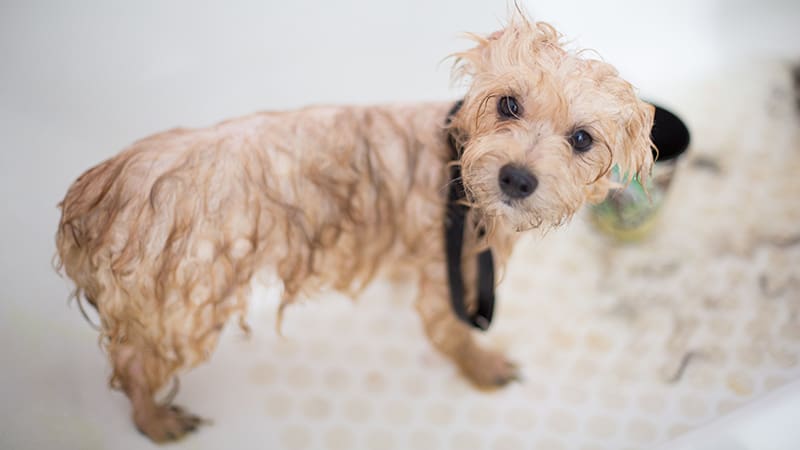
Bath time! Probably one of the more stress-inducing moments for households with pets. Maybe it’s because some dogs feel more comfortable in an icy-cold, dirty puddle than in warm bath water in the safety of their own home, or because their pet parents bathe them too often.
Don’t feel bad if you haven’t figured it out yet. This is the most frequently asked question when it comes to caring for dogs. And it usually happens because answers vary from once every 3-4 weeks to 3-4 times a year. No wonder people are confused.
The correct answer is that it depends entirely on the dog. While guidelines and recommendations exist, each owner still has to figure out what works best for their dog. Therefore, you might know what your dog needs in theory, but you still have to pay attention to what your dog needs in particular.
As usual, when in doubt, ask your vet. If you follow recommendations but something about your schedule feels wrong, don’t hesitate to ask and make the necessary changes. When it comes to hygiene and grooming, some things are unfortunately a bit counterintuitive.
Strict Schedule versus Flexibility
It’s best to nip such ideas in the bud. A strict schedule can sound appealing and reduce mental load. However, it only works if you find the sweet spot for your dog’s skin and coat type, your activities don’t vary much during the week, or you can do messier activities right before bath night.
Otherwise, keep an eye on your furry companion and make sure their real, specific grooming needs are met. This means bathing according to coat type, choosing the right products for your dog’s skin sensitivities, and taking into account your activities – whether your dog spends time indoors or outdoors, or you’ve recently had fun at the beach, in the rain, or on a mountain trail.
Not to mention that if your dog rolls over in something smelly, your perfectly drafted bath schedule goes out the window. So, it’s better to remain flexible.
Over-bathing Versus Under-bathing Your Dog
Finding the right frequency plays a big part in life with a furry companion. And it’s not just about the fuss they make at bath time. Over-bathing can also strip your dog’s skin and fur of the oils they need, leading to skin sensitivities, redness, flaking, hair loss, dull-looking hair, and itching, among other things.
Under-bathing, on the other hand, can allow bacteria to build up on the skin, triggering odor, itching, scratching, and potential skin infections. Hair matting is another issue to avoid. If your dog’s hair becomes tangled and coarse, you may need professional help to detangle, clear, and clean it.
Note: Never bathe a dog whose fur is matted. Water makes the mats tighten. You must remove or loosen them first.
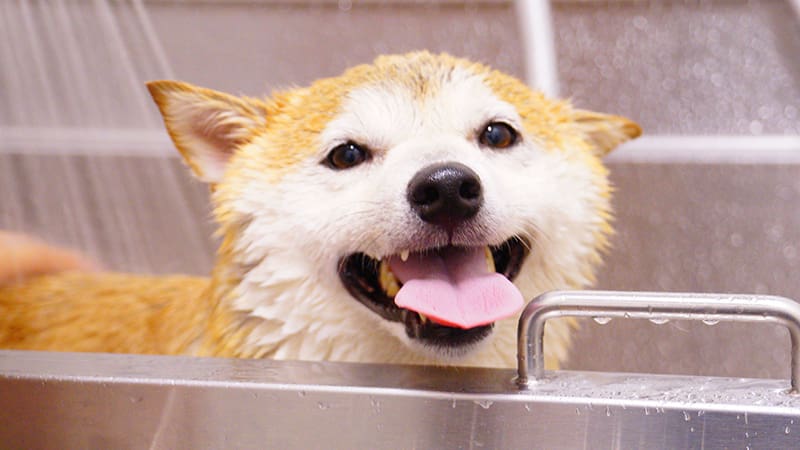
How to Establish Bathing Frequency for Your Dog
Several factors affect bathing frequency. The most important one is your dog’s coat type. Some coats protect an animal’s skin in specific living conditions, so dogs with these coats may need more frequent washing. Activity levels also matter because a couch potato will need fewer baths than a dog that actually spends the entire day outside.
You must also consider skin sensitivities. As a responsible pet owner, you should notice this yourself. If you notice your dog’s skin getting flaky and irritated, you might be bathing them too often and not allowing the sebum to keep the skin and coat properly conditioned.
Finally, lifestyle factors and specific medical conditions can also play a role. If you travel a lot and you take your dog with you, if your weekends are always away on camping trips, or if you walk a lot in the countryside, your dog’s grooming might need more attention than a dog living primarily in an urban environment.
You should normally discuss medical conditions with a veterinarian, and you can decide together how best to care for your dog.
Long coats – like Shih Tzus, Yorkshire Terriers, Afghan Hounds
These long, silky coats are extremely high-maintenance, tangle easily, trap odors, and pick up dirt and debris.
Bathe every 3–4 weeks; brush consistently so as to avoid matting. Avoid under-bathing.
Double coats – like Huskies, Golden Retrievers, German Shepherds
These dogs have a weather-resistant topcoat and a dense and insulating undercoat. They were made to be outdoors and active in all sorts of settings, with their coat architecture protecting them from cold and light rain. On the other hand, this type of coat traps dirt, debris, and odor near the skin.
Bathe every 6–8 weeks. Avoid over-bathing.
Curly coats – like Poodles, Bichon Frises, Doodles
Their tightly spiraled hair traps odor, debris, and dirt. Everything clings to it, and they can easily develop bacterial or yeast overgrowth. Otherwise, these dogs’ coats are considered hypoallergenic as they don’t shed as much.
Bathe every 3–4 weeks; keep up haircuts.
Wiry coats – like Scottish Terriers, Airedales, Wire Fox Terriers
Their coats are highly functional, with bristly textures that repel dirt. Over-bathing these dogs can soften their coat texture and reduce their coat’s main function.
Bathe every 6–8 weeks.
Short or smooth-coated dogs – like Beagles, Boxers, Dalmatians
These close-lying coats naturally let dirt and debris slide off and help distribute sebum across the short hair shafts. It keeps the coat properly conditioned and the skin adequately oiled.
Bathe every 8–12 weeks, with quick wipe-downs between baths and mitt grooming.
Hairless breeds – like the Chinese Crested, Xoloitzcuintli
Paradoxically, these are the most frequent bathers. Sebum accumulates easily on their unprotected skin, and they have no coat to distribute it. Left uncleaned, it clogs pores and irritates the skin.
Bathe weekly and protect the skin from sun exposure.
Signs Your Dog Needs a Bath Right Now
No matter how much you try to stick to the correct schedule, there are situations when you need to pay attention to the reality in front of you. Your dog may sometimes be trying to tell you, ‘Bathe me, now!’
You might already know that an unscheduled puddle or mud bath will automatically reset your grooming schedule. Another obvious sign is if you notice your dog’s coat looks flat or greasy. This means that there is buildup beyond the normal levels.
A persistent odor beyond the normal doggy smell can also be a sign. This one can feel strong, musty, or even sour, and it usually points to bacterial buildup on the skin.
Excessive scratching and licking could mean allergens and irritants are building up on the skin.
Bath Quality Matters Just as Much as Frequency
It’s not just about keeping the right schedule, but also doing the right things when grooming your dog. This implies choosing the right shampoo. Never use human (not even baby) products because human skin is more acidic; our products have a pH of 5.5. Special dog skincare products should have a pH between 6.5 and 7.4. Using the wrong products can strip your dog’s natural skin barrier, their first line of defense against infections.
Always dry your dog thoroughly after a bath. For some, this could be the real challenge. But hot spots can lead to severe skin infections.
Ultimately, there is no perfect bathing schedule that works for every dog. Pay attention to your dog’s coat, skin, lifestyle, and the occasional muddy adventure, and adjust accordingly. When something looks or smells different from normal, don’t just add another bath to the calendar – check with your veterinarian or groomer to find out what your dog actually needs.

Do you want to hear more news about our stories?
Related content
Why Is My Dog Drinking So Much Water? When Thirst Becomes a Warning Sign
‘Didn’t I just fill your water bowl?’ This is how it starts: you notice your dog’s water bowl is often empty. Like any responsible dog owner, you start to wonder whether your dog is drinking more water than usual and whether this should concern you. Before jumping to conclusions, know that there are many reasons ... How Often Should You Bathe Your Dog? A Practical Guide for Every Coat Type
Why Legacy Donations Can Create a Brighter Future for Shelter Dogs
Every donation we receive is an act of compassion toward our dogs. We are grateful for each one and for every person who wants to help us change the story for thousands of dogs. And if donating makes you feel happy for having contributed and become part of the story, know that there is a ... How Often Should You Bathe Your Dog? A Practical Guide for Every Coat Type
How Adoption Stories Inspire More People to Help Animals in Need
One of our favorite online trends is the posting of pictures with happy dogs and their new families, with those big ‘ADOPTED’ signs! And it’s hard not to share in the enthusiasm. The adoptive family took their time setting things up; they got the floof ready, bathed, brushed, and smelling like a million bucks. And ... How Often Should You Bathe Your Dog? A Practical Guide for Every Coat Type
How Sponsoring a Shelter Dog Can Change a Life Before Adoption
Adopting a shelter dog is the most beautiful act of kindness people could ever do in their lives. It is a gesture in which they take in a soul that was once abandoned and give it a home and a purpose. And then, they get to watch it thrive, and their lives grow richer and ... How Often Should You Bathe Your Dog? A Practical Guide for Every Coat Type
Supporting Rescue Dogs Through Donations When Adoption Is Not an Option
And as the rescue van took the suffering dog away, the people in town sighed with relief, thinking the poor soul was now safe and off to live a better life. The End Cute, but wrong! As an organization dedicated to bettering the lives of dogs and animals in general, ROLDA’s mission is to get ... How Often Should You Bathe Your Dog? A Practical Guide for Every Coat Type