non-US support +44 (0)161 531 8801



































10 Things to Know Before Bringing Home a Rescue Dog

You have selected your rescue dog, and your rescue dog has selected you! Congratulations! You’re about to begin a wonderful journey that should go smoothly, allowing you to enjoy your new life together from the start.
The key to a successful transition for your dog—and, by extension, for your new life together—is to carefully plan his first days at home. This ensures they are completely stress-free and comfortable. The goal is to help an overwhelmed dog feel at ease and relaxed in a new environment.
The good news is that you’re providing a deserving soul with the loving home and family they need. You may need to prepare a few things in advance, but it’s manageable. Once you handle the initial steps, everything will come together, and your exciting new life can start.
Before bringing your dog home
1. Complete documents in advance
It would be helpful if you could complete the adoption papers and similar documents beforehand, or at least come prepared to finish this part of the process. Once the dog is out, your attention should be entirely on him, rather than dealing with paperwork.
If there are still some issues to address on adoption day, keep everything organized and stay well-informed. The documents are important, so do not neglect them. However, try to resolve any outstanding matters before you pick up your excited dog.
2. Dog-proof your house
Before bringing home your new four-legged companion, ensure your house is dog-proofed. While some friends’ pets might ignore items on shelves or decorative objects on the floor because they’re used to them, this tolerance often develops over time—or maybe not at all, depending on the pet.
When introducing a new animal into your home, ensure all breakable items are removed from its way.
This includes vases on the floor, sculptures, paintings—items that could be knocked off coffee tables or lower shelves—plus toxic plants, room sprays with artificial or overly strong natural scents, wires, extension cords, drape cords, and heavy objects that could fall and injure the dog if displaced.
Although it might seem silly, the most effective way to identify potential threats in a room for your dog is to get down on all fours and inspect at eye level, seeing the space from your dog’s perspective. This approach can provide better insight and reveal problem areas.
3. Choose some of the potential spots
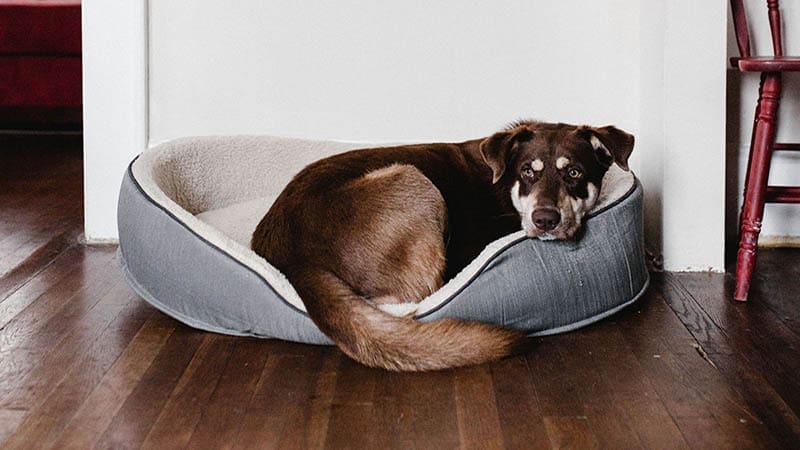
Your dog will have a dedicated spot in the house, whether it’s a cozy corner, at the foot of the bed, in front of the TV, or right under your desk if space allows. It would be helpful to create these spaces in every room, so your dog can stay with you while you go about your chores and tasks.
Eventually, one will become his favorite, but it’s helpful to identify a comfortable resting spot for him where he can relax and sigh while you go about your chores. This way, you won’t keep tripping over him as you move around the house.
4. Get the doggy stuff in advance
Some adopters might assume that all dog supplies should already be purchased and ready at home. However, we’ve also had instances where people come to pick up the dog and then drive with him to the store.
We understand the excitement and appeal! The idea that your dog can choose his own belongings and you can share a cute first moment is very tempting. However, considering your dog’s excitement about leaving the shelter with you, visiting a pet store might be overwhelming on the very first day.
When your dog arrives, ensure your home has the essentials: a doggy bed, water and food bowls, a crate, a lead and collar, a secure way to keep the dog in the car—either a crate or a harness based on the dog’s size—and some toys. You can acquire additional items later.
5. First aid kit
Like any responsible parent, pet parents should keep a first aid kit for emergencies. Even if your veterinarian’s office is nearby or the doctor and team are easily accessible, there are still essential skills and knowledge you need to have to act promptly until professional medical help for your dog is available.
This kit should contain gauze pads and rolls to control bleeding, medical adhesive tape, sterile non-stick pads, cotton balls, scissors (preferably a separate, blunt pair suitable for cutting fur around the wound if necessary), tweezers, a digital thermometer, cold packs, disposable gloves, and a soft muzzle or a towel/blanket to immobilize the dog, as dogs may bite when in pain.
6. Medicine
Never give your dog human medicine, as it can be toxic to animals! Instead, keep antiseptic wipes, saline solution, styptic powder for minor bleeding, and dog-safe antihistamines on hand, following your vet’s recommended dosages.
7. Learn the 3-3-3 rule and prepare
As a new pet owner, patience during the settling-in process is essential, but it won’t last forever if you follow the right steps initially. The 3-3-3 rule can guide you through this period, representing the stages your dog needs to adapt to living with you.
3 days to decompress
Don’t expect immediate results in the first three days. The environment—your new place, yard, neighborhood—and the rules are all unfamiliar, as are the living conditions. Even with your effort and good intentions, your dog needs time to adjust and should be left alone during this period.
3 weeks to start settling in
Once he understands the house layout, your identities, the schedule, and the family’s routine, he will begin searching for his role within the house and the family. This is just the beginning—his initial step—to feel comfortable.
3 months to truly feel at home
In three months, you can expect to have the life you envisioned with your new dog. Provide him with this time within these guidelines, and you’ll be on the right track. Rushing these steps will likely cause you to continually reset his inner compass.

8. Clear the house for when he arrives
Nothing will excite an already anxious dog more than a house full of new people. If possible, send everyone away so your dog can have his first experience in the new home without distractions. He will already pick up on your scents there, but give him a chance to explore each room calmly first.
9. Make plans to pick up your dog
You might all be excited about picking up your new friend. But you might risk overwhelming him if all the family shows up, kids screeching, jumping, spouse all excited, everybody talking loudly at the same time. Have one parent do the pickup. And one more person can accompany you if you need help in the car.
10. Clear your calendar (No house parties, long vacations, and loud get-togethers)
As your dog gets used to his new environment, family, and house routine, it’s best to avoid overwhelming him with loud, crowded gatherings during the initial days, weeks, or even the first three months. Keep this in mind when planning your social events.
Support the ROLDA Rescue Team and make every rescue possible!

Do you want to hear more news about our stories?
Related content

How Sponsoring a Shelter Dog Can Change a Life Before Adoption
Adopting a shelter dog is the most beautiful act of kindness people could ever do in their lives. It is a gesture in which they take in a soul that was once abandoned and give it a home and a purpose. And then, they get to watch it thrive, and their lives grow richer and ... 10 Things to Know Before Bringing Home a Rescue Dog

Supporting Rescue Dogs Through Donations When Adoption Is Not an Option
And as the rescue van took the suffering dog away, the people in town sighed with relief, thinking the poor soul was now safe and off to live a better life. The End Cute, but wrong! As an organization dedicated to bettering the lives of dogs and animals in general, ROLDA’s mission is to get ... 10 Things to Know Before Bringing Home a Rescue Dog
Why Regular Donations Are Essential for Keeping Rescue Shelters Running
What do you think is the most expensive part of running a dog shelter? Some people might think it’s the dramatic animal rescue missions. Others might say it’s the complicated medical procedures needed to put the poor animals back together or even the latest recovery and rehabilitation therapies. Both groups are wrong. The most expensive ... 10 Things to Know Before Bringing Home a Rescue Dog

The Life-Changing Impact of Dog Adoption on Both Pets and Their New Families
Who benefits more from a shelter adoption? The dog that has just received a chance at the perfect life in a loving home with a caring family? Or the family that has just become whole with the addition of the cutest, most loyal, and most lovable member? Both sides will. It’s a win-win type of ... 10 Things to Know Before Bringing Home a Rescue Dog

Creating Hope for Homeless Dogs: How Every Act of Kindness Makes a Difference
Overwhelmed. This is how animal lovers feel when they see so many struggling animals. Some people try to help, try to save the ones they come across. But once they start seeing the need, they cannot unsee it, and there are always so many animals in distress. Who could ever help them all? That is ... 10 Things to Know Before Bringing Home a Rescue Dog